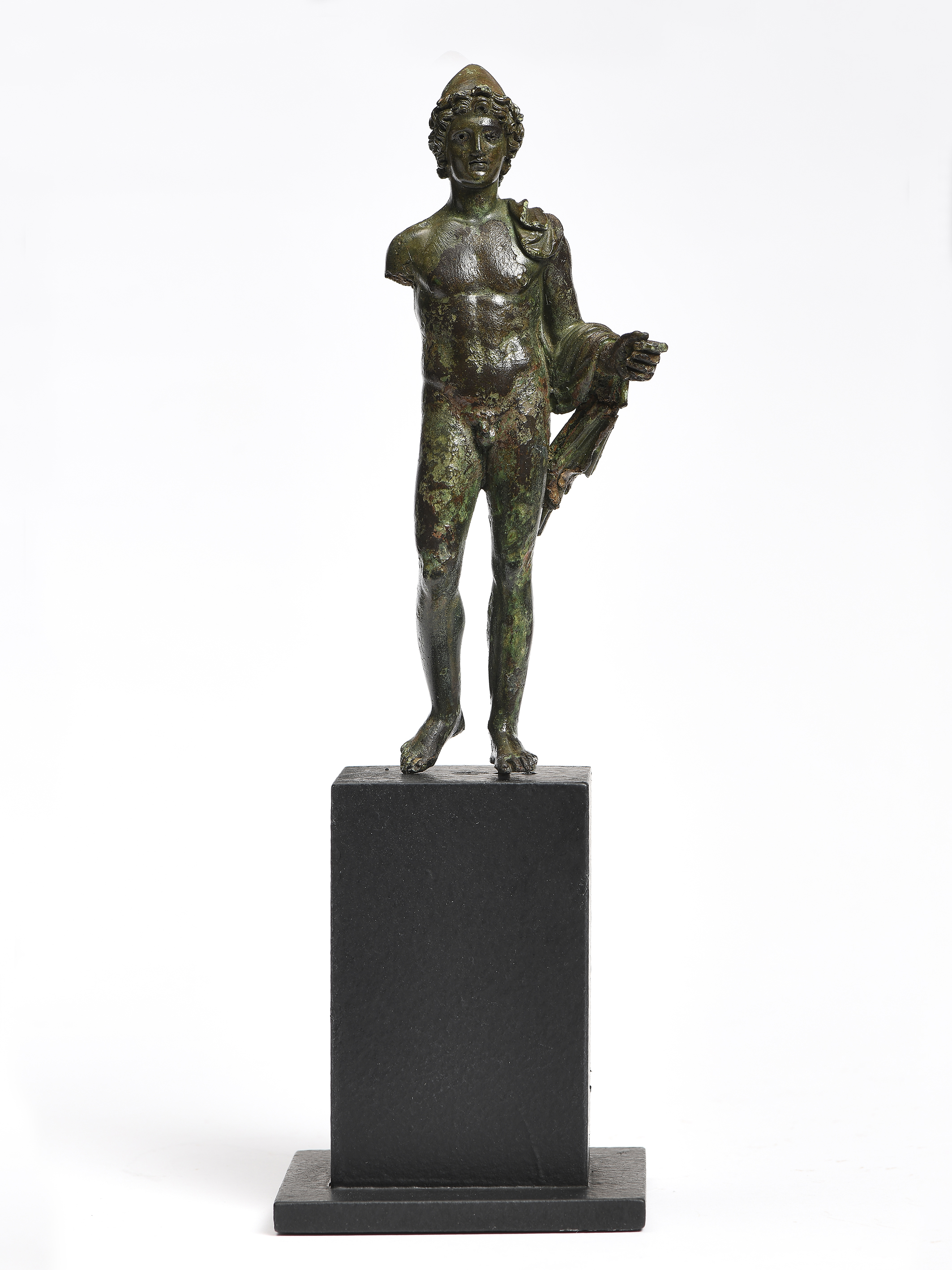
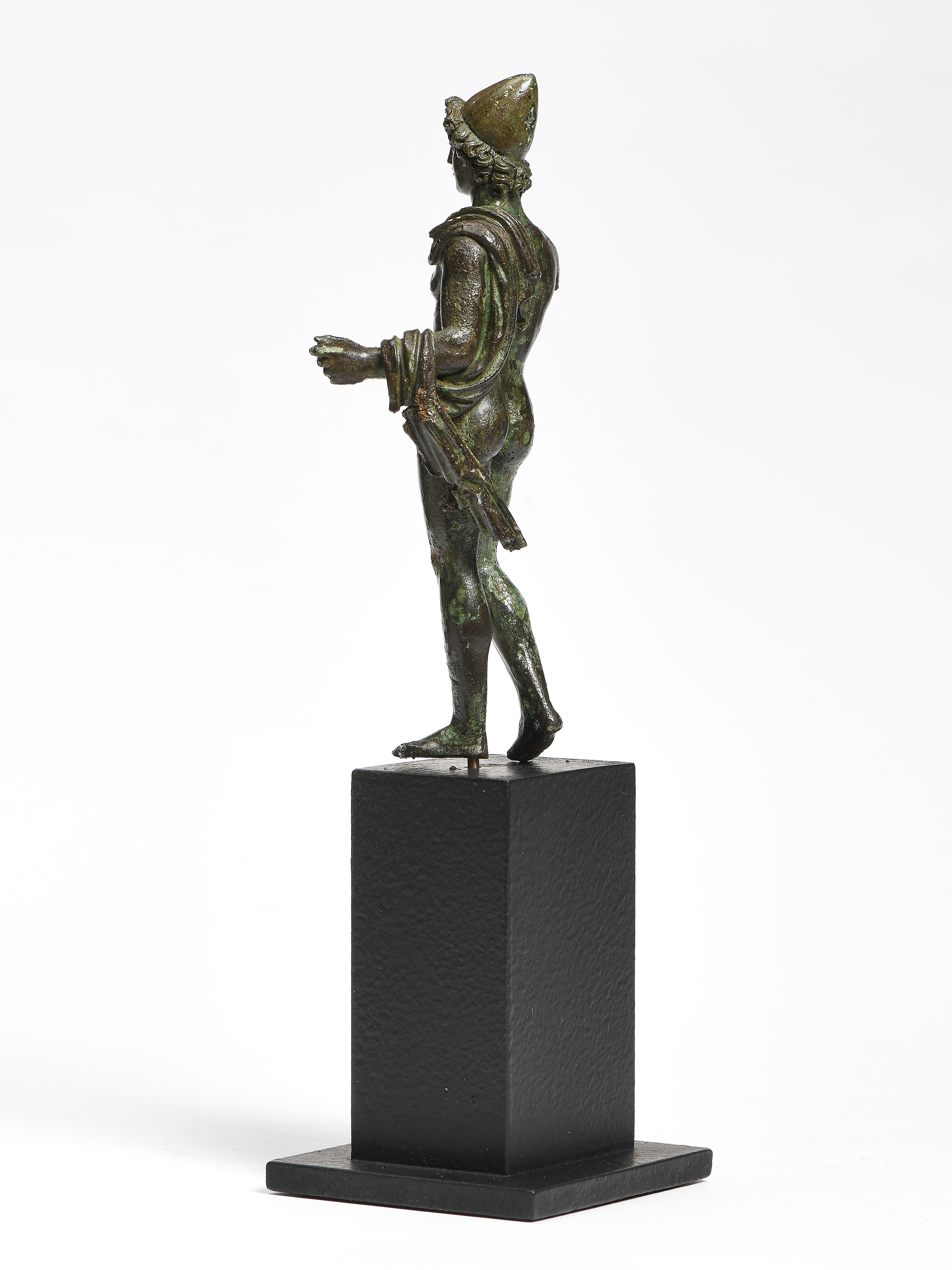
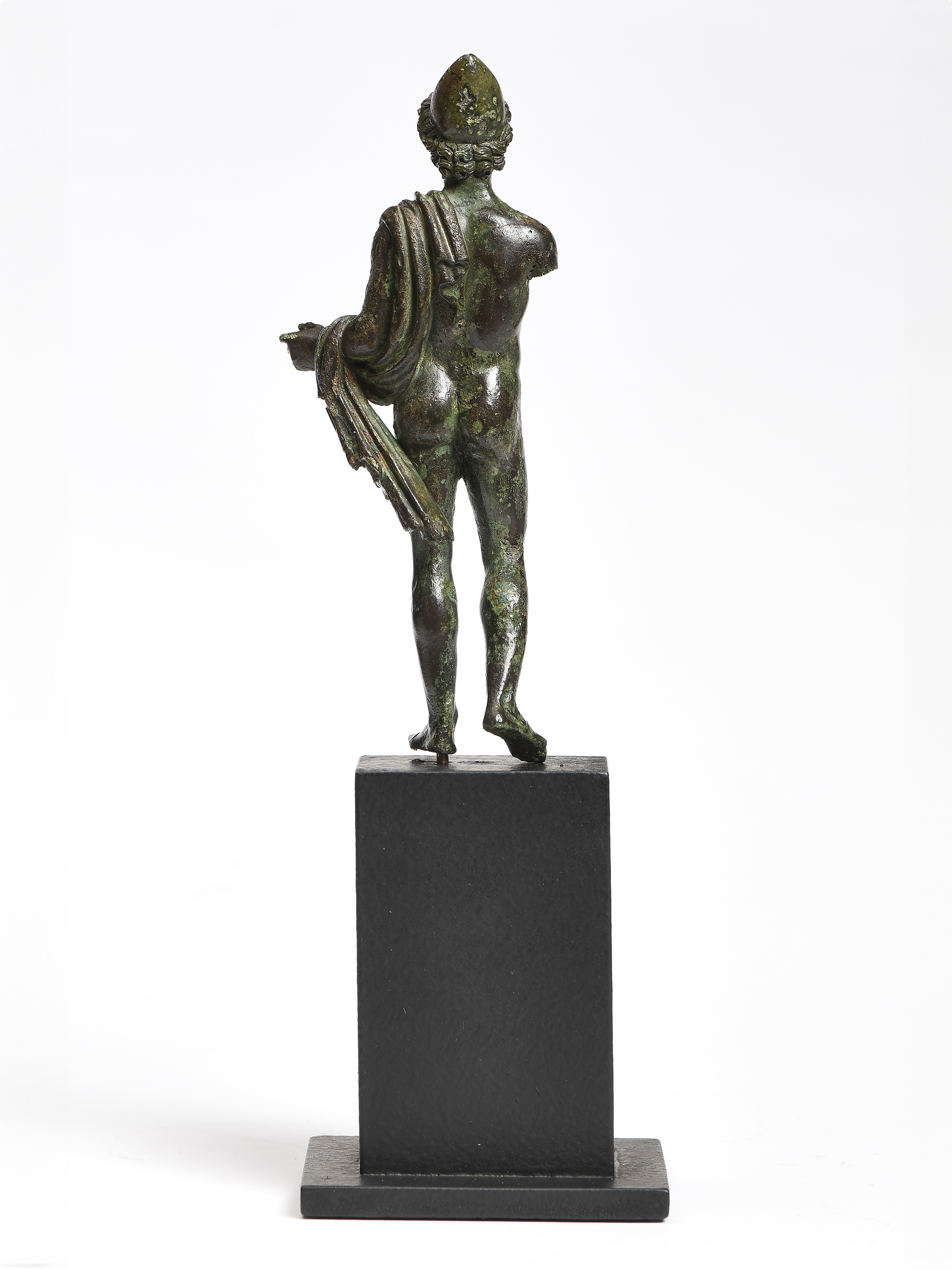
Bronze statuette of a Dioscurus
Private collection, Roger Peyrefitte (1907-2000), Paris, acquired in the late 1950s/early 1960s (by repute)
Private collection, Switzerland, acquired from the above, thence by descent
Roger Peyrefitte (1907-2000)
Roger Peyrefitte was a French writer, author of numerous novels, an anthology of Greek texts and historical biographies.
Born in Castres in 1907, he was educated by the Lazarist brothers. A brilliant student in the humanities, he continued his studies at the Faculté des Lettres in Toulouse, before entering the École des Sciences politiques, from which he graduated in 1930.
Peyrefitte's taste was boastful, perverse and not without its share of vulgarity. He wrote of himself in Jérôme Garcin's dictionary: ‘By that time, he had realised that there were only two things that mattered: money and a name, if you weren't born with one’.
He became embassy secretary in Athens from 1933 to 1938. In February 1945, he retired from the diplomatic service and began a literary career the same year.
Thanks to his erudition, his vast classical culture, his concise style with its rich vocabulary, his biting irony and his abundant output, he became a leading French writer. His masterpiece remains the biography of Alexander III of Macedonia (La jeunesse d'Alexandre; Les Conquêtes d'Alexandre; Alexandre le Grand). This work relates the life of the greatest conqueror of Antiquity from a variety of angles, incorporating social, geographical and mythological knowledge. Peyrefitte was a passionate collector in many fields.
Roger Peyrefitte, Un musée de l’amour, édition du rocher, 1972 (illustrated)
Musée d'art et d'histoire, Geneva, 2002 until 2021
New York, The Metropolitan Museum of Art, Antiquities from the Collection of Christos G. Bastis, 20 November 1987 - 10 January 1988
The finely modeled young man stands in a relaxed contrapposto with his weight borne by his left leg and his right leg relaxed with knee slightly bent. The beardless, oval face with articulated eyes, elegant nose, and closed mouth. He is shown nude but for a chlamys hanging down his back and thrown over his left shoulder and left lower arm. His head is turned slightly to the right, his full curly hair is topped by a pilos as the remnant of the egg from which the twin hatched. Mounted.
Note
The bronze figure exudes strength and power with its muscular body and confident stance. Its nakedness symbolizes the idealized beauty celebrated during ancient Greece's classical period.
For a similar but larger piece cf. the statuette of a Dioscurus in the Museo Archeologico Nazionale, Naples; for large marble representation of the Dioscuri cf. the statues from the Tempio di Venere a Baia, now in the Museo Archeologico Nazionale, Naples