The Memnon-Amphora
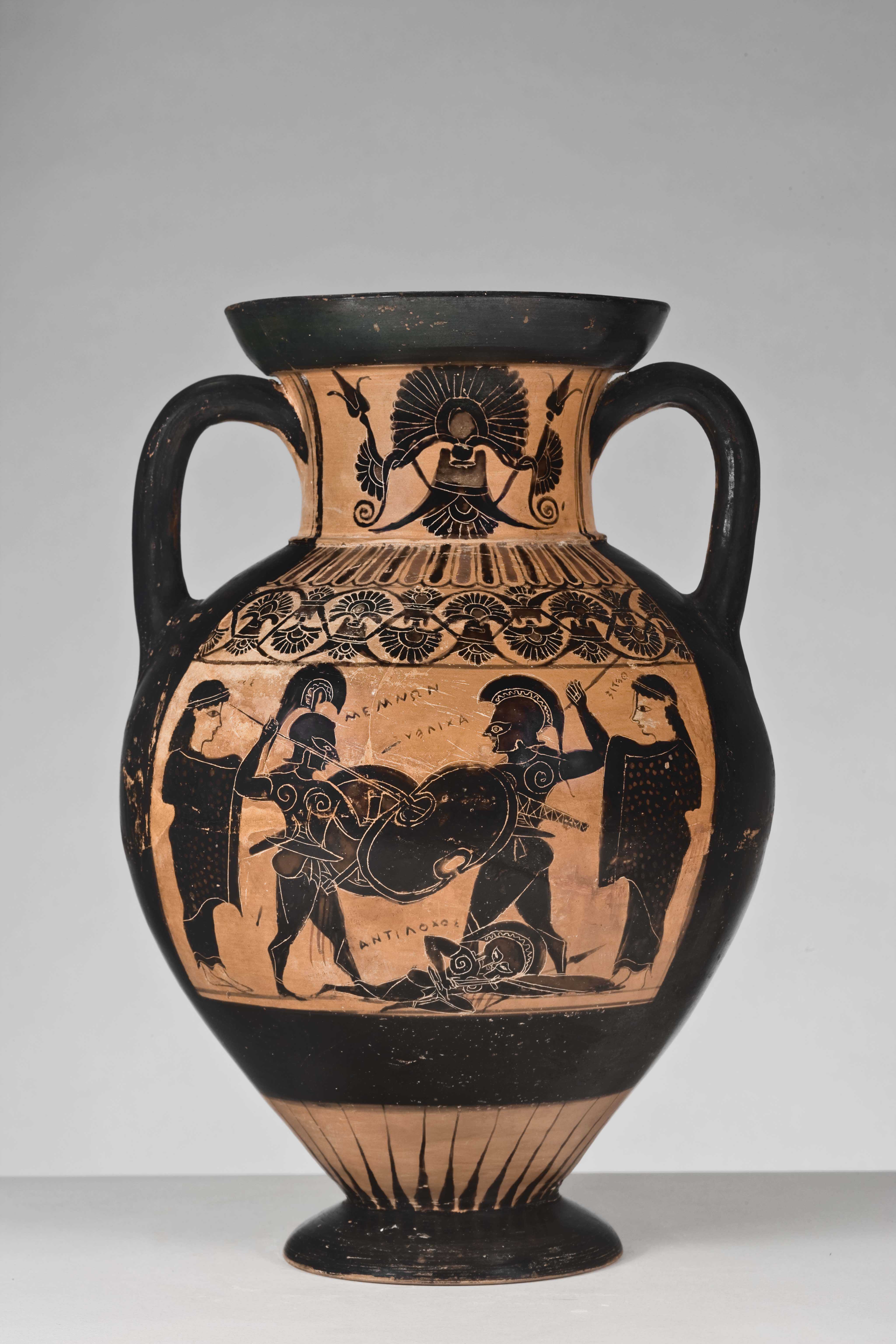
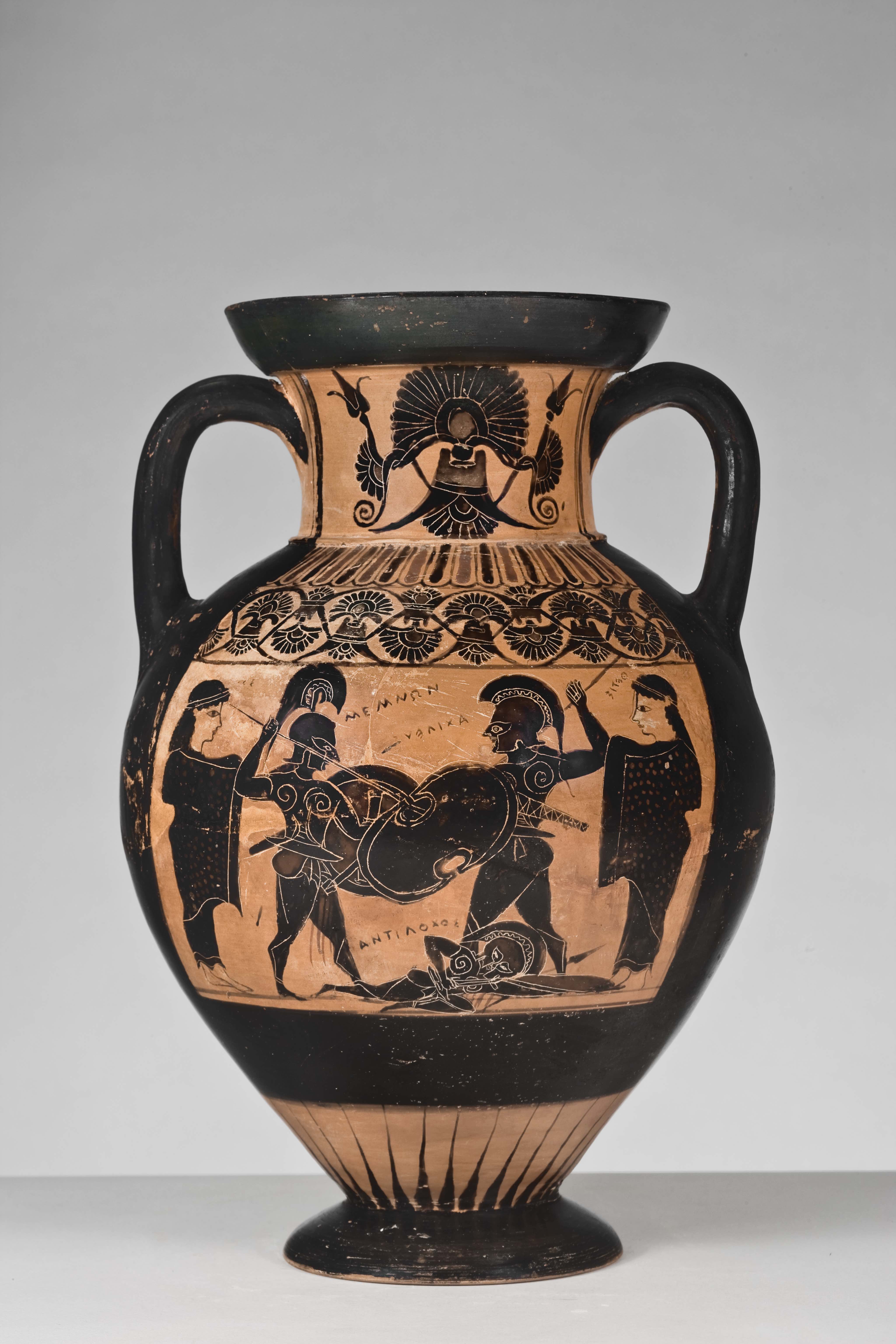
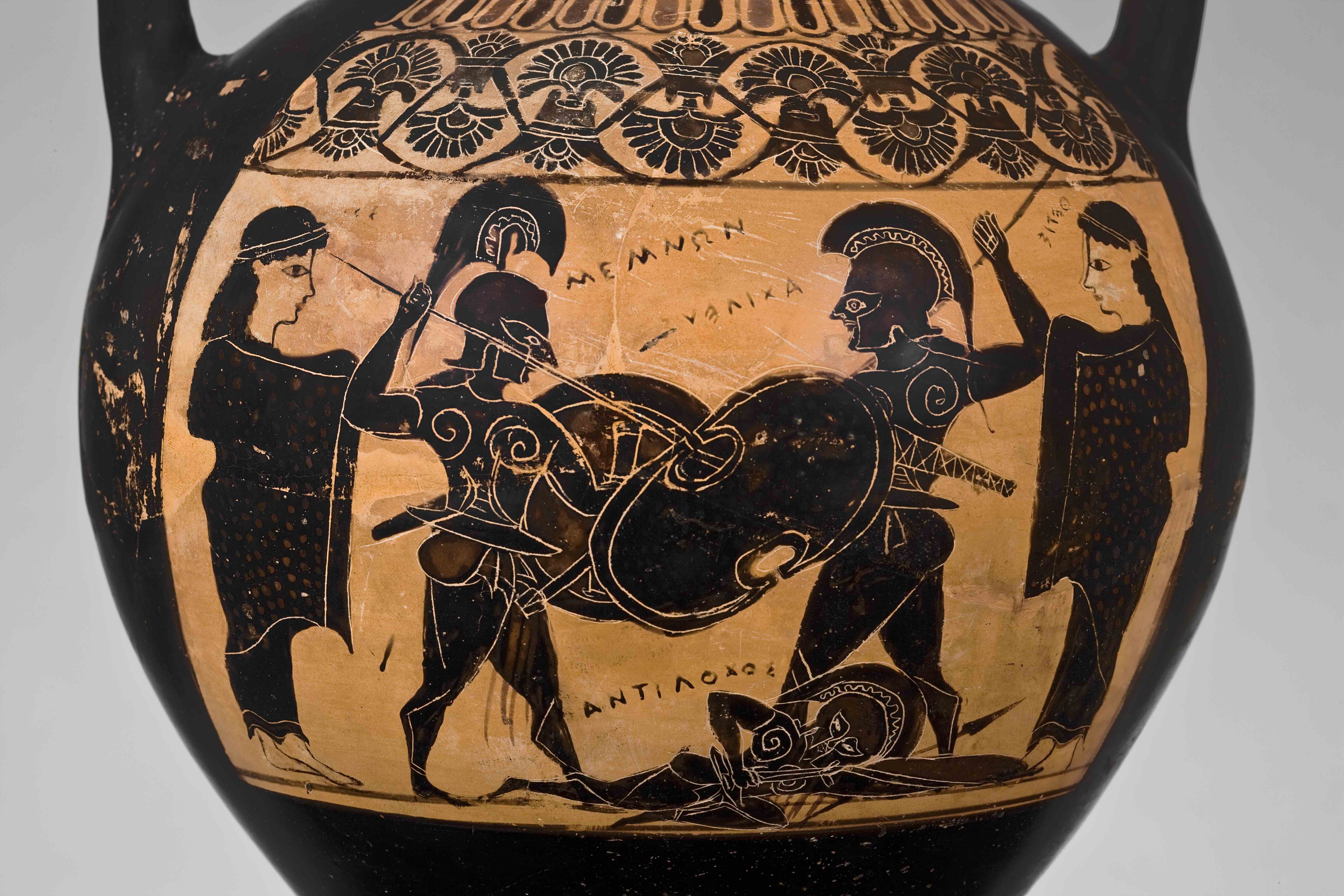
Discovered at Campomorto di Vulci in the early 19th century, the Memnon Amphora captures a moment of tragic intensity: the combat between the Ethiopian king Memnon and Achilles over the dead body of Antilochos.
As the eponymous masterpiece of the Memnon Group, this amphora stands as the group’s finest surviving work and the only one to bear named inscriptions, written in the Ionic alphabet.
Antilochos’ death highlights the human cost of war, even for its greatest heroes, as Achilles seeks vengeance in single combat. The scene captures a powerful cycle of heroism, revenge and mortality, shaped by fate and the inescapable will of the gods.
Created in the Pseudo-Chalcidian tradition—where Chalcidian, Attic and Corinthian influences converge—this amphora belongs to the much rarer of its two groups, the Memnon Group, set apart from the Polyphemus Group by its scarcity. Only twelve examples are known, found almost exclusively in Etruria and Sicily, making mythological scenes such as this exceptionally rare.
Collection Agostino Feoli (1785-1856), Rome
Collection Césaire-Emmanuel-Flavien Henrion-Staal de Magnoncour (1800-1875), Paris
Christie’s Antiquities, London, 27 April 1976
Private collection Switzerland, acquired from the above, thence by continuous descent
Agostino Feoli (1785-1856)
Born into a prosperous Roman family, Agostino Feoli was the son of the engraver and antiquities dealer Vincenzo Feoli (1750–1831). On the family estate at Campomorto, near the Etruscan νecropoleis of Vulci, he directed major excavations in 1829–31 and 1846–47, assembling an important private collection of Greek and Etruscan antiquities. First published in 1837 by Secondiano Campanari, the Feoli Collection was acquired in 1872 by the University of Würzburg and today forms the core of the Antiquities holdings of the Martin von Wagner Museum. Alongside his antiquarian activity, Feoli pursued a successful career in banking. A founder and later director of the Cassa di Risparmio di Roma, and subsequently general administrator of the Banca Romana, he was widely respected for his financial expertise during a period of papal fiscal instability. He died in Rome in 1856 and was buried at Santa Maria del Popolo.
Césare-Emmanuel-Flavien Henrion-Staal de Magnoncour (1800-1875)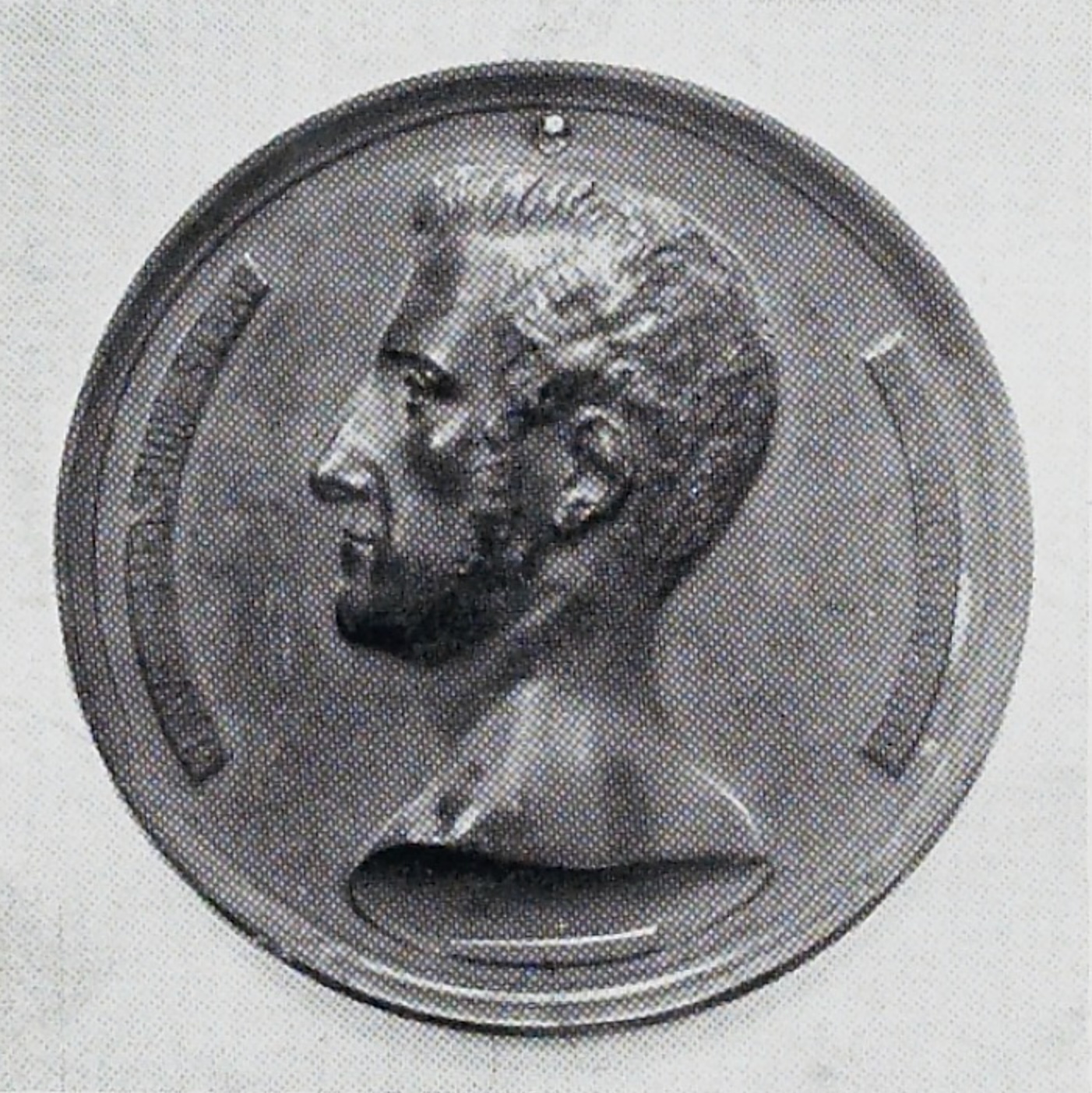
French diplomat and collector, born into a wealthy noble family from Franche-Comté. He inherited substantial family collections of books, manuscripts, paintings, coins and prints, and a prolonged stay in Italy in 1832–34 inspired him to assemble a collection of ancient vases and bronzes, augmented by purchases at the Duran (1836) and Canino (1837) sales. His engagement with antiquities was, however, relatively brief, and he sold his a archaeological collection anonymously in 1839.
J.J. de Witte, Collection de M. de M(agnoncour) (1839) 48 no. 59
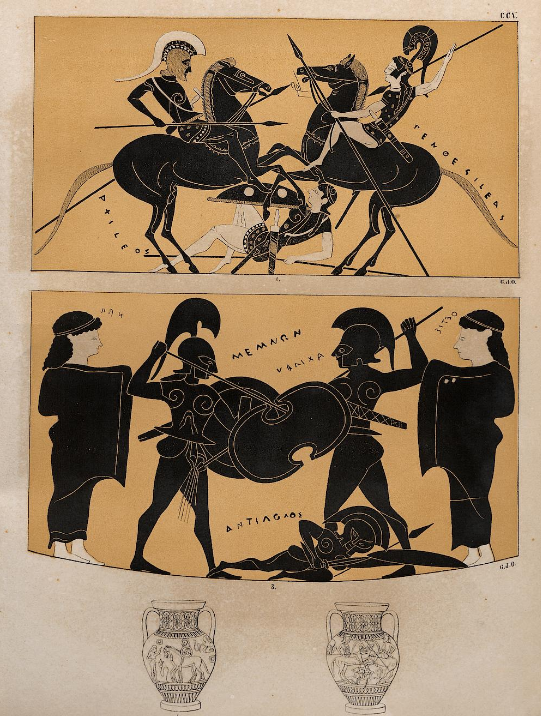
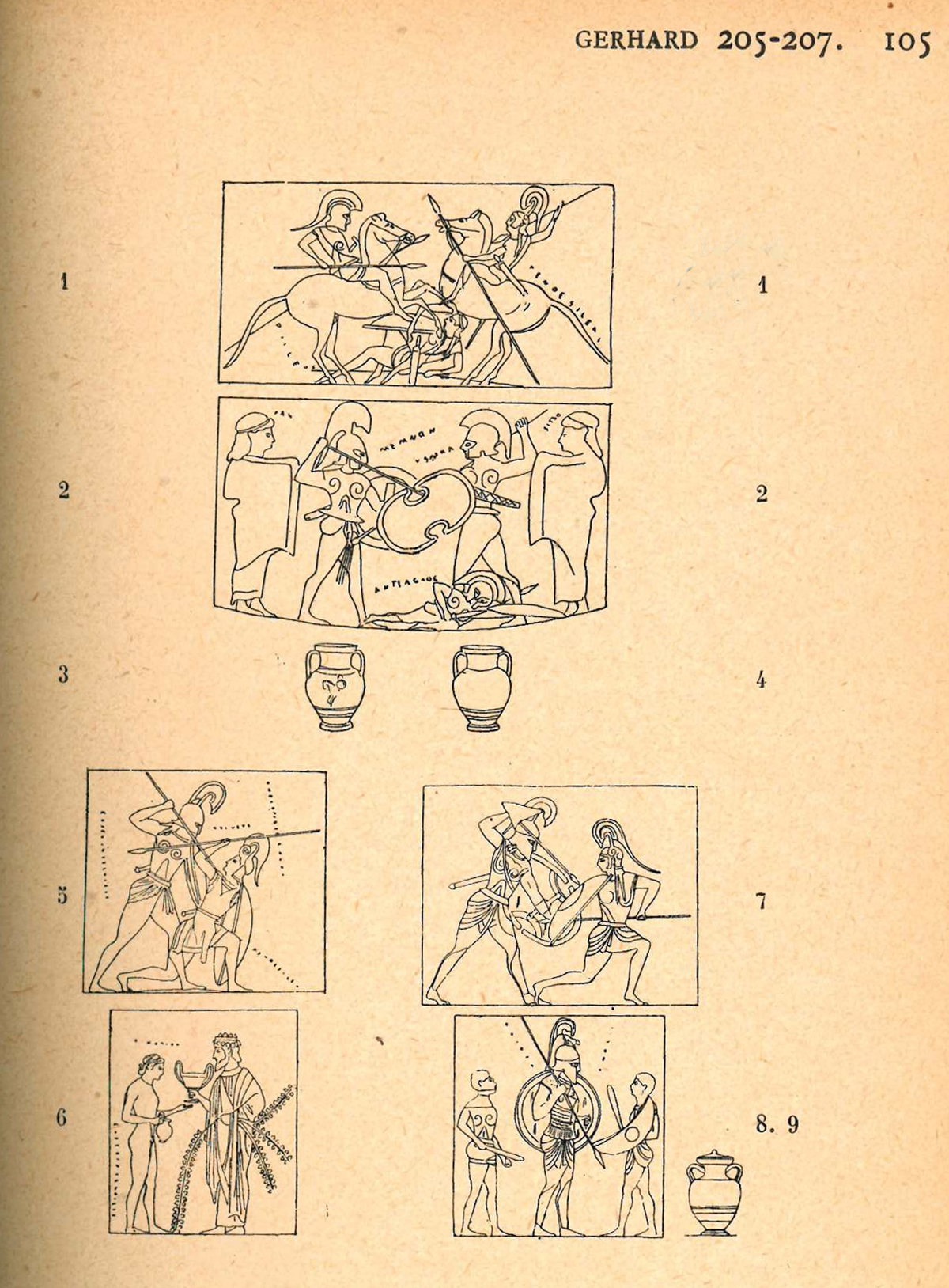
E. Gerhard, Auserlesene griechische Vasenbilder (Berlin 1840-1858) Taf. 205, 3-4
J. Overbeck,Die Bildwerke zum troischen und thebischen Heldenkreis (Stuttgart 1857) 520
H. Lückenbach, Das Verhältnis der griechischen Vasenbilder zu den Gedichten des epischen Kyklos (XI, Suppl Bd. d. Jahre. f. cl. Philol., B.G. Teubner 1880), 616 C.I.G. 8409
Arndt, Studien, 52; Rom. Mitt. III 1888, 165 (Dümmler = Kl. Sehr. III, 268)
Bern. Philol. Wochenschau. 1888, Sp. 18 (Dümmler = Kl. Sehr. III, 354)
Carl Robert, Scenen der Ilias und Aithiopis auf einer Vase der Sammlung des Grafen Michael Tyskiewicz. 15. Hallesches Winckelmannsprogramm (Halle 1891), Anm. 3
Paul Kretschamen, Die griechischen Vaseninschriften ihrer Sprache nach untersucht (Gütersloh:Bertelsmann, 1894) 56 II; Johann Endt, Beiträge zur ionischen Vasenmalerei (Prag 1899) 38
Athenische Mitteilungen XXV, 1900, 79 Abb. 49 (Böhlau)
Bern. Philol. Wochenschr. 1900, Sp. 369 (Karo)
L. A. Milani, Monumenti scelti (1905), 1 Anm. 1
S. Reinach, Répertoire des vases peints grecs et étrusques II (Paris 1900) 104f. 2.3
Adolf Furtwängler-Karl Reinhold, Griechische Vasenmalerei: Auswahl hervorragender Vasenbilder (München 1904, 222
H.B: Walters, History of Ancient Pottery, Greek, Etruscan, and Roman (1905) 323 Anm. 3 (18), 357. II, 253
P. Ducati, ÖJh 12, 1909, 79 Abb. 49
E. Langlotz, Zeitbestimmung, 23; Athenische Mitteilungen, XLVI, 1921, 187f.
P. Ducati, Storia della ceramica Greca I (Firenze 1922) 194
E. Pfuhl, Malerei und Zeichnung der Griechen I, 1876-1923, 196, 202
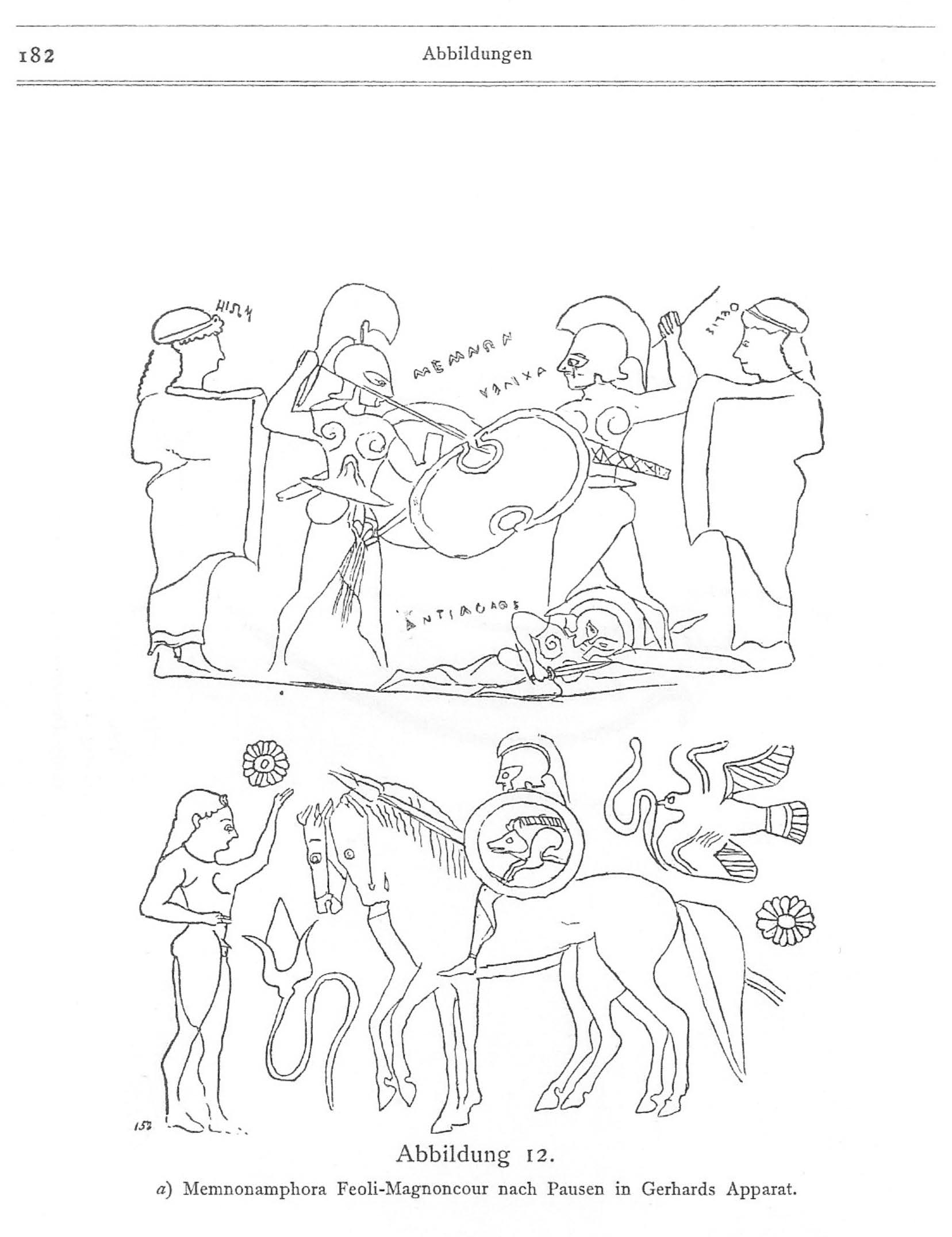
Lippold 432; A. Rumpf, Chalkidische Vasen (1927) 156 a, Abb. 12 with earlier literature
R. Hampe - E. Simon, Griechische Sagen in der frühen etruskischen Kunst (Mainz 1964) 58
F. Canciani, in: Tania. Festschrift R. Hampe (Mainz 1980) 118f. Abb. 1-2
LIMC I (Zürich 1981) s. v. Achilleus (A. Kossatz-Deissmann) Nr. 815
LIMC I (Zürich 1981) s. v. Antilochos I (A. Kossatz-Deissmann) Nr. 29
F. Canciani, Eine neue Amphora aus Vulci und das Problem der pseudochalkidischen Vasen, JdI 95, 1980, 145f. Abb. 7. 9
V. Brinkmann, Die aufgemalten Namensbeischriften an Nord- und Ostfries des Siphnierschatzhauses, BCH 109, 1985, 118 Abb. 88
LIMC III (Zürich 1986) s. v. Eos (C. Weiss) Nr. 302
LIMC VI (Zürich 1992) s. v. Memnon (A. Kossatz-Deissmann) Nr. 34
Hermes statt SMS (Basel 2010) 88
Wann ist man ein Mann? Das starke Geschlecht in der Antike. Ausstellungskatalog Basel (Basel 2013), 60
Antikenmuseum Basel und Sammlung Ludwig, 1991-2026
Sold
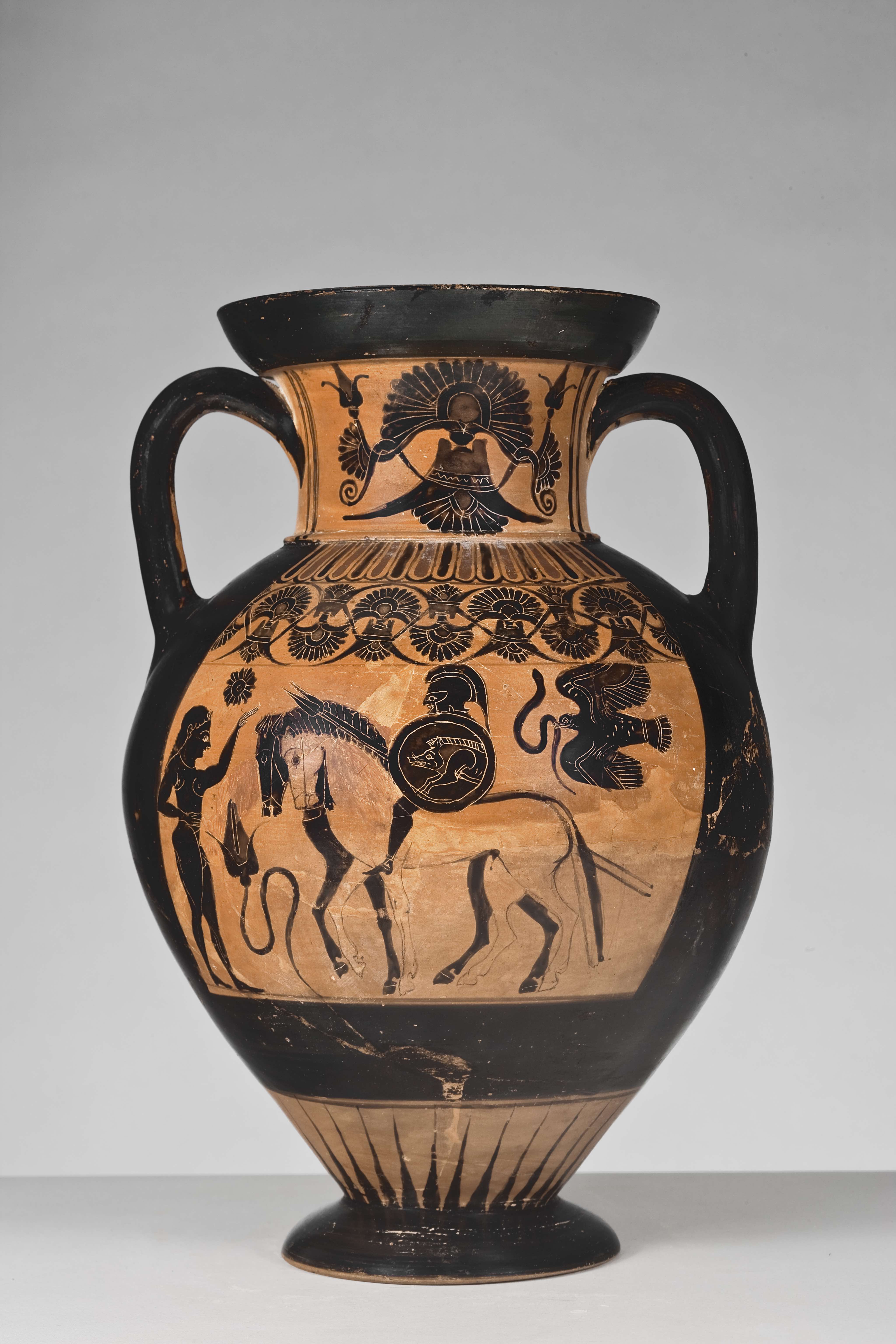
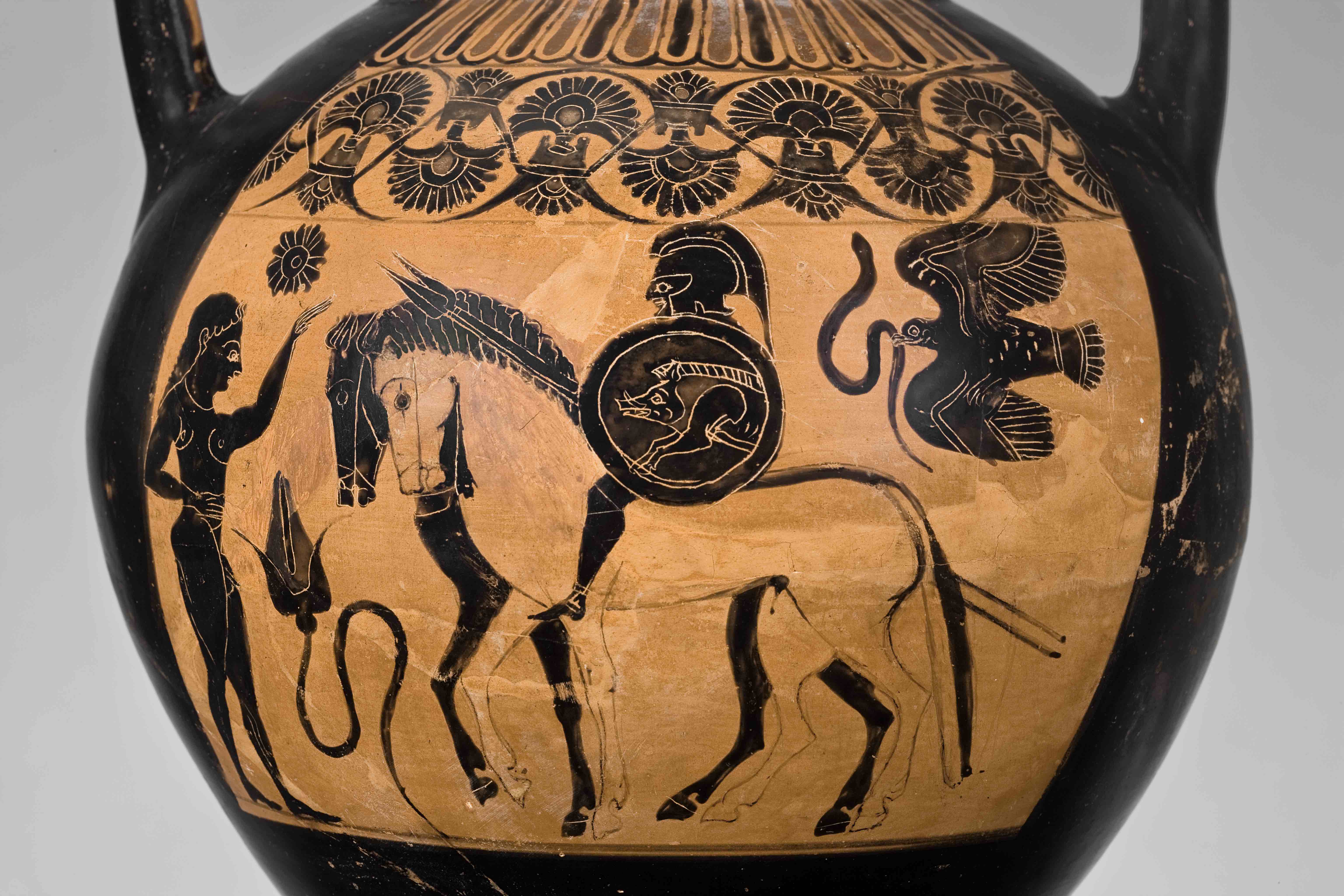
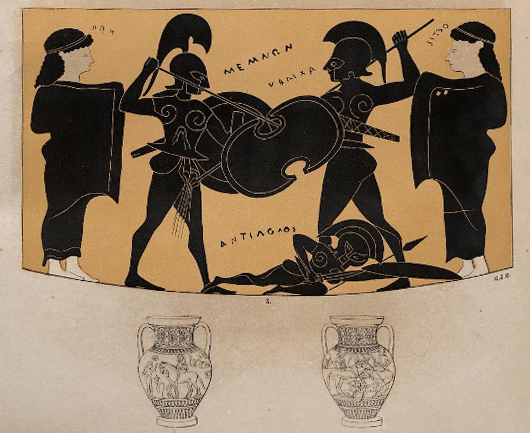 The pseudo-Chalcidian black-figure neck amphora is decorated on each side with a figured panel. On the obverse is depicted the combat between Memnon, king of Ethiopia, and Achilles on the battlefield over the dead body of Antilochos. The two heroes are shown fully armed, each wearing a crested Corinthian helmet, cuirass, and greaves, and carrying a shield and spear. Achilles’ spear is shown piercing Memnon’s thigh at the moment of impact. The scene is flanked by the mothers of the heroes, Eos and Thetis, who stand on either side wearing himatia decorated with red dots. All the figures are identified by inscriptions in the Ionic alphabet. The reverse depicts a mounted hoplite accompanied by his horse, facing an ephebe standing before him. In the field, a flying bird grasping a snake, a rosette, and a lotus bud. The neck is ornamented with an antithetic palmette and lotus-bud frieze between two horizontal lines. The shoulder is decorated with alternating red and black tongues, while below runs a double palmette and lotus chain. Rays encircle the foot of the vessel. Details throughout are enriched with added red. Memnon, the Ethiopian king and son of Eos, arrived at Troy to aid the Trojans in the final phase of the war. Celebrated for his beauty, strength, and prowess in battle, he quickly proved himself a formidable opponent. In the fighting, Memnon slew Antilochos, the youngest son of Nestor, a devoted Greek warrior renowned for his courage and loyalty. Antilochos’ death deeply affected the Greeks, underscoring the profound human cost of the conflict - even among its greatest heroes. Seeking to avenge his fallen comrade, Achilles challenged Memnon to single combat and killed him. Their encounter reflects the recurring cycle of heroism, vengeance, and mortality central to Greek myth, illuminating themes of bravery, loyalty, and the inexorable destiny that binds mortals under the will of the gods.
Note
Our Amphora depicting the combat of Memnon and Achilles over Antilochos, the group’s eponymous amphora, is among the finest of the group and the only amphora of the Memnon group wearing named inscription - in Ionic alphabet. Pseudo-Chalcidian vase painting is an important style among black-figure Greek vase painting. It was strongly influenced by Chalcidian, but also shows influences from Attic and Corinthian vase painting. The potters used the Ionic alphabet for added inscriptions. As per today we know about 60 vases of the style - studied by Andreas Rumpf for the first time in 1927. The potters/painters may have been the successors of those who produced Chalcidian pottery, as well as some potters newly immigrated to Etruria. Pseudo-Chalcidian vase painting is divided into two groups: the Polyphemus Group and The Memnon Group. The first group produced the majority of known vases, mainly neck amphorae and oinochai. They show groups of animals, mythological imagery is rare. The vessels were found in Etruria and Sicily, but also in Marseille and Vix. The Μemnon Group, to which only 12 vases can be attributed, had a much less extensive distribution, limited exclusively to Etruria and Sicily. Except for one oinochoe, the Memnon group only produced neck amphorae, usually decorated with animals and horsemen. Mythological scenes are rare.