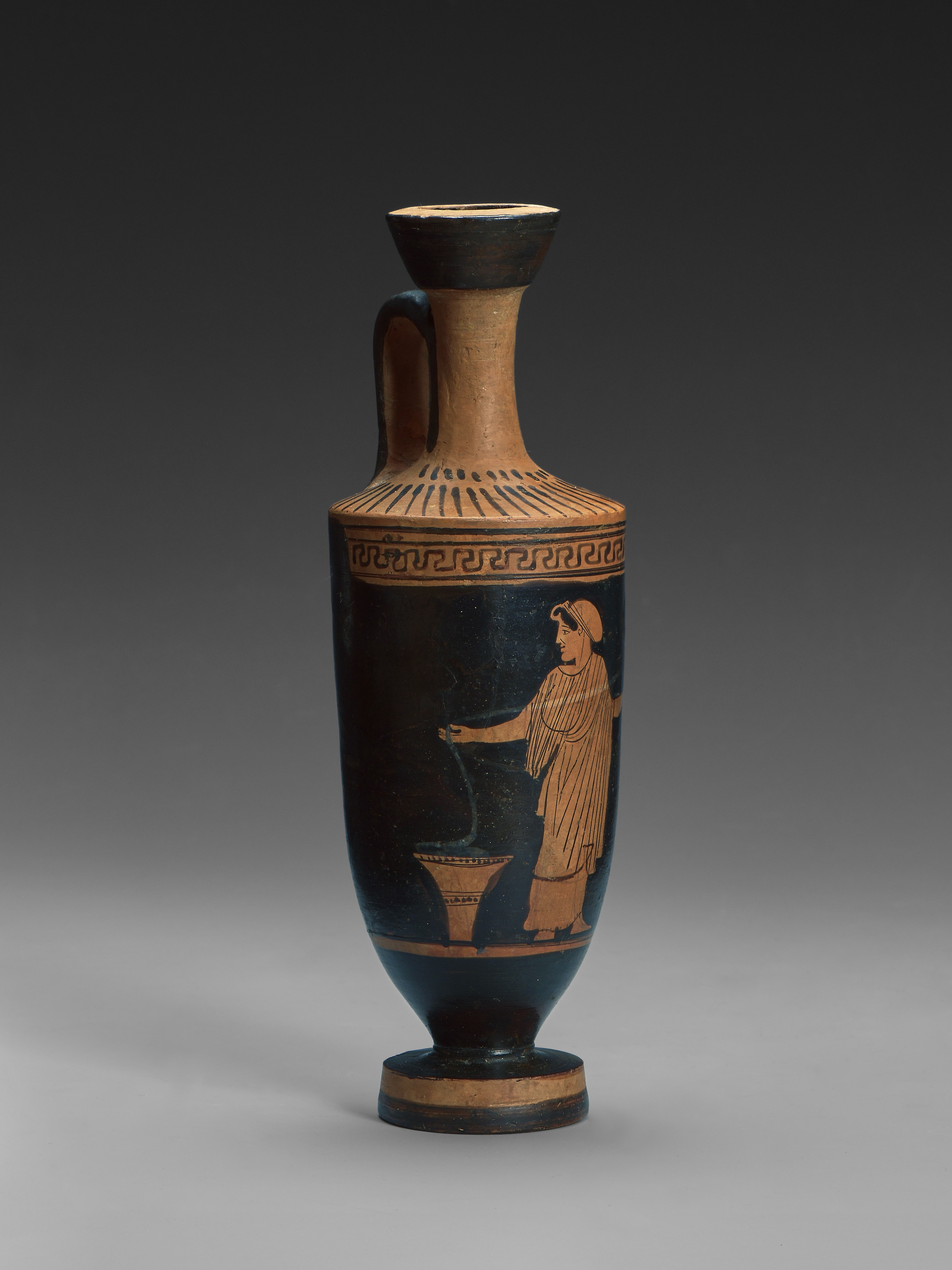
Red-Figure Lekythos
Bought from Roussos
Collection Joseph/Ernest Brummer, New York and Paris, [Brummer inv. no. P3565], acquired in 1926 from the above
Collection Piero Tozzi, acquired from the above on 07.03.1949
Galerie Koller and Spink & Son, The Ernest Brummer Collection, Galerie Koller Zürich, 19 October 1979, vol. II. 338–339, lot 700
Private collection Louis Ruess, Zurich, Switzerland, acquired from the above
Ernest Brummer
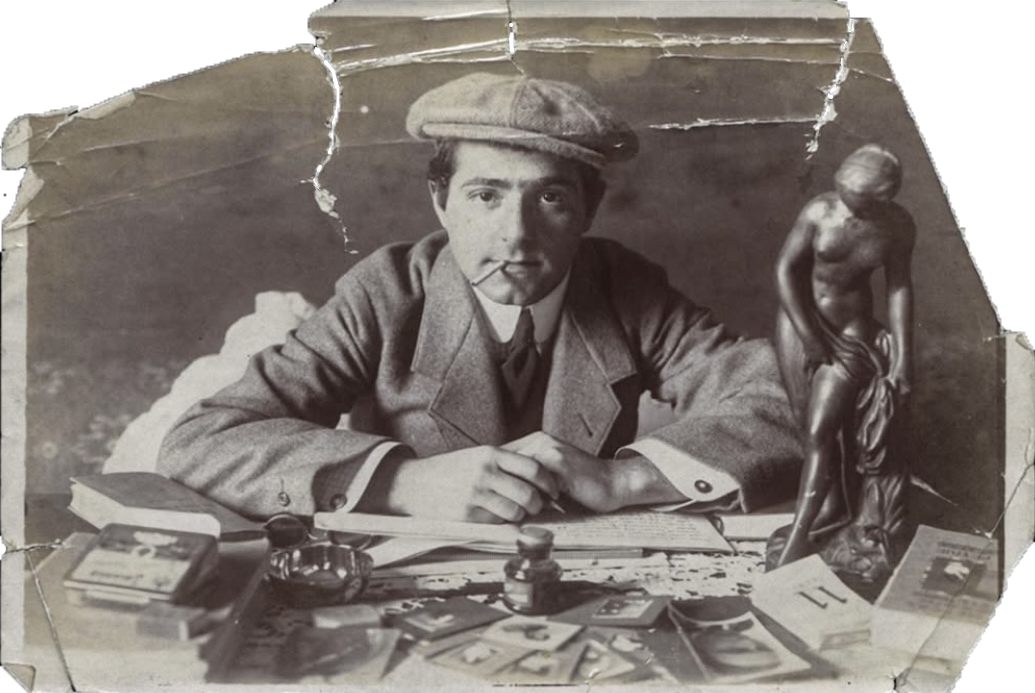 Ernest Brummer (1891–1964) was a Hungarian-born art dealer and collector who played a key role in shaping early 20th-century art collecting in Europe and the United States.
Born in Sombor in the Austro-Hungarian Empire, he studied music in Budapest and later art history and archaeology in Paris at the Sorbonne and the École du Louvre under archaeologist Salomon Reinach.
Around 1906, he co-founded the Brummer Gallery in Paris with his brothers Joseph and Imre. By 1912, the gallery—known as Brummer Frères—had built a strong reputation dealing in African, pre-Columbian, Classical, Byzantine, Medieval, and Renaissance art. After World War I, his brothers moved to New York, while Ernest remained in Paris managing the gallery.
In 1940, during World War II, he relocated to New York and continued operating the Brummer Gallery. After Joseph’s death in 1947, Ernest led the gallery until its closure in 1949.
The Brummer Galleries supplied major American museums, including the Metropolitan Museum of Art, the Walters Art Museum, Dumbarton Oaks, the Brooklyn Museum, and the University of Pennsylvania Museum.
After his death, the Brummer collection was dispersed through major auctions (New York 1949; London 1964; Zurich 1979). The gallery’s records, now housed at the Metropolitan Museum of Art’s Cloisters Library and Archives, remain an important resource for provenance research and the history of art collecting.
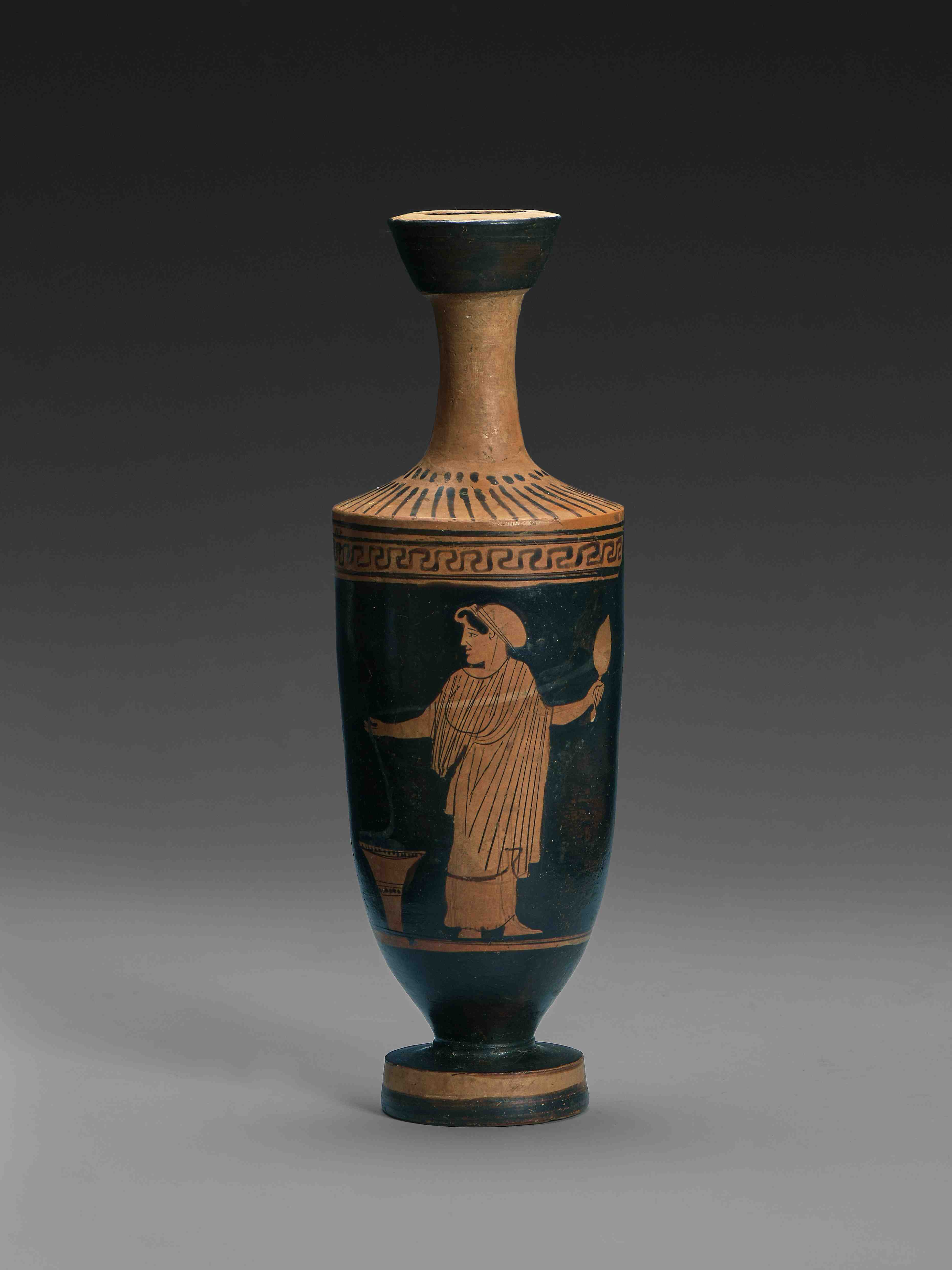
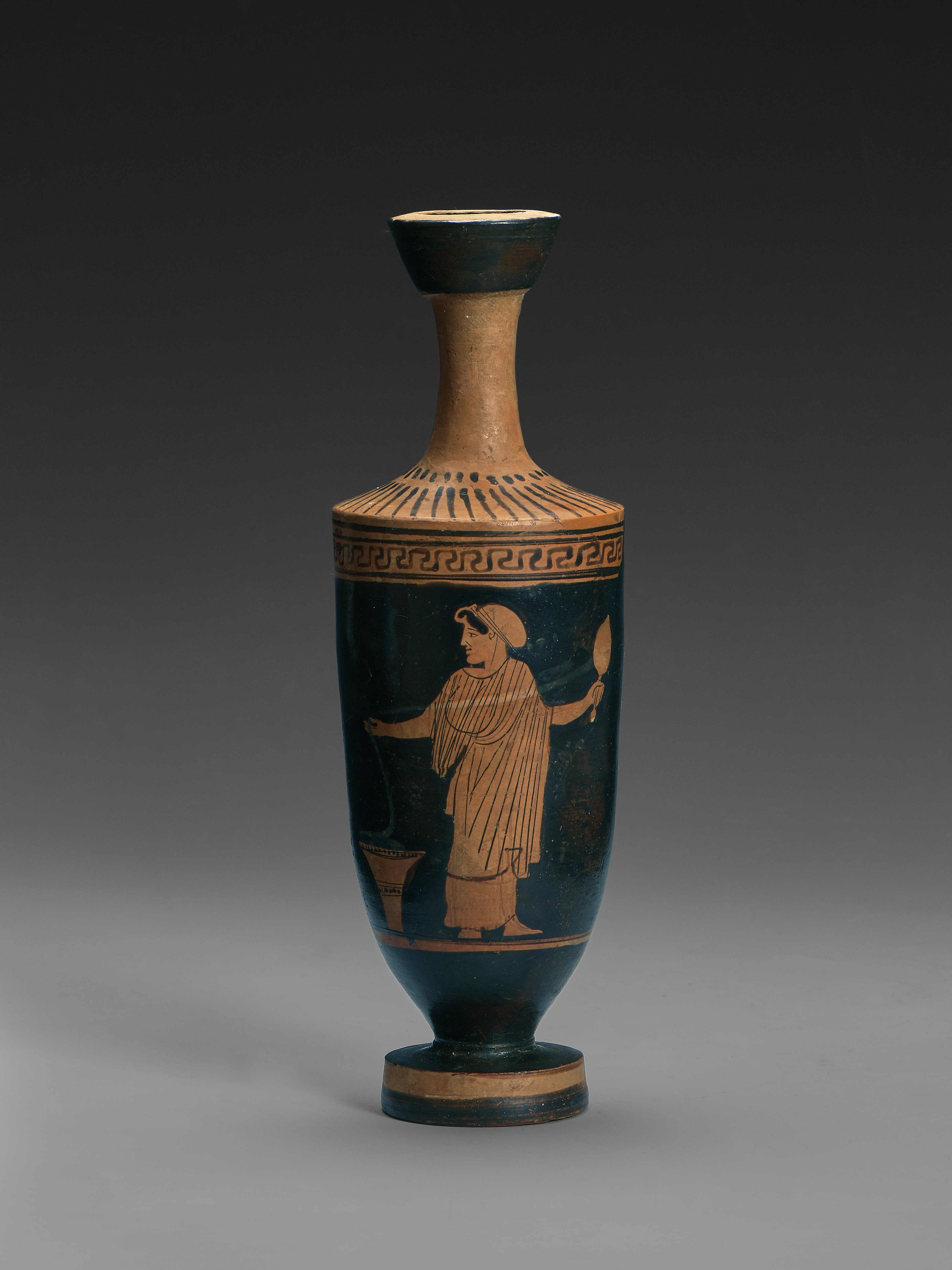
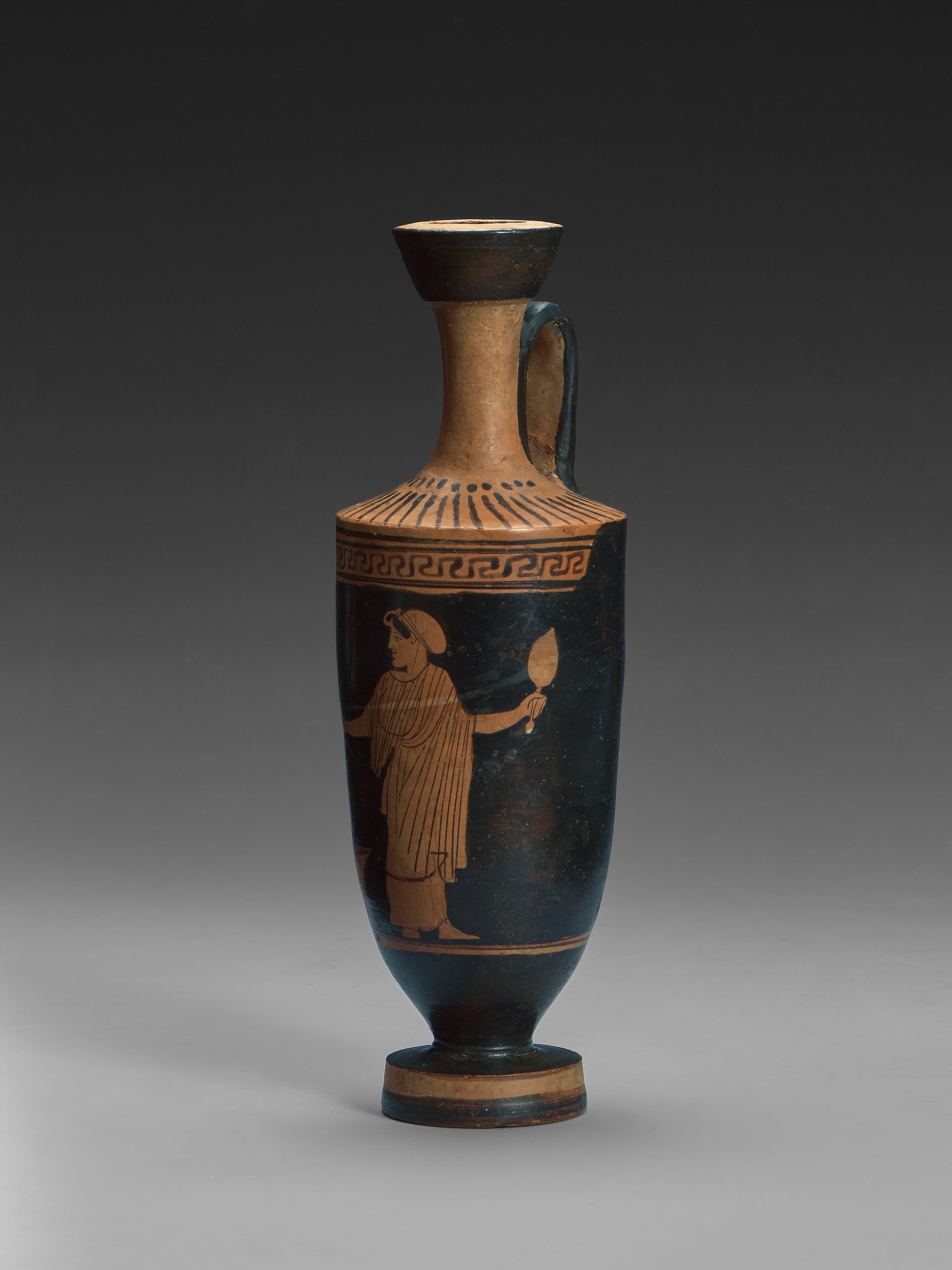
This elegant, slender-bodied vessel, characterized by its tall neck and echinus-shaped mouth, is called a lekythos - a type of oil flask used to store precious oils or perfumes.The artwork portrays a young woman standing frontally, dressed in a chiton and himation, with a sakkos adorning her head. Her face is rendered in profile, turned to the left, while her arms extend outward - one to each side.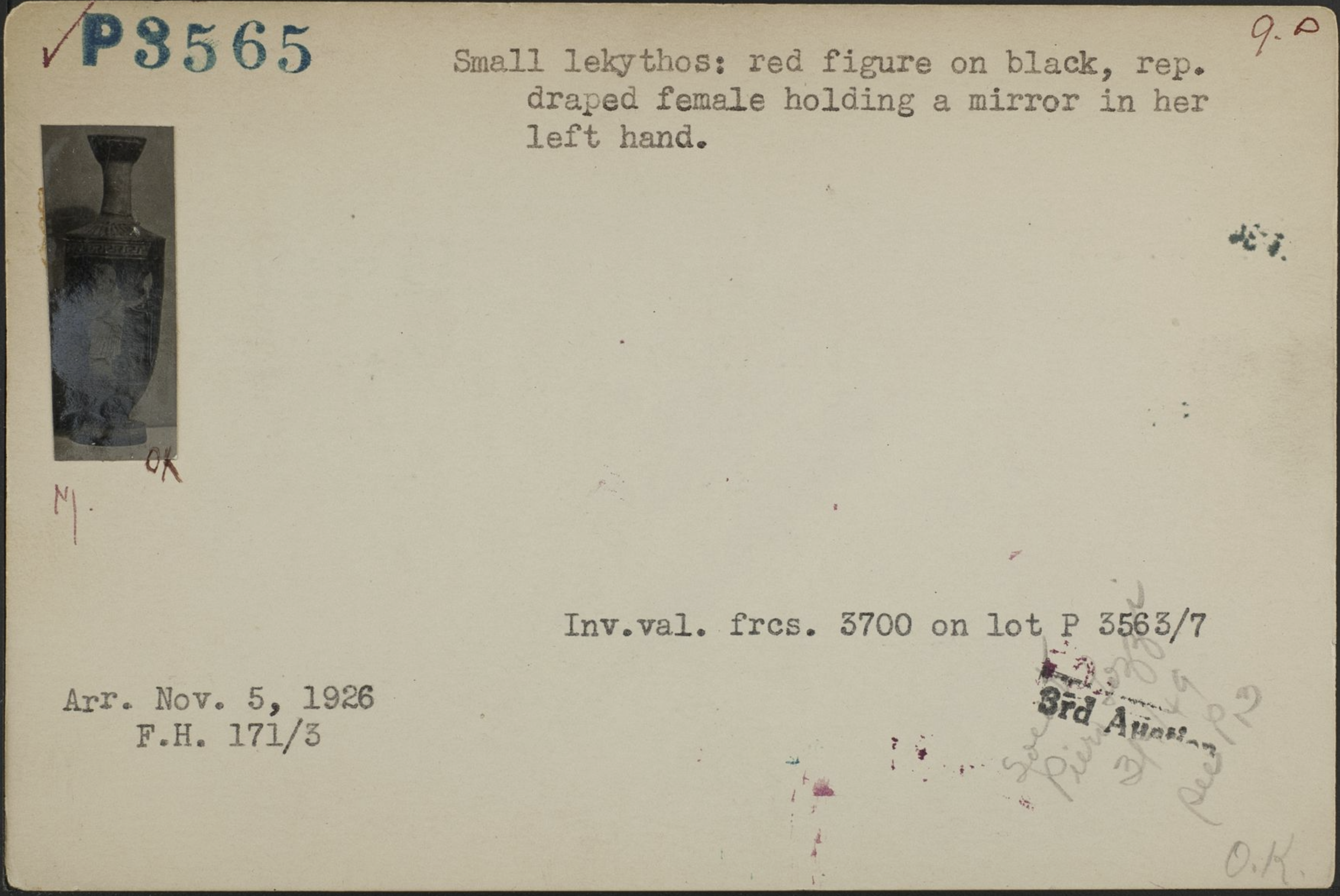 In her left hand, she holds a distaff (a tool for spinning wool), from which a strand of wool threads across to her right hand and down into a wool basket (kalathos) at her feet. Traces of a preliminary sketch are still visible. The scene likely depicts the act of gathering wool into the basket on her right, capturing a simple yet evocative moment of daily life.
The composition is framed above by a rightward-running meander pattern, complemented by dotted rays on the shoulder. A single horizontal line borders the scene below.
The Carlsruhe Painter
The Carlsruhe Painter, named after a vase housed in Karlsruhe, Germany, was an Athenian vase painter renowned for his distinctive style, which reflects a coherent artistic identity. Specializing primarily in decorating lekythoi, he also adorned other vase forms with his work.