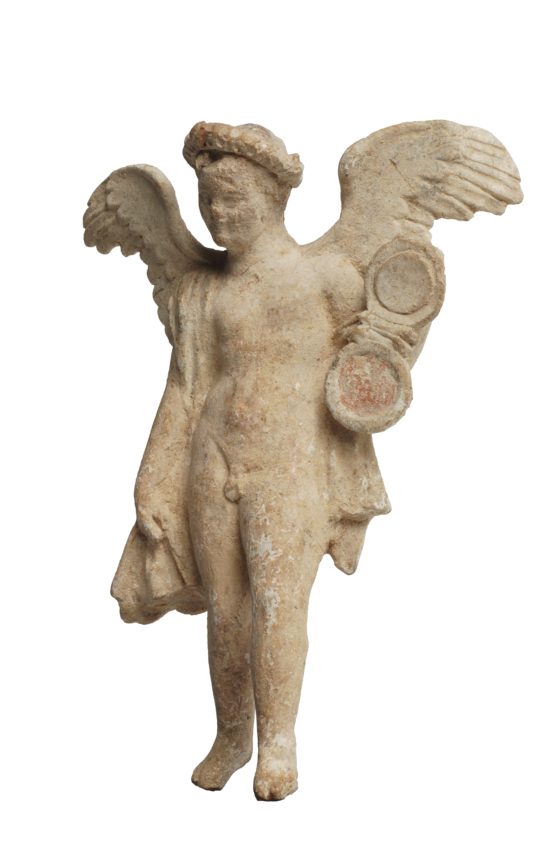
Terracotta statuette of Eros
Collection Roger Peyrefitte (1907-2000), Paris, prior 1977
Private collection, Switzerland, acquired from the above
Roger Peyrefitte (1907-2000)
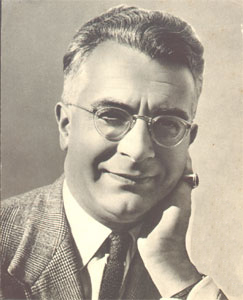 Roger Peyrefitte was a French writer, author of numerous novels, an anthology of Greek texts and historical biographies.
Born in Castres in 1907, he was educated by the Lazarist brothers. A brilliant student in the humanities, he continued his studies at the Faculté des Lettres in Toulouse, before entering the École des Sciences politiques, from which he graduated in 1930.
Peyrefitte's taste was boastful, perverse and not without its share of vulgarity. He wrote of himself in Jérôme Garcin's dictionary: ‘By that time, he had realised that there were only two things that mattered: money and a name, if you weren't born with one’.
He became embassy secretary in Athens from 1933 to 1938. In February 1945, he retired from the diplomatic service and began a literary career the same year.
Thanks to his erudition, his vast classical culture, his concise style with its rich vocabulary, his biting irony and his abundant output, he became a leading French writer. His masterpiece remains the biography of Alexander III of Macedonia (La jeunesse d'Alexandre; Les Conquêtes d'Alexandre; Alexandre le Grand). This work relates the life of the greatest conqueror of Antiquity from a variety of angles, incorporating social, geographical and mythological knowledge. Peyrefitte was a passionate collector in many fields.
Ars Amatoria. The art of love in antiquity, 2019, 39-40 no. 41
J. Coleman Carter
The Sculpture of Taras, Philadelphia 1975
G. Volpe (ed.)
Introduzione all’artigianato della Puglia antica, dall’età coloniale all`età romana, Università di Bari, 1992
Olympic Museum in Lausanne, Switzerland from 1999-2010
This delightful statue shows the god, standing naked save for a flowing cloak behind, his wings outstretched. His well-modelled face gazes downwards, a substantial floral wreath on his head. In his left hand, held bent to his side, he cradles a pair of crotales (or a folding mirror "Klappspiegel"). His right hand is lowered to his side, clasping his cloak. There are remains of pigment visible. The rear with a rectangular firing hole.
Note
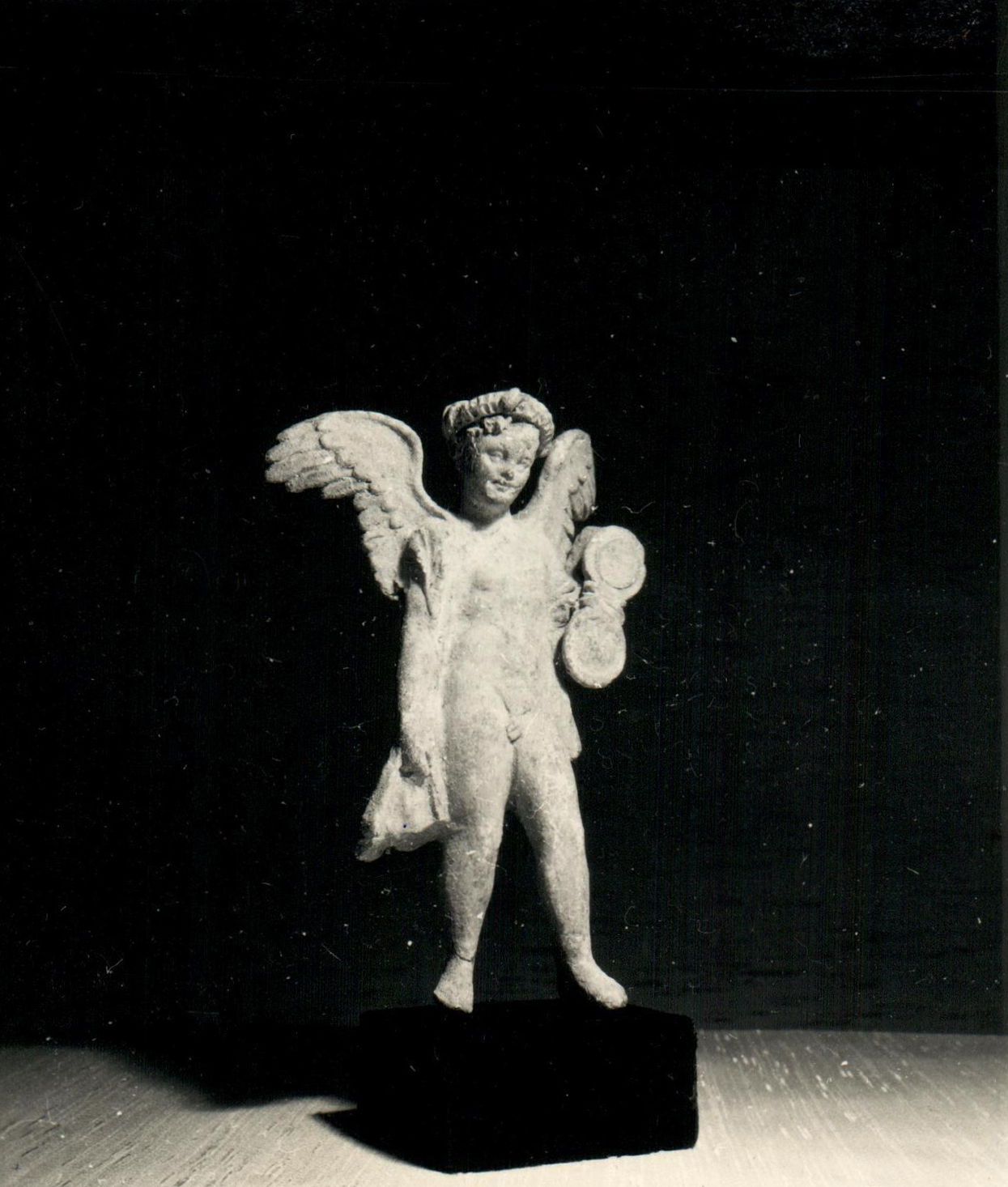 Representations of winged Eros such as this example originated in the Hellenistic period. The type was later adopted by Roman artists for depictions of Cupid and, much later, revived during the Renaissance in the form of putti. This statuette belongs to the well-known corpus of terracotta figurines discovered at Myrina, a coastal settlement in Aeolis north of Smyrna. Ongoing scholarly debate concerns whether these works were produced locally or imported from major regional centres.