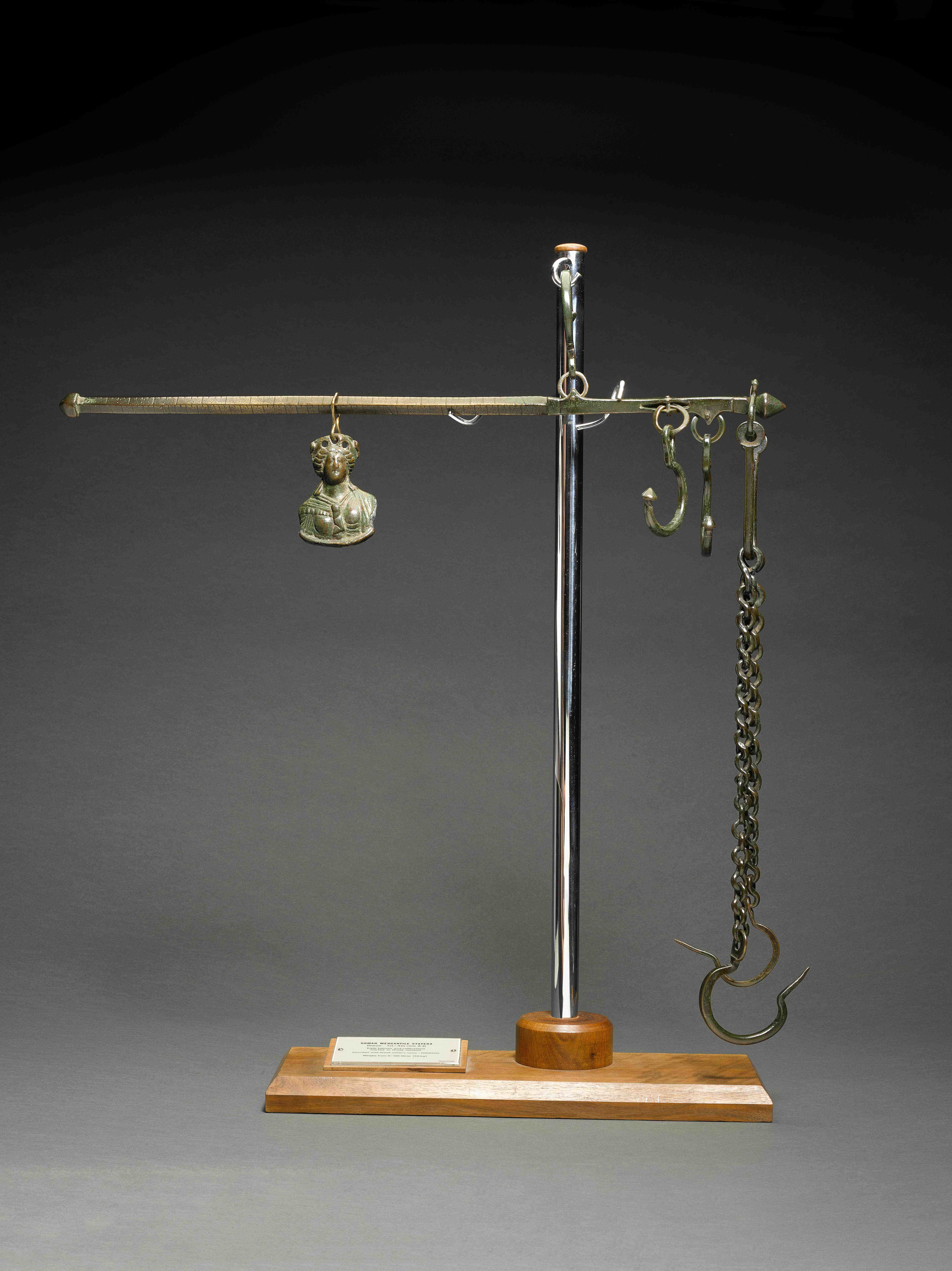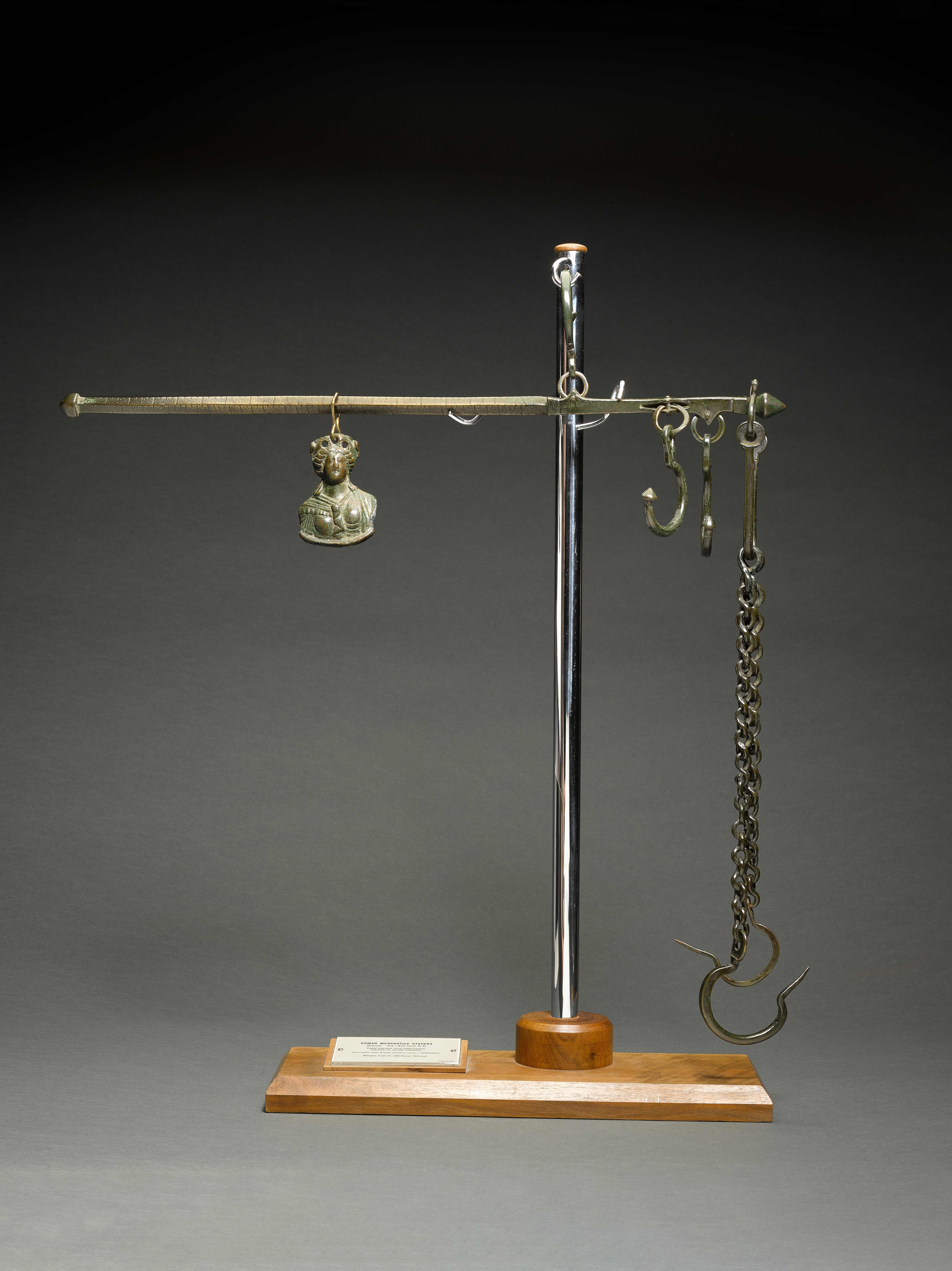
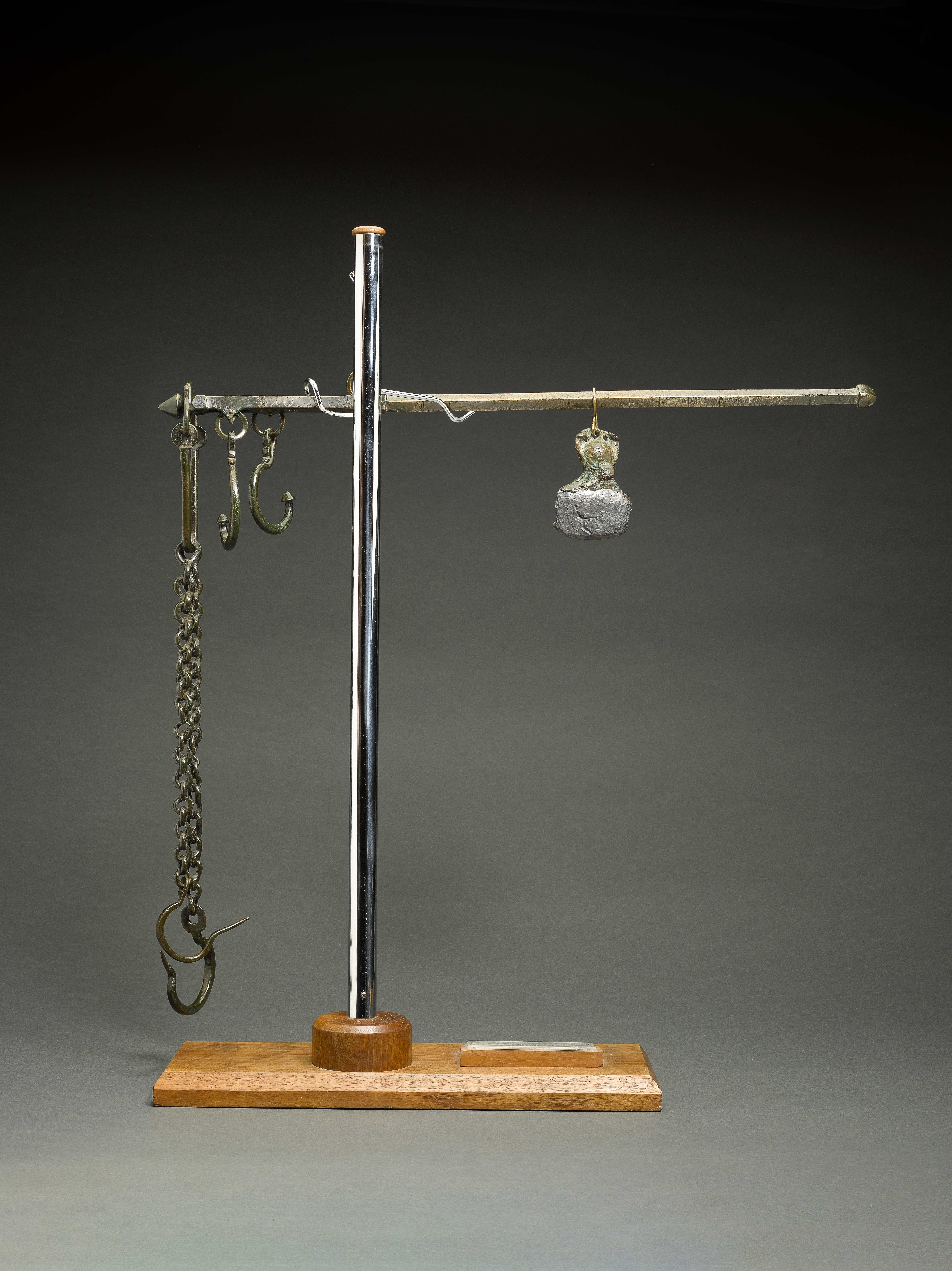
The steelyard consists of a rectangular, sectioned bar with conical terminals, engraved on three sides with a scale in Roman librae, though shown in Greek characters. Two suspension hooks are attached to a chain at the opposite end to the weight, with two additional hooks suspended on rings. The lead-filled weight is in the shape of a female bust, possibly Athena, suspended from a small ring. The bar is inscribed with the owner's name, ‘THURSOS'.
65 cm (25 1/2 in.) long
Note
Steelyard balances were popular devices for weighing all kinds of commodities, and were used during the Roman and early Byzantine periods. Generally thought to have been invented by the Romans, the steelyard is an unequal arm balance with an adaptable fulcrum and movable counterweight. The collar, which held the hooks on the long chains, was fitted over the shorter end with the various suspension hooks, while the sliding counterweight moved along the other end of the long calibrated rod. See Vitruvius' description in his "De Architectura," Book X, 3-4.