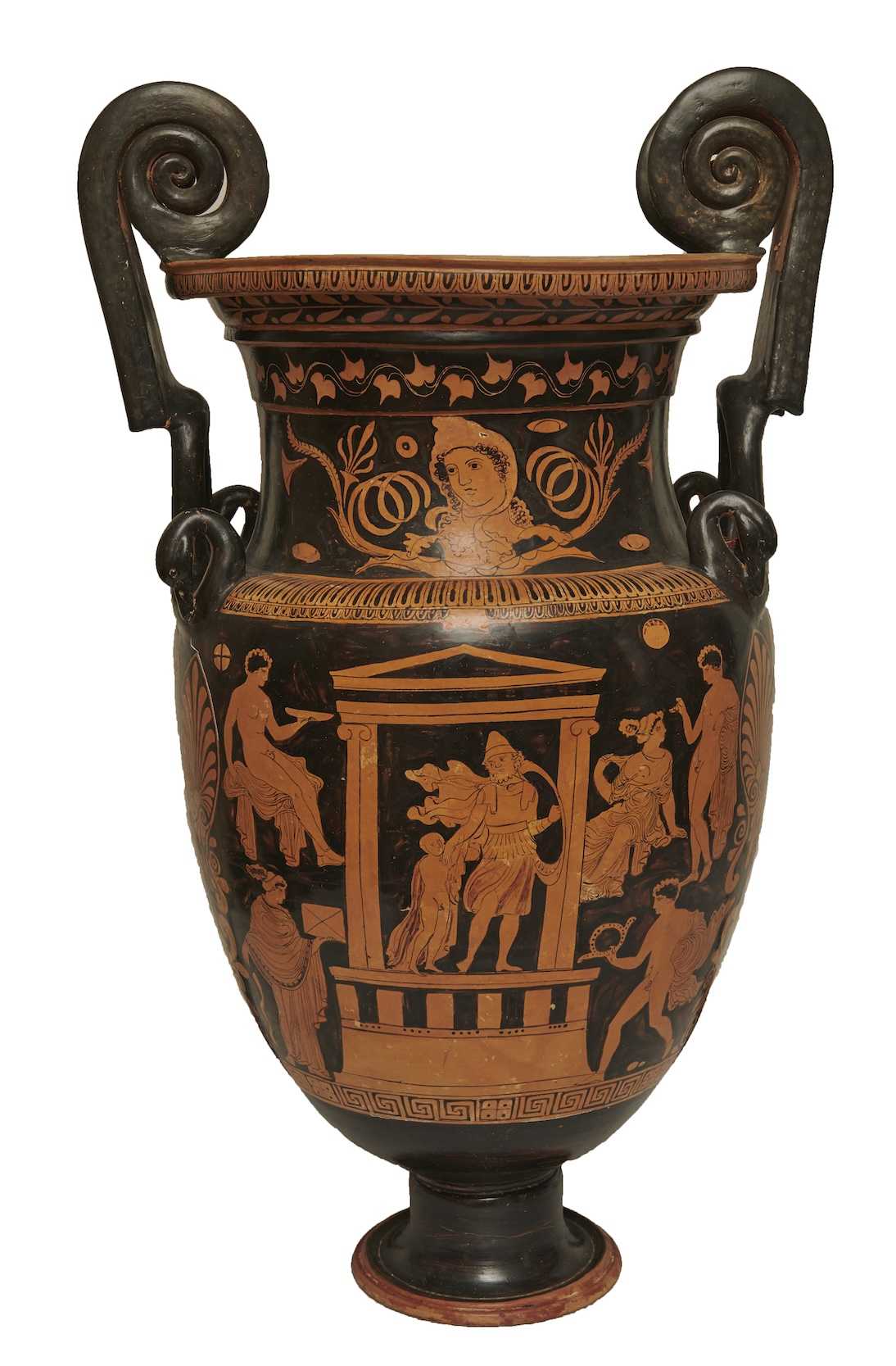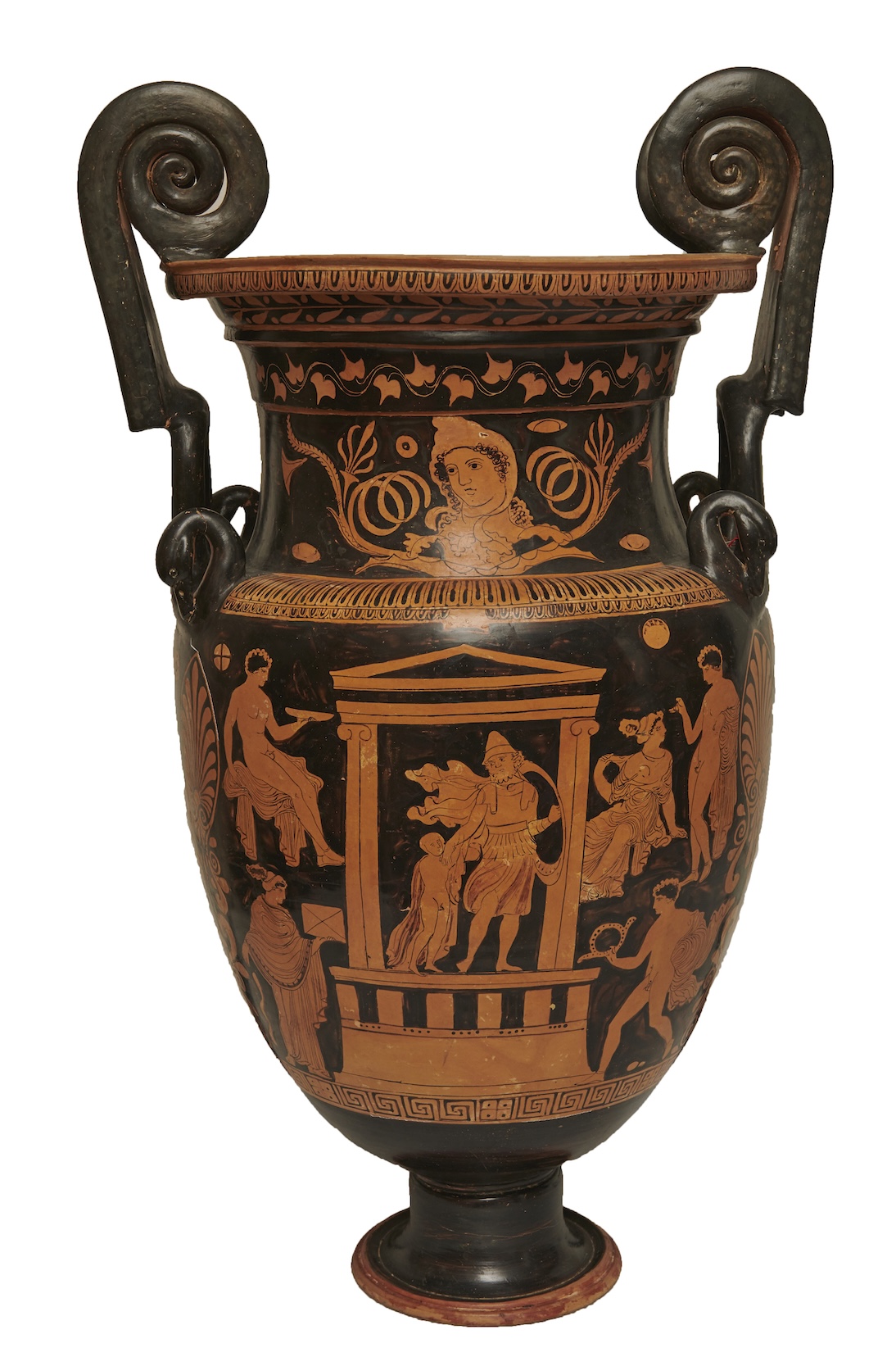
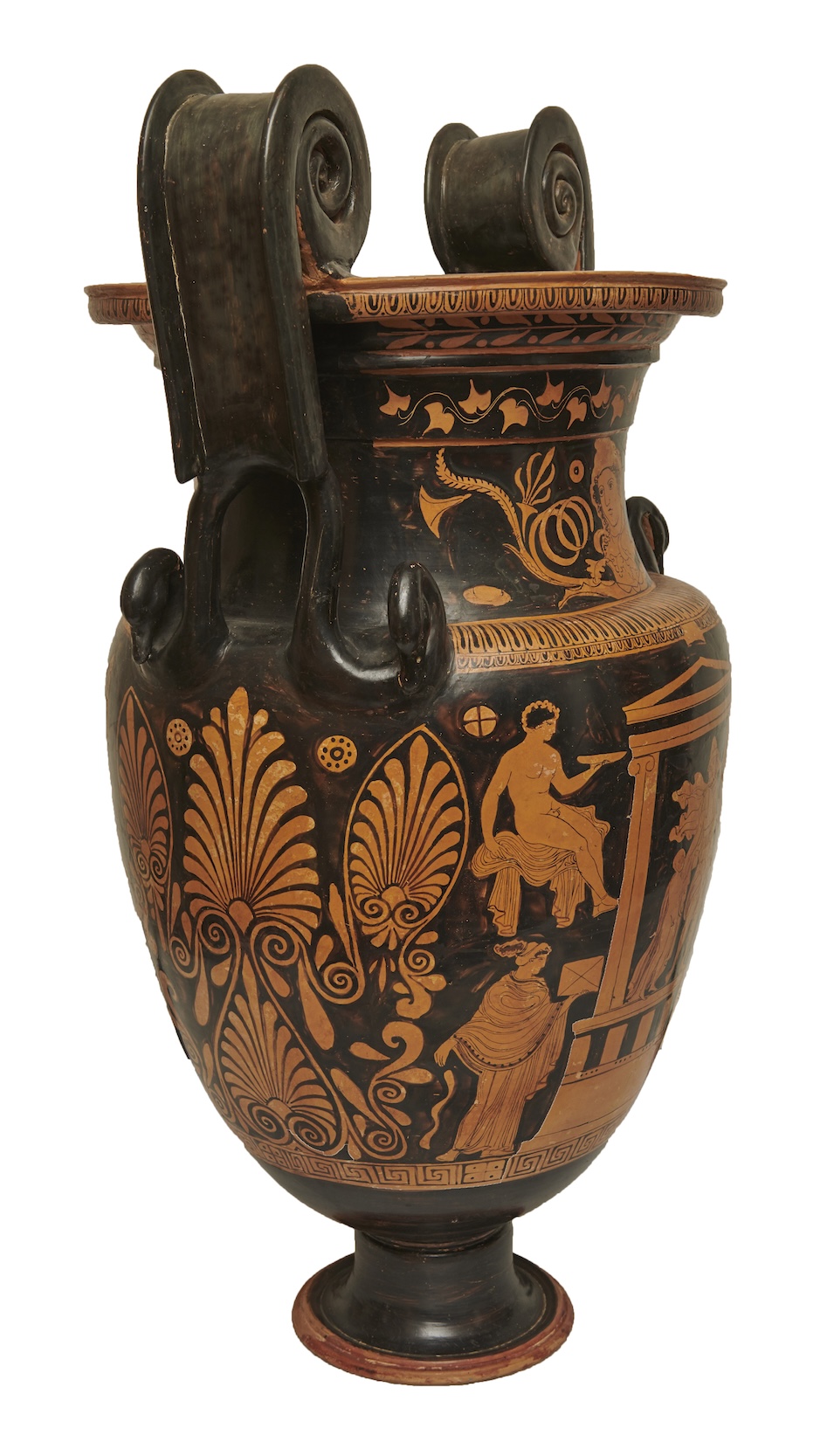
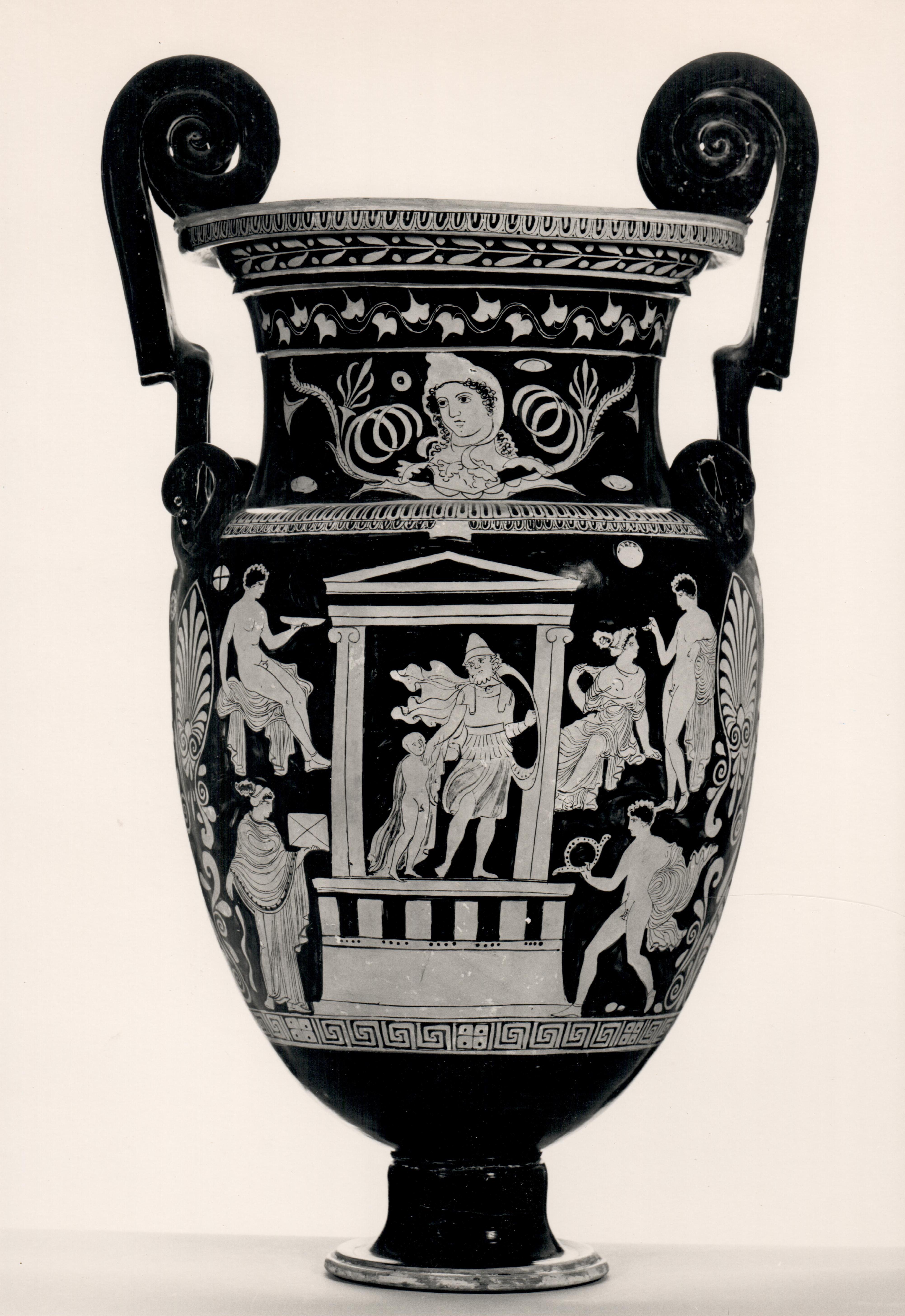
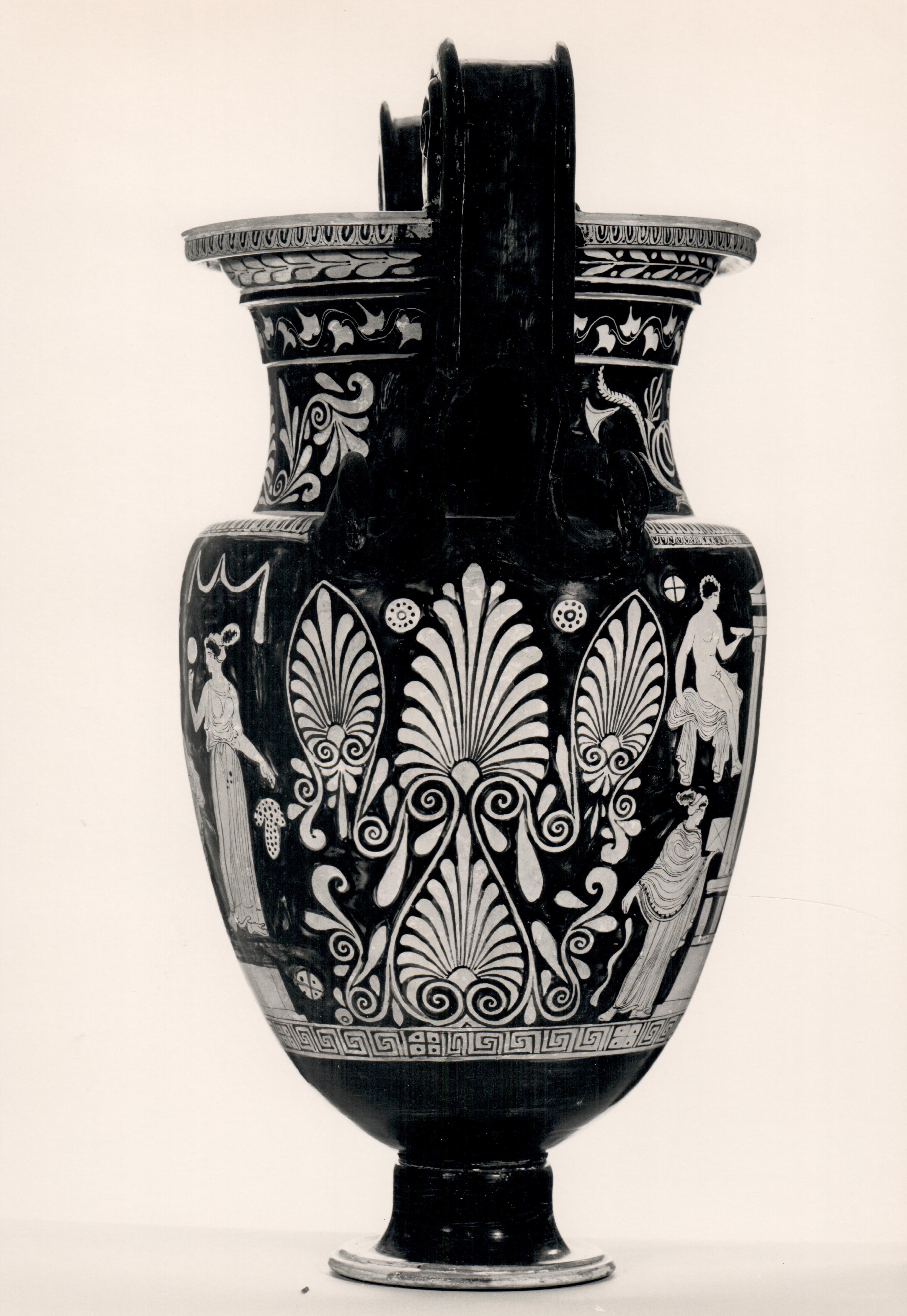
This impressive Apulian volute krater features on Side A a head wearing a Phrygian cap between two floral bands on the neck and ivy decoration above. The central body depicts a naïskos with two figures, an elderly, bearded man and a child, likely representing Aeneas? and Ascanius?, illustrating the myth of Aeneas fleeing Troy with his son. Additional figures include a naked man holding a phiale and a woman with a box on the left, and on the right, a seated woman in discussion with a standing man and a young man running below. These surrounding figures suggest a funerary reinterpretation of the mythological scene, indicating the deceased’s identification with epic heroes.
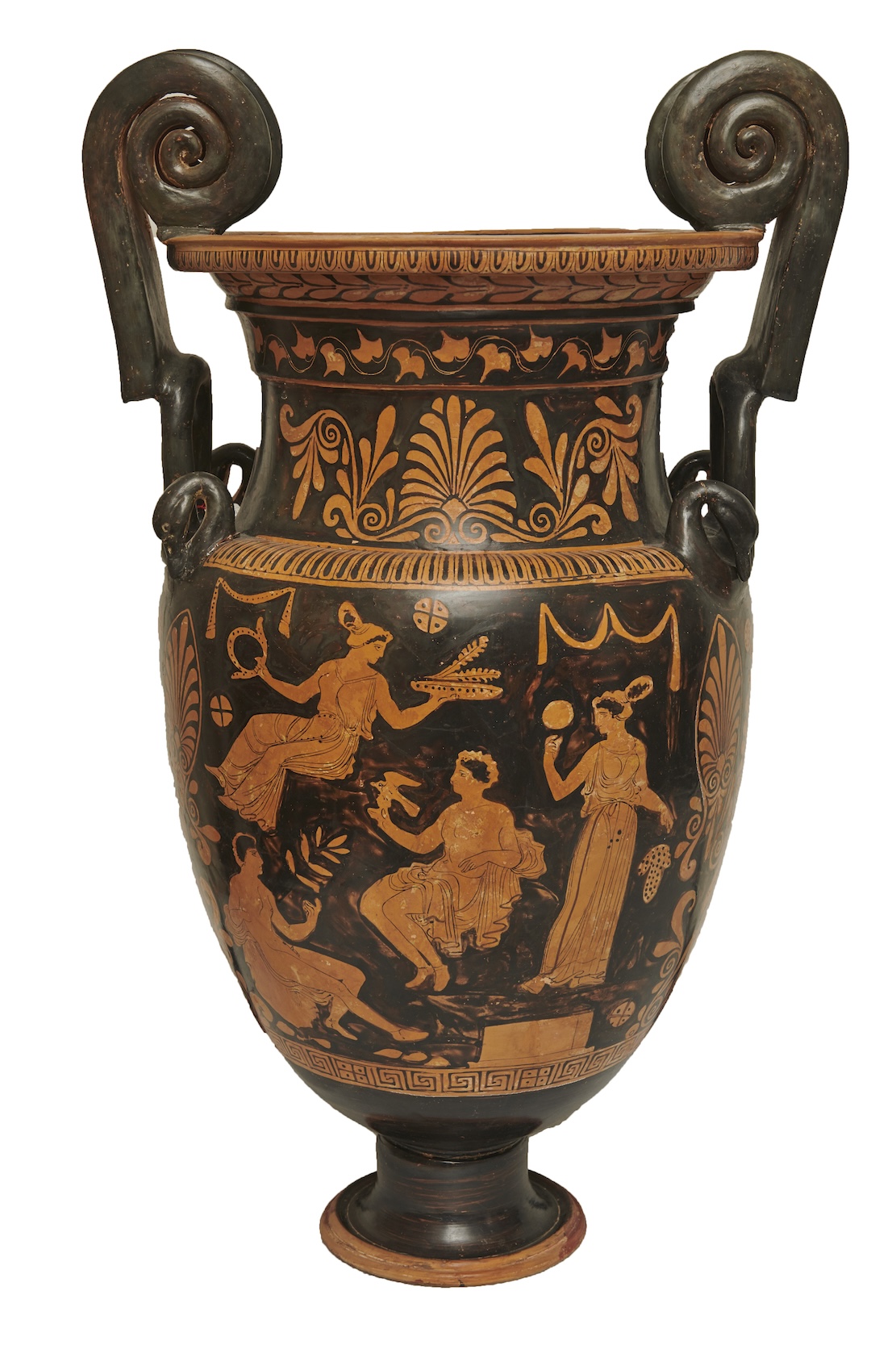
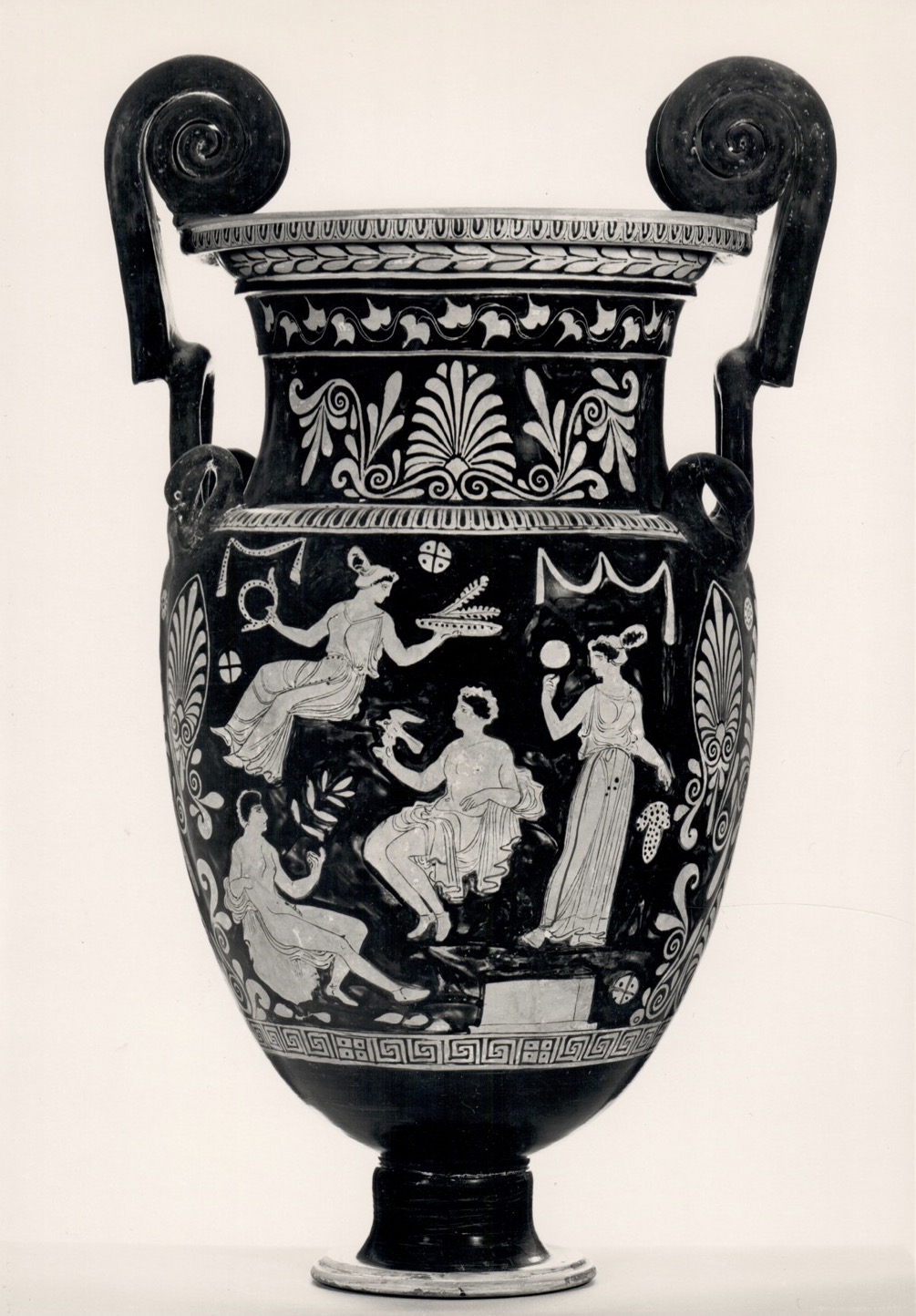
Side B presents two floral bands on the neck with ivy decoration below the lip and a palmette between tendrils. The main body shows four figures: a seated woman with a phiale or basket and crown, another standing woman holding a mirror, and two seated naked men, one holding a bird.
This amphora captures both the iconography and probable symbolic meaning of the scenes, emphasizing the funerary reinterpretation of mythological subjects in this ancient work. The detailed depiction and stylistic elements suggest a sophisticated narrative composition with both mythological and ritual significance.
Note
Large Apulian Volute Kraters are monumental mixing bowls characterized by their distinctive spiral (volute) handles.  Produced mainly in South Italian Greek colonies from the mid-5th to late 4th century BCE, they were used to mix wine and water at symposia but served predominantly as elaborate tomb markers and funerary offerings. The iconography often features mythological and funerary scenes, such as episodes from epic narratives or depictions of the deceased identifying with heroic figures, underscoring themes of death, afterlife, and memory.
These kraters symbolize elite status and the connection between death, memory, and myth through their grand size and detailed iconography. They were mainly made for the local Italic market, reflecting regional tastes and practices in funerary art.