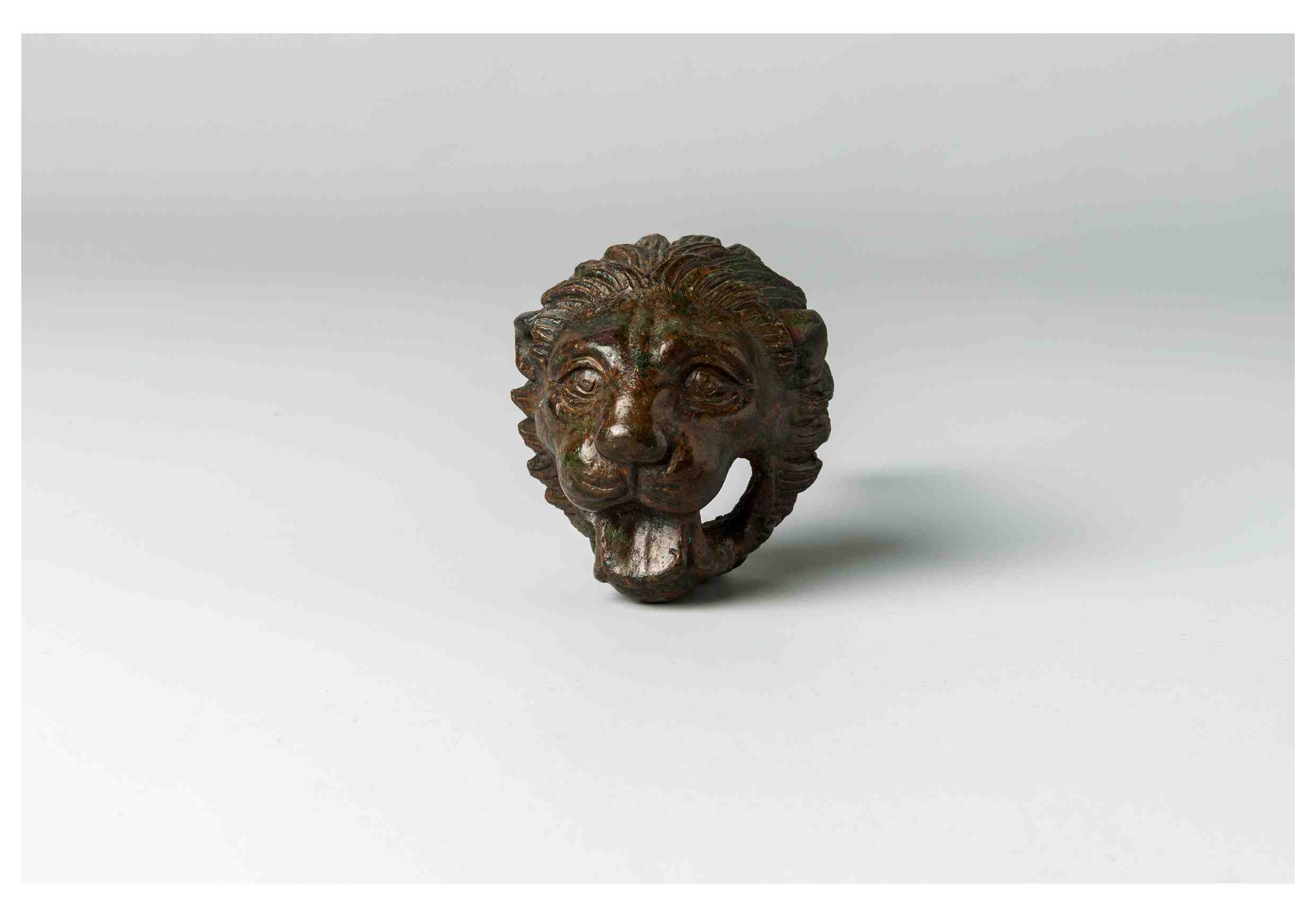
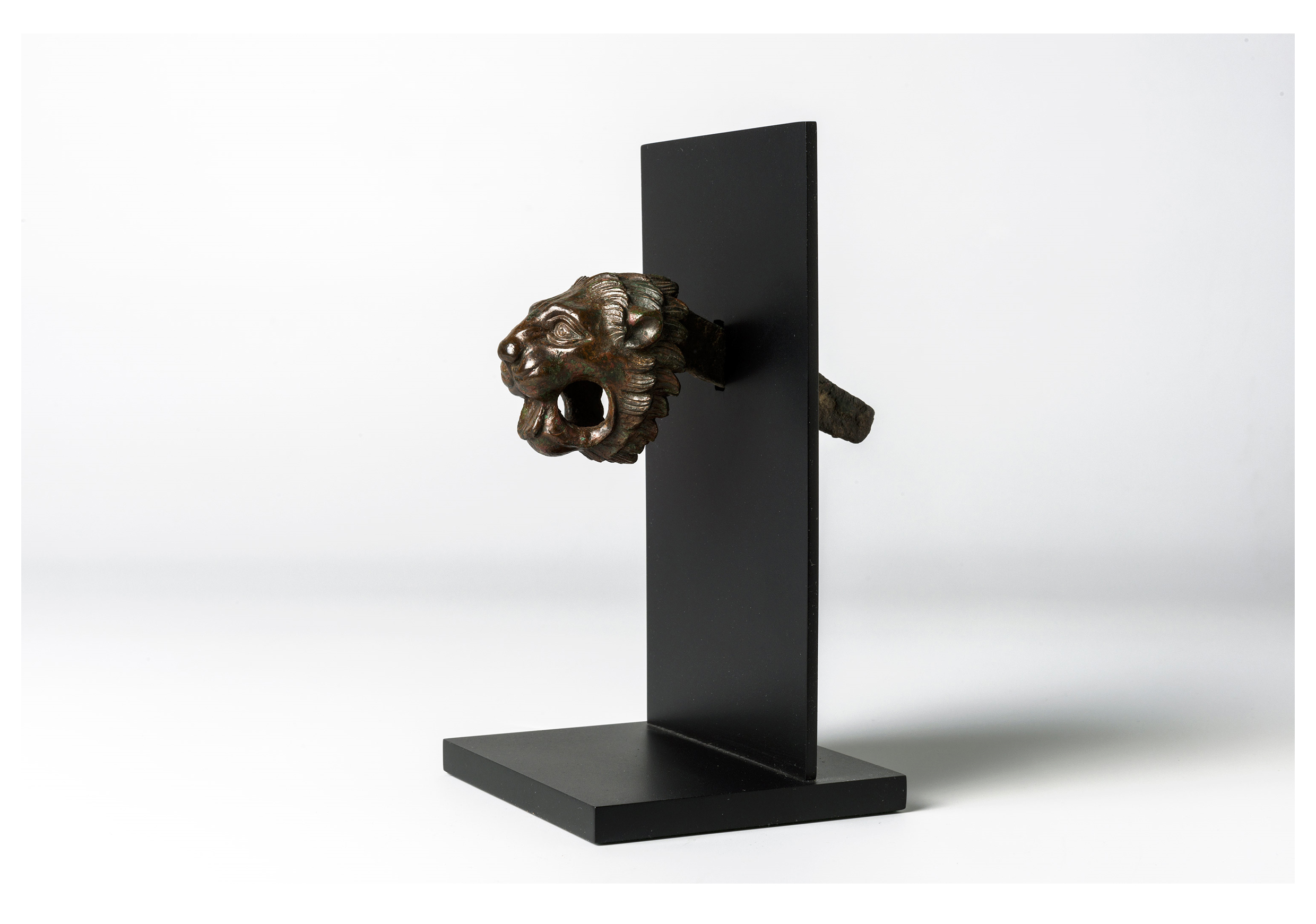
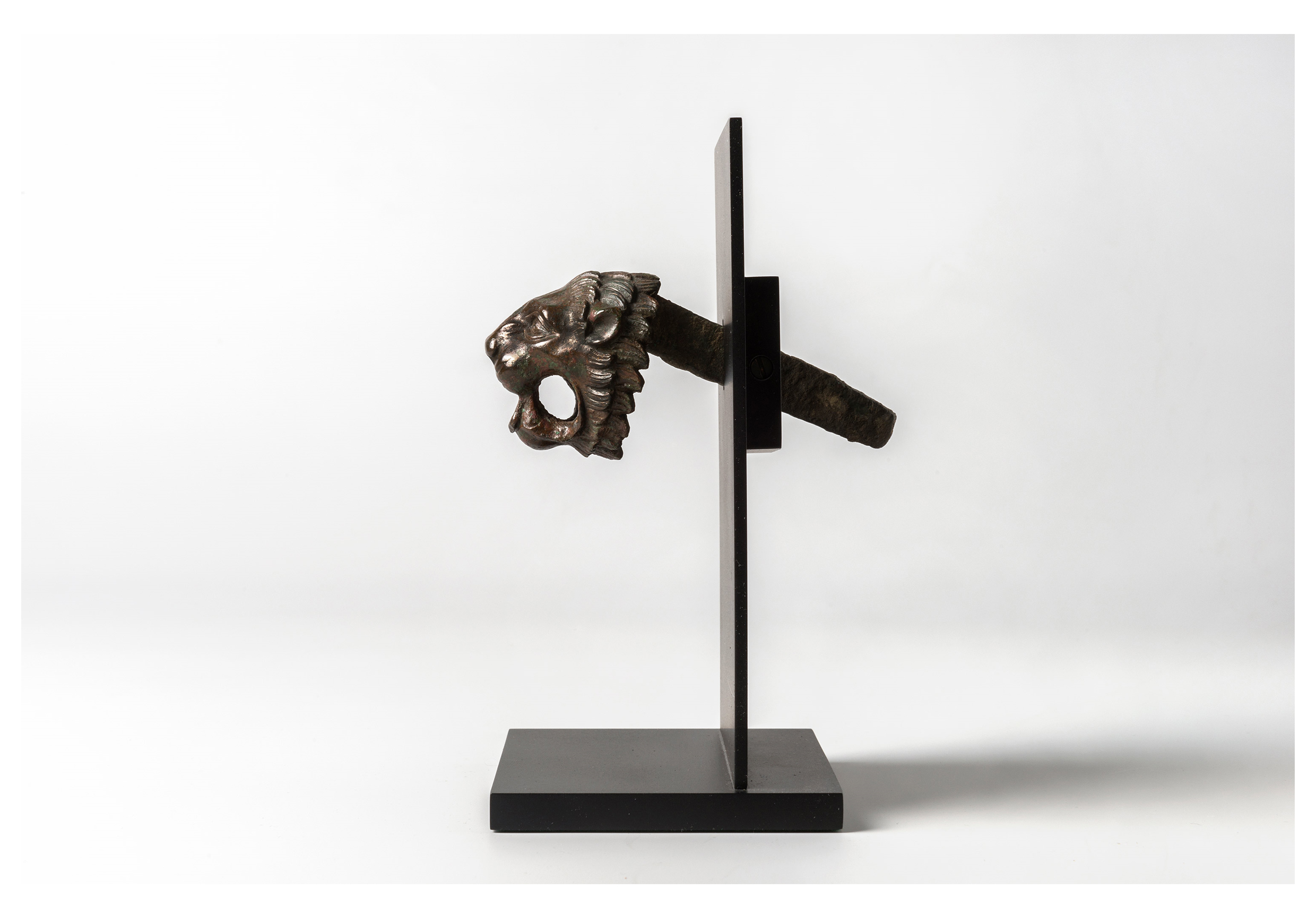
Lion head attachment
Collection W. Rosenbaum († 1984), acquired from him in 1979, Basel
Edith Bader Koller, Lugano, acquired from the above
Private collection, Switzerland, from the above
Neue Zürcher Zeitung, Donnerstag, 6. November 1997 · Nr. 258 / B3, 75
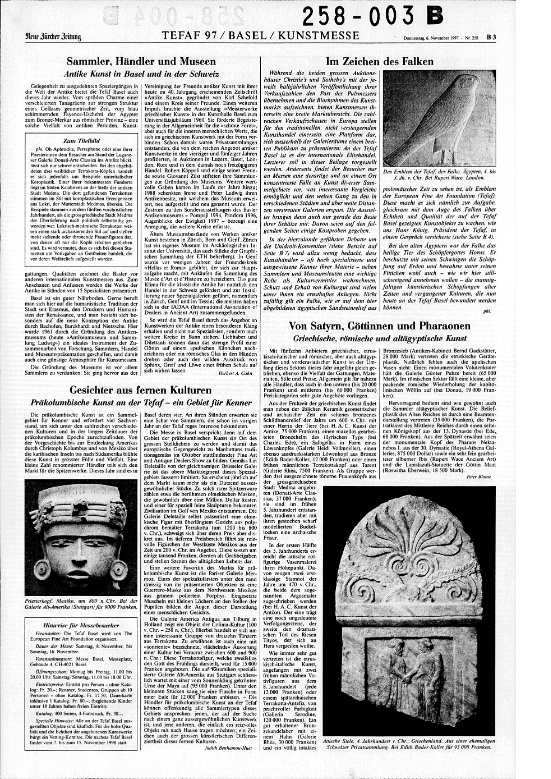
TEFAF Basel, Messe Basel, Messeplatz, 4021 Basel, 8-16 November 1997
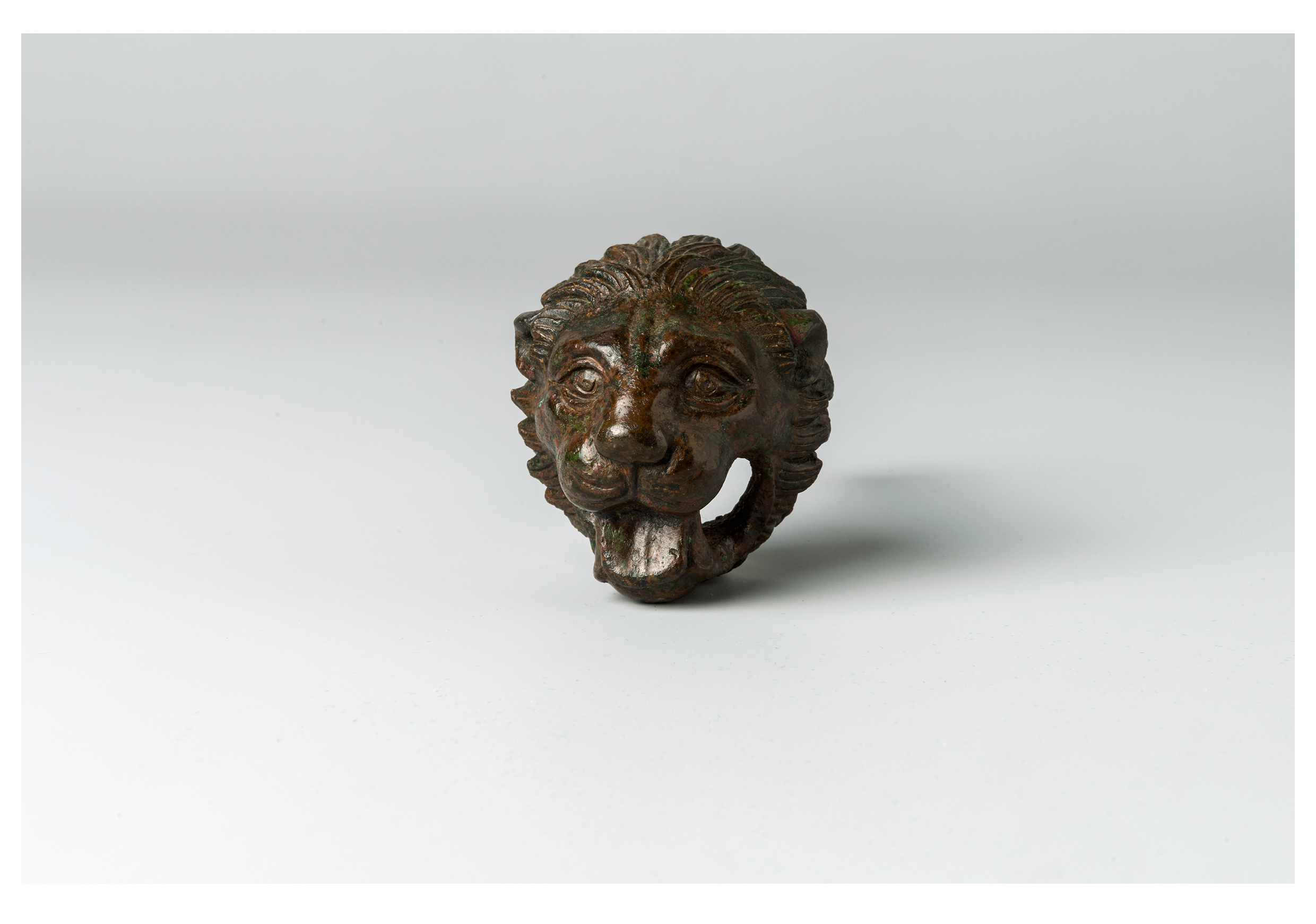
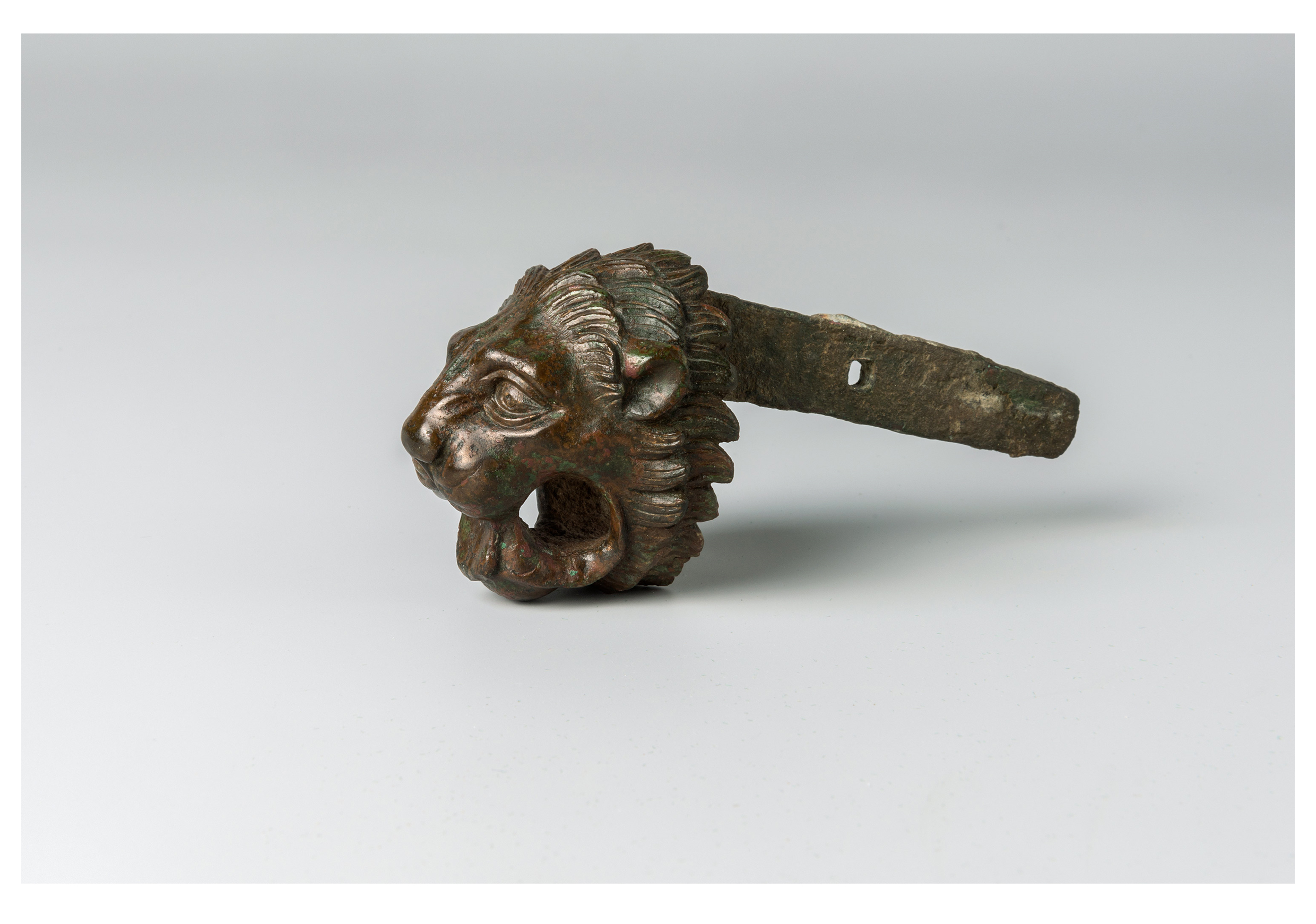
This bronze decorative fitting takes the form of a lion’s head, characterized by a pronounced, stylized mane and an alert expression. The modeling effectively conveys the animal’s dynamic character. The face is oval in shape, framed by a full, radiating mane composed of deeply incised, flame-like locks that extend evenly around the head.
The facial features are boldly defined: the broad, slightly furrowed forehead lends the lion a lifelike expression, while the large, almond-shaped eyes, with pronounced upper lids and carefully contoured pupils, create an alert and animated appearance. The nose and muzzle project forward, with clearly delineated nostrils and an upper lip forming a subtle ridge above the open mouth. The mouth itself is shaped into a rounded “O,” forming a hollow, ring-like aperture beneath the chin, with a protruding tongue accentuating the lively expression.
From the back of the head extends a rectangular, tapering tang, roughly cast and pierced with a small hole. This feature indicates that the fitting once served as an ornamental finial, likely affixed to a piece of furniture or a chest using rivets or nails.
Note
Lion head fittings in bronze were popular accoutrements for luxury furnishings throughout the Roman world. Their imposing visages signified protection, strength, and status, and were a favored motif on household chests, ceremonial couches, caskets, and architectural moldings.