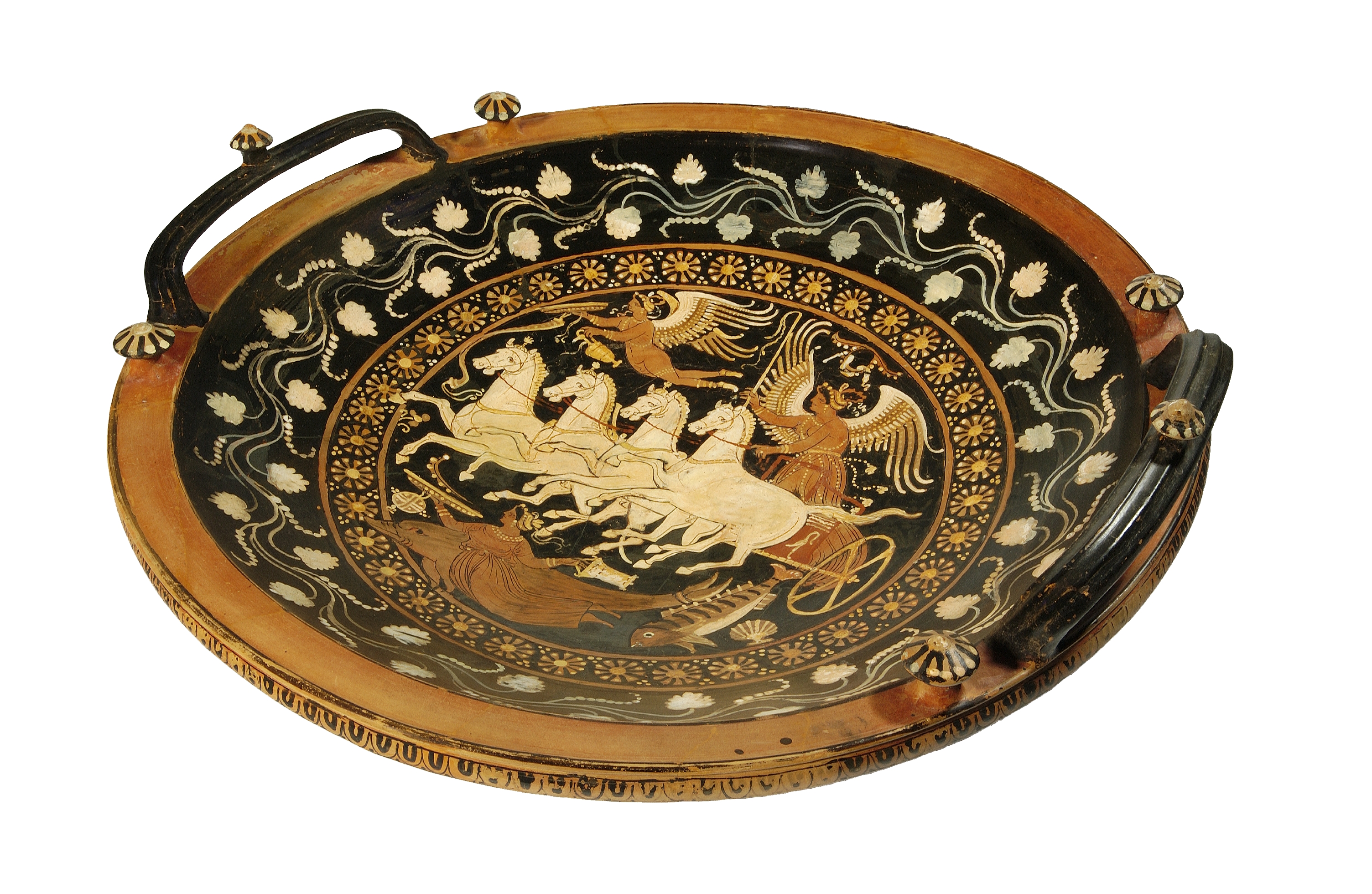
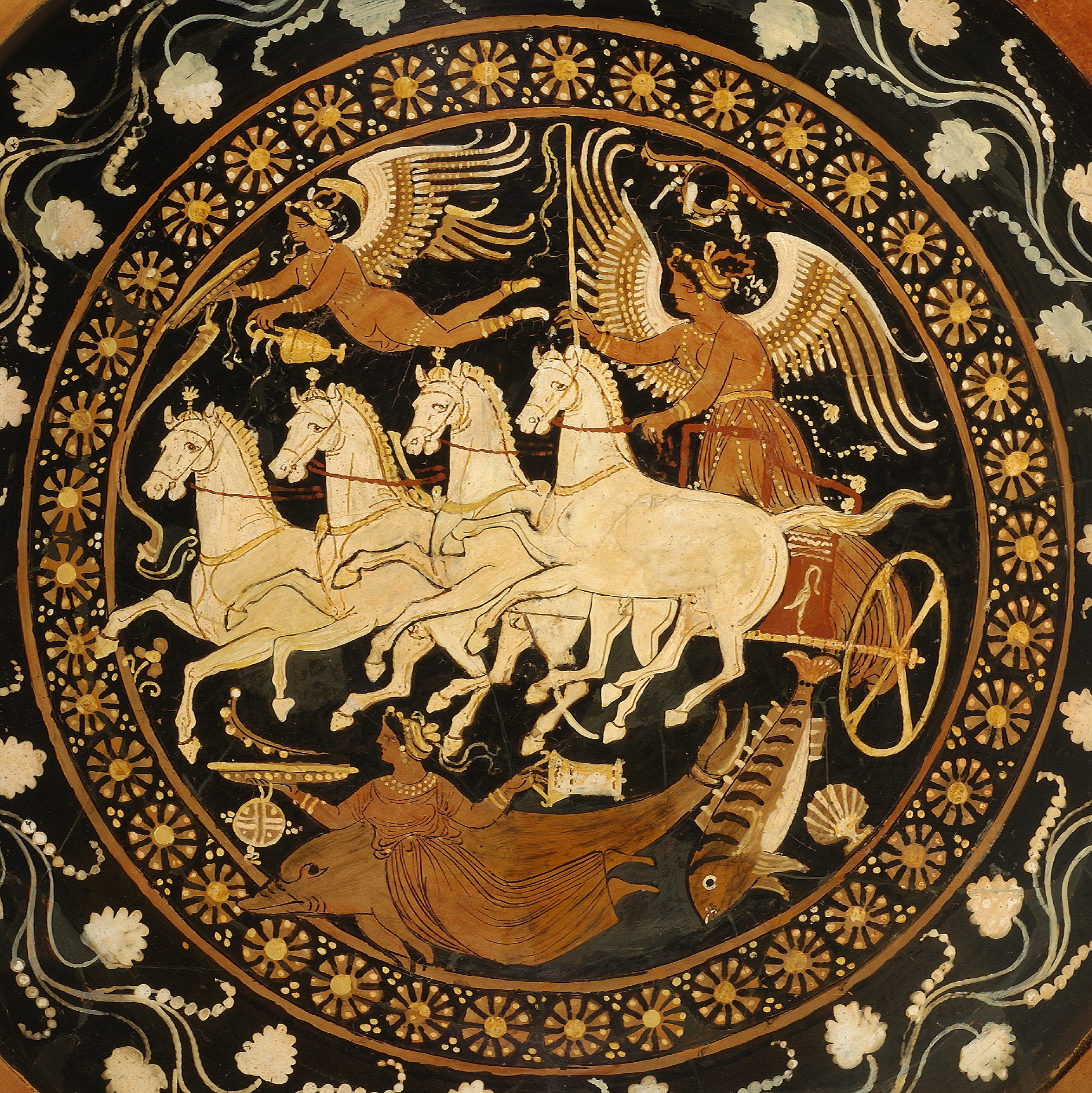
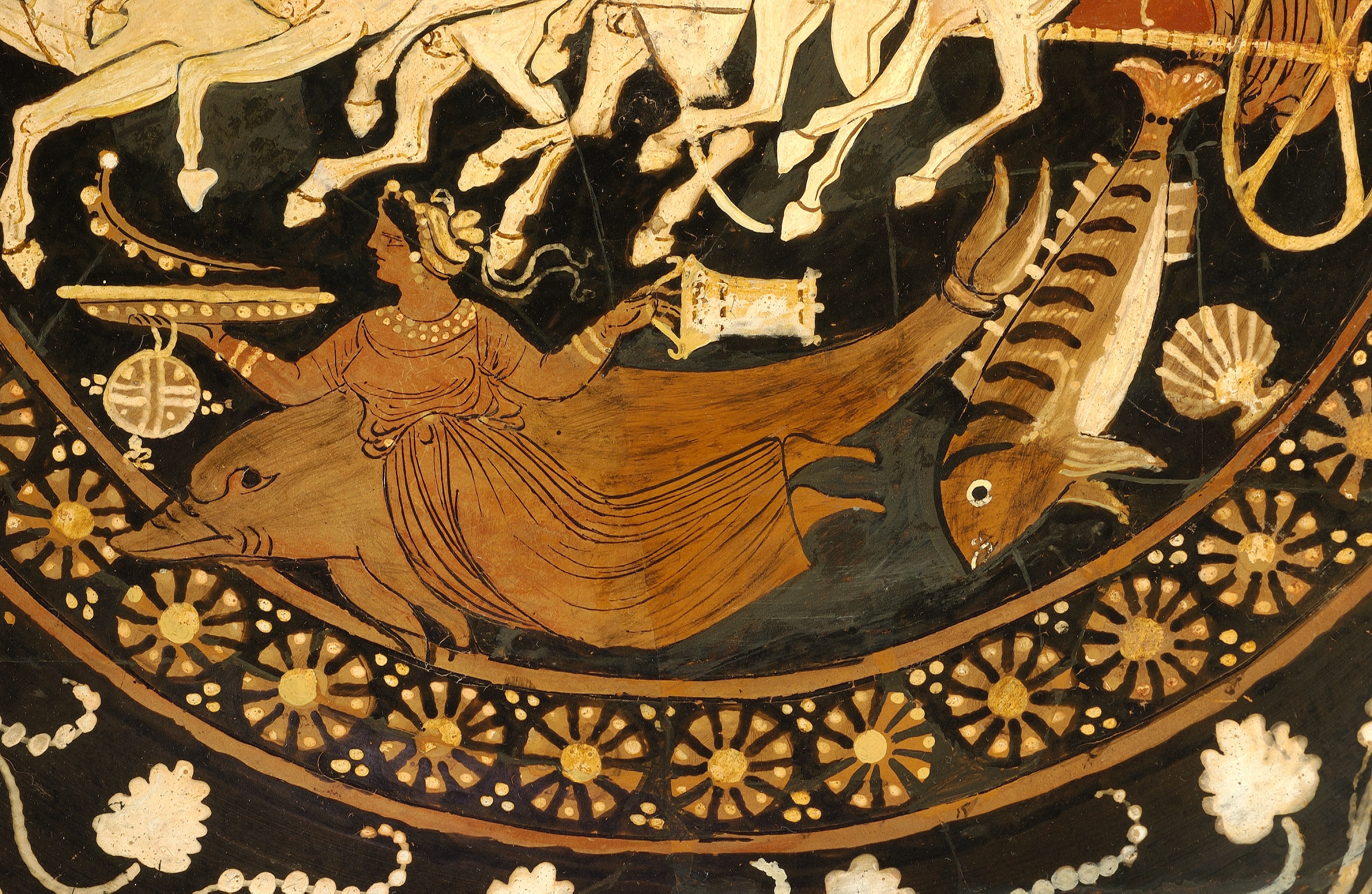
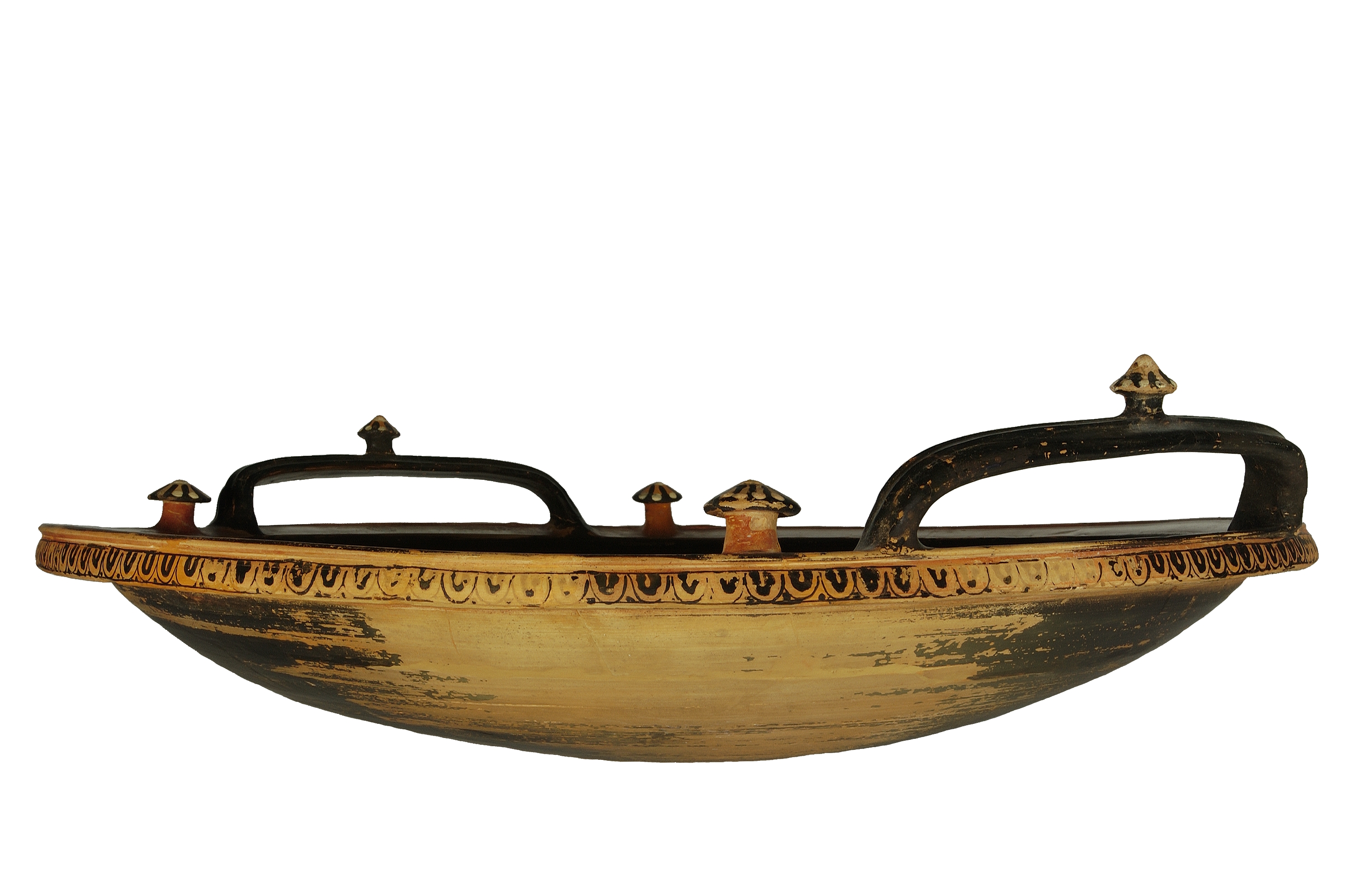
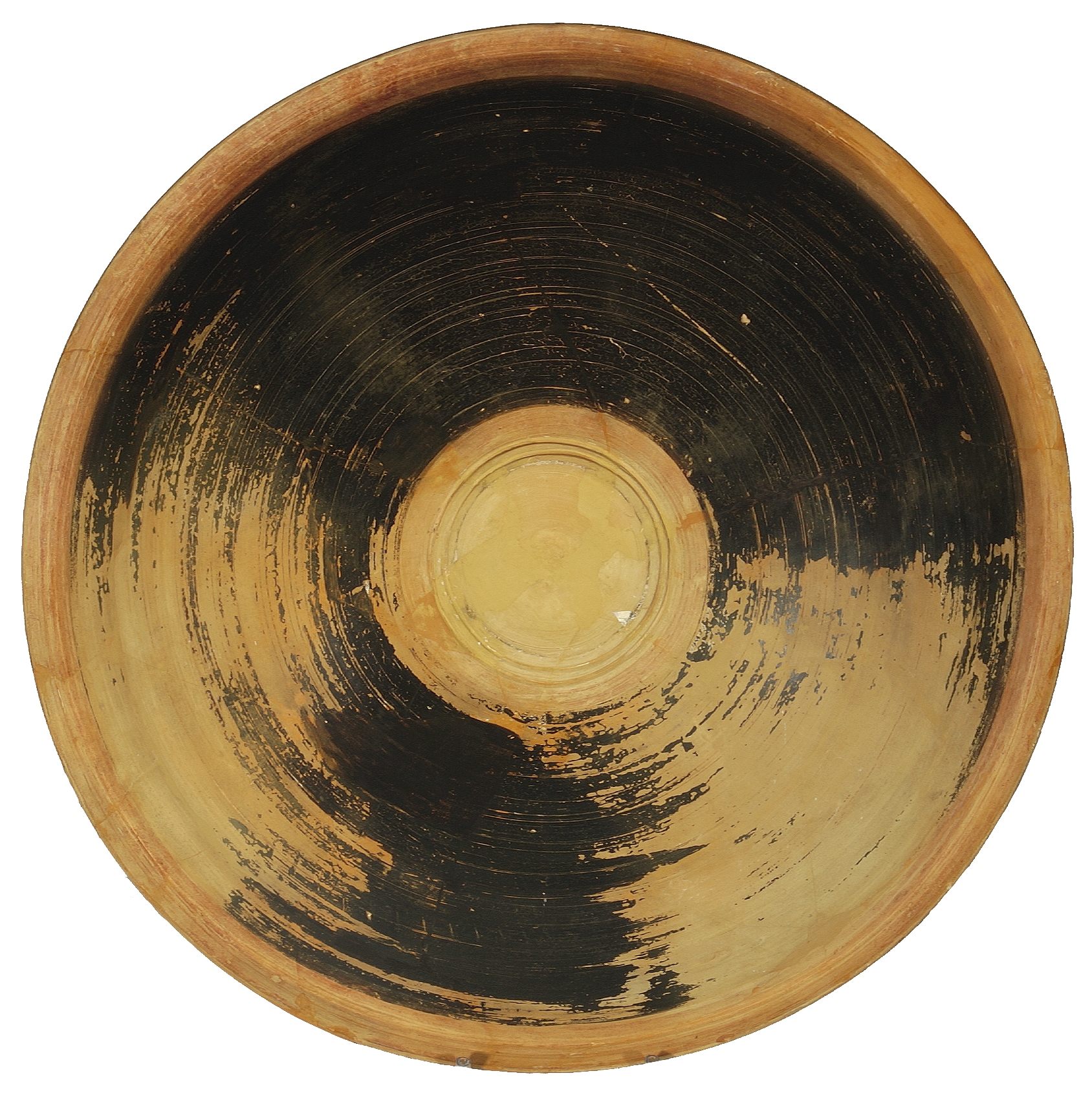
The scene depicts Victory or Nike driving a quadriga above the sea. The four horses, all identical, are galloping, one with a horizontally floating tail. Victory leans forward, her torso bare, brandishing a whip in her right hand. A garland of pearls crosses her chest, with additional strands hanging from her belt. The chariot box, highlighted in violet, is decorated with a wader. Above the horses, Eros flies, holding a phiale and a strip of cloth in one hand and an oinochoe in the other. Beneath the quadriga, a Nereid navigates atop a dolphin whose snout extends significantly onto the tondo’s border. Following the dolphin swims a marbled fish (Lithognathus mormyrus), while a lapwing (Chlamys opercularis) further evokes the marine setting. Above Nike, a crown of foliage intertwined with a ribbon hovers, and in front of the foremost horse a flower appears to grow along the edge of the image.
The Baltimore painter
Active in the late 4th century BCE, the Baltimore Painter was the leading figure of late Apulian red-figure vase painting. Named after a volute krater in Baltimore, his early work shows strong influence from the Patera Painter, while his compositions and choice of themes also recall the Underworld Painter.
He primarily painted large vessels—kraters, amphorae, and hydriai—decorated with sepulchral scenes, mythological and Dionysiac subjects, weddings, erotes, and scenes from daily life. Figures often wear yellow-orange garments, and intricate ornamentation and added colors enhance the compositions. His scenes frequently extend beyond the circular tondo, creating dynamic and narrative effects.
Likely active in Canosa, he influenced a generation of successors, including the White-Sakkos Painter and other associated groups, and represents the pinnacle of late Apulian vase painting.