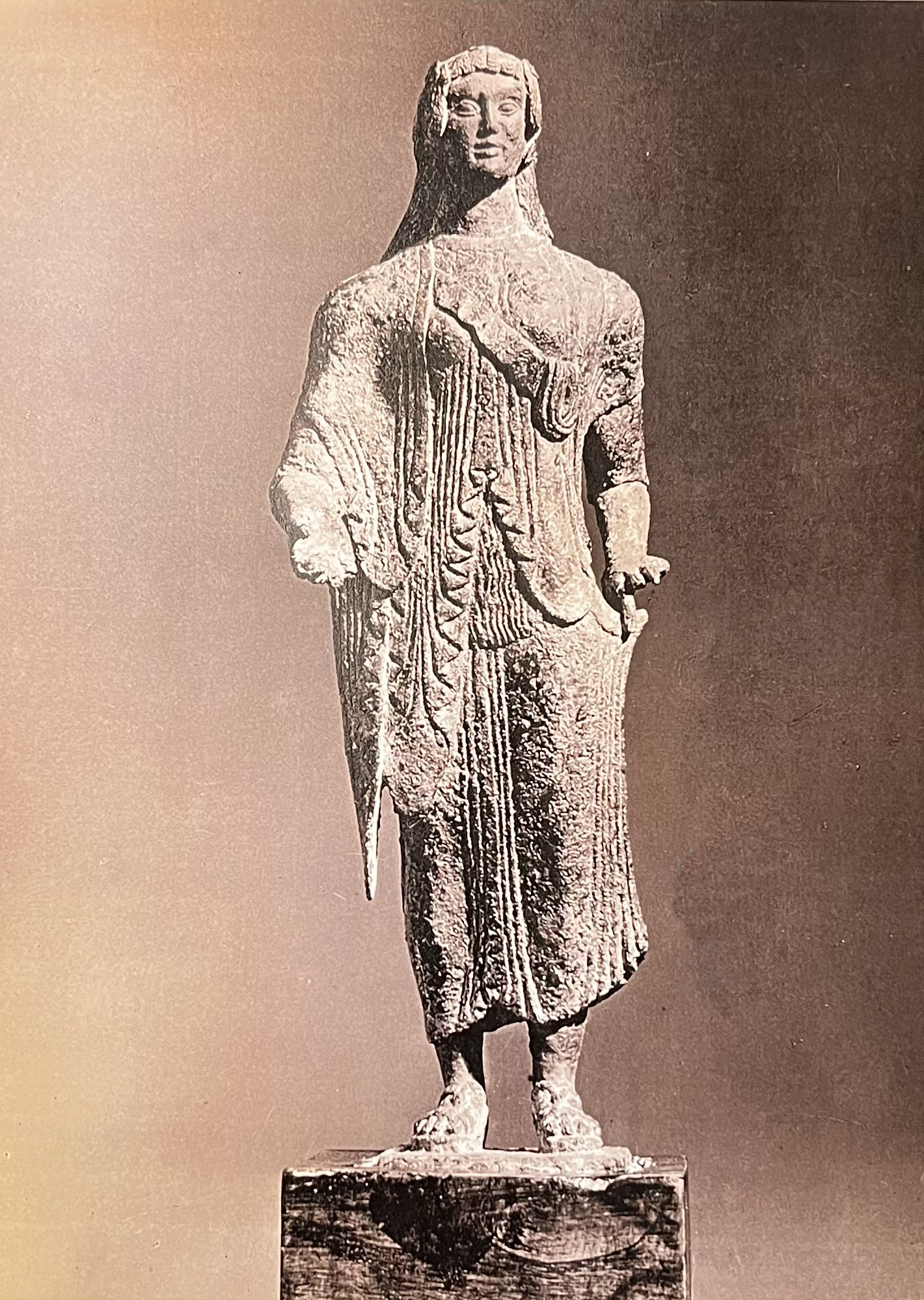
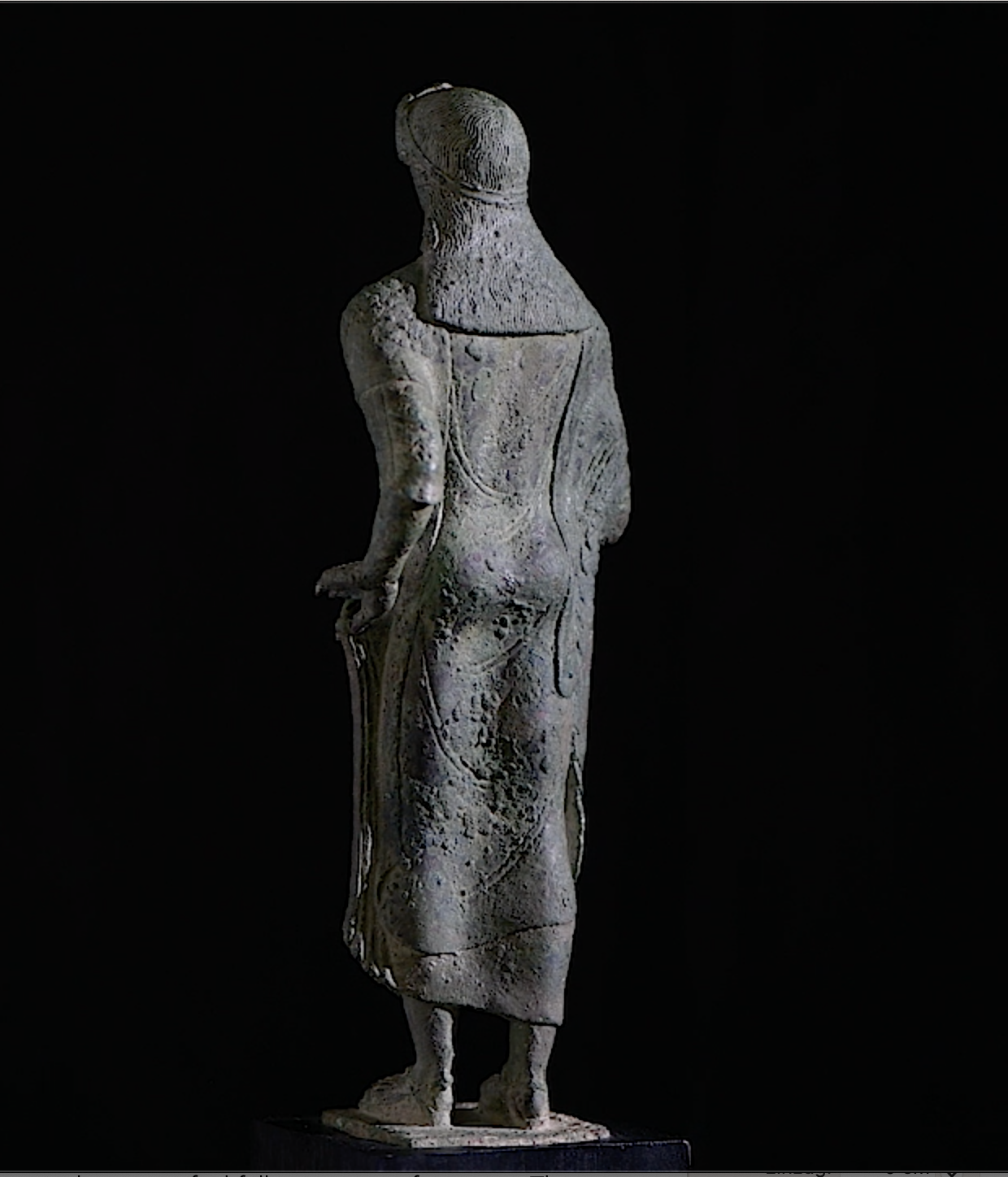
Large bronze votive figure of a Kore
Over 2,500 years old, this bronze Kore has survived the centuries in remarkably pristine condition. Preserved for more than seventy years in a prestigious Swiss private collection, it is now shown to the public for the first time.
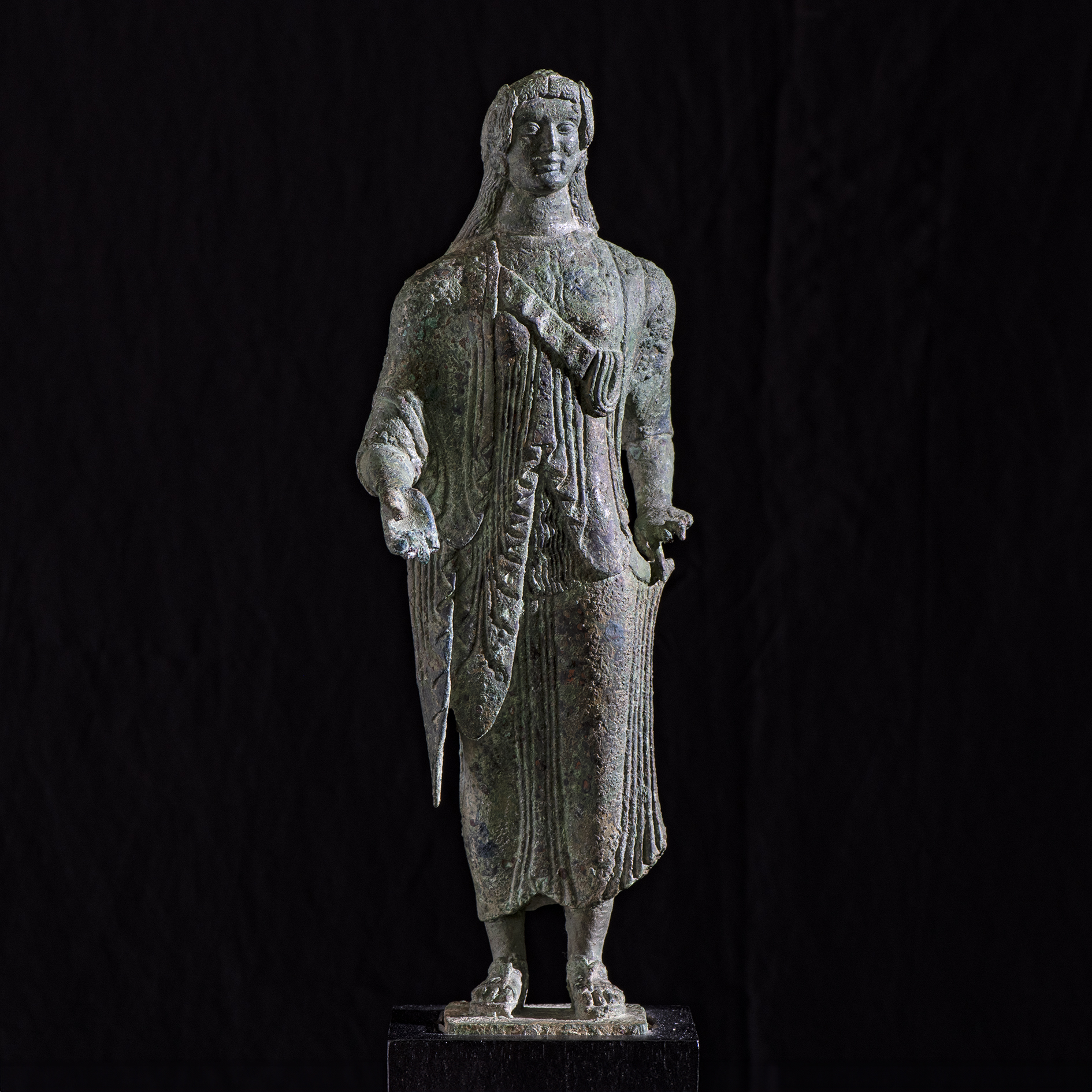
Following the tradition of Kore statues dedicated in Greek sanctuaries, with parallels on the Athenian Akropolis, it is closely related to figures from the Temple of Aphaea on Aegina and belongs to the Late Archaic period.
Likely produced in Etruscan territory, it is a rare bronze example of Greek ideals realised through Etruscan craftsmanship.
Dr. Jacob Hirsch (1874-1955), Geneva, 1940s (by repute)
Swiss collection from the above, prior to 1955
Ars Antiqua, Lucerne, from the above, thence by continuous descent
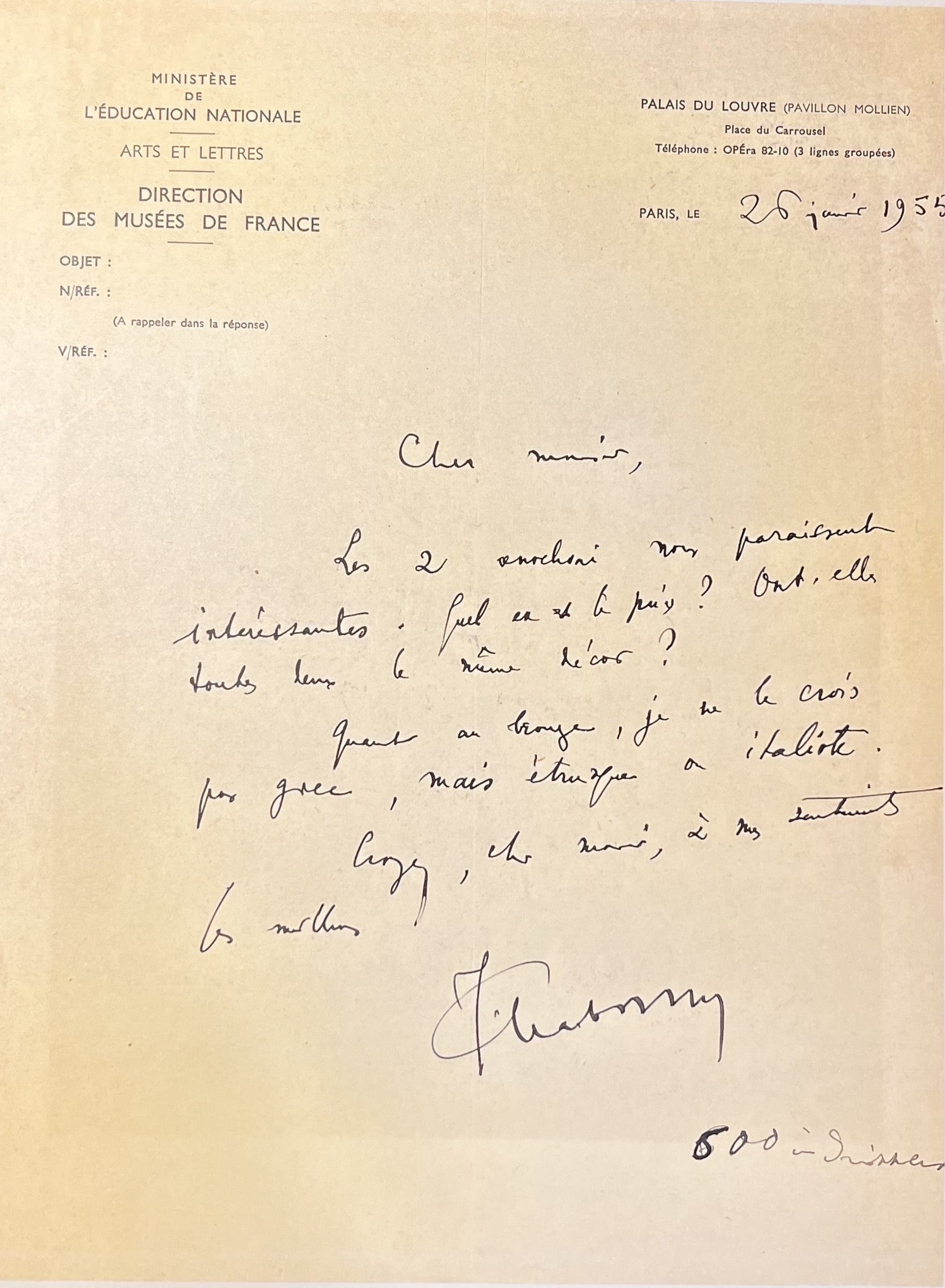
Letter from Prof. Jean Marie Augustin Charbonneaux (1895-1969), chief curator, Inspector General of the Museums of France, dated 26 June 1955
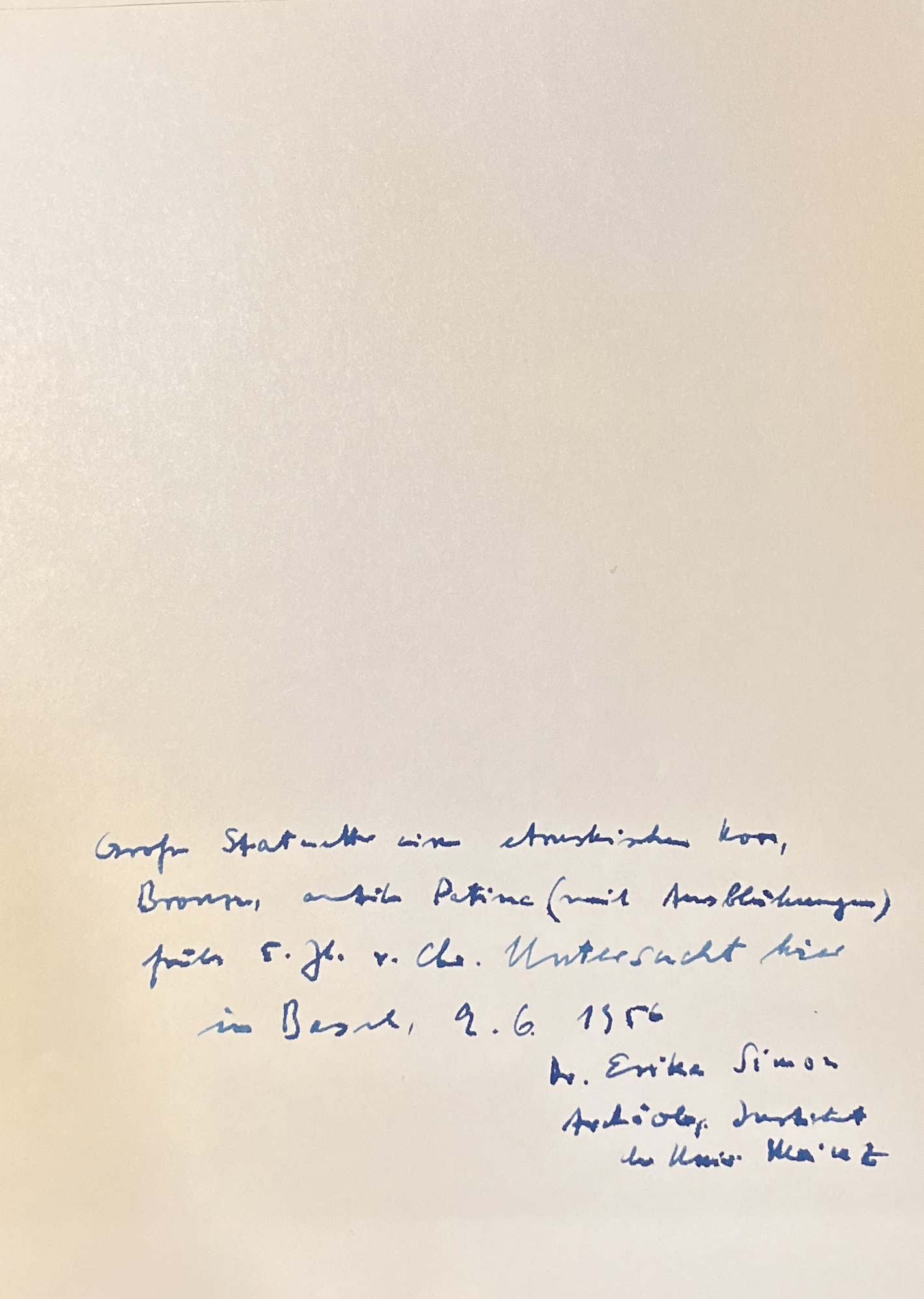
Dated photographs mentioning: Grosse Statuette einer etruskischen Kore, Bronze, antike Patina (mit Ausblutungen) frühes 5. Jh. v. Chr. Untersucht hier in Basel, 9.6.1956 - Dr Erika Simon, Archäolog. Institut der Univ. Mainz
Mounted on a stand crafted by Kichizô Inagaki (1876-1951)
Kichizô Inagaki (1876 - 1951)
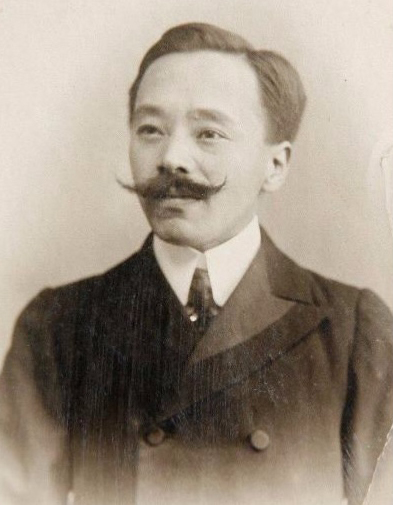 The superb bronze votive figure of a Kore presented here is mounted on a pedestal crafted by the Japanese cabinetmaker Kichizô Inagaki. He gained renown in Paris during the early 20th century for his innovative wooden pedestals and sophisticated stands for Ancient as well as for African and Oceanian art. Far from being an inconsequential detail, this stand allows us to place this artwork within the context of the early 20th-century art market. Born on April 11, 1876, in Murakami, Japan, Inagaki’s artistic talents emerged early, leading him to win second place in a sculpture contest in 1894 and third prize at the National Contest for lacquer masters in 1899. After completing his studies at the Tokyo School of Fine Arts in 1904, Inagaki briefly worked in Tokyo before moving to Hong Kong. In 1906, he settled in Paris, following the path of many Japanese artists seeking to explore Western aesthetics. In Paris, Inagaki initially struggled, selling varnished wood animal sculptures to make ends meet while learning French. However, his exceptional talent soon caught the attention of antique dealers such as Joseph Brummer and others who commissioned him to create pedestals for archaeological and primitive artworks. Inagaki’s unique approach aimed to create stands that harmoniously merged with the sculptures rather than competing with them.
Inagaki’s work is characterized by his masterful woodworking skills and distinctive finishes. His works, recognizable thanks to his very particular wood finishes, revealing a slight colored grain in white, black, red, green, or silver, often feature a subtle colored grain. This attention to detail and craftsmanship earned him prestigious clients, including Auguste Rodin, who was fascinated by Inagaki’s woodwork. Despite his connections with famous artists, art dealers and collectors, Inagaki remained relatively unknown during his lifetime, partly due to his discretion and the mentality of the period. However, his craftsmanship was highly valued, and his works have since been recognized for their artistic merit.
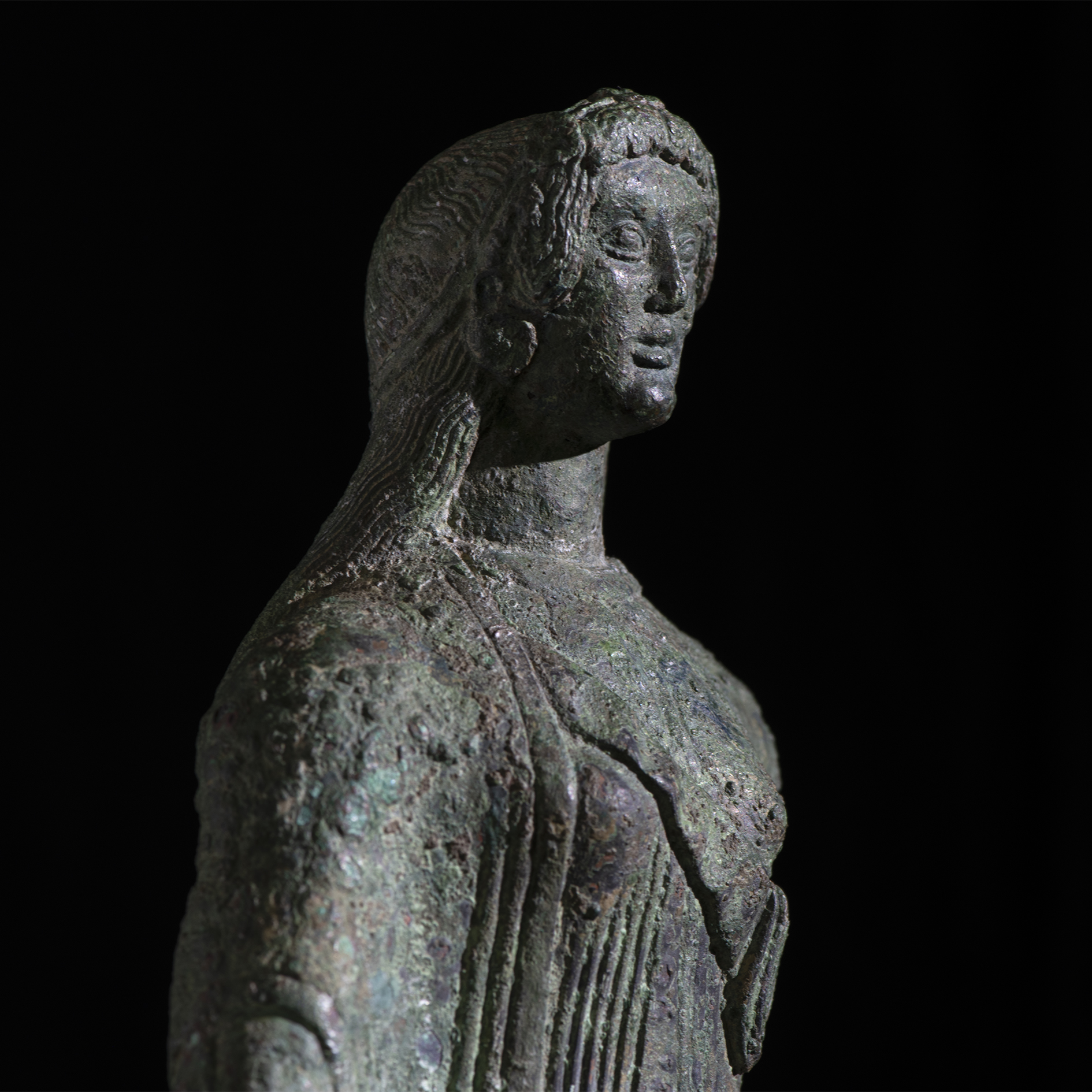
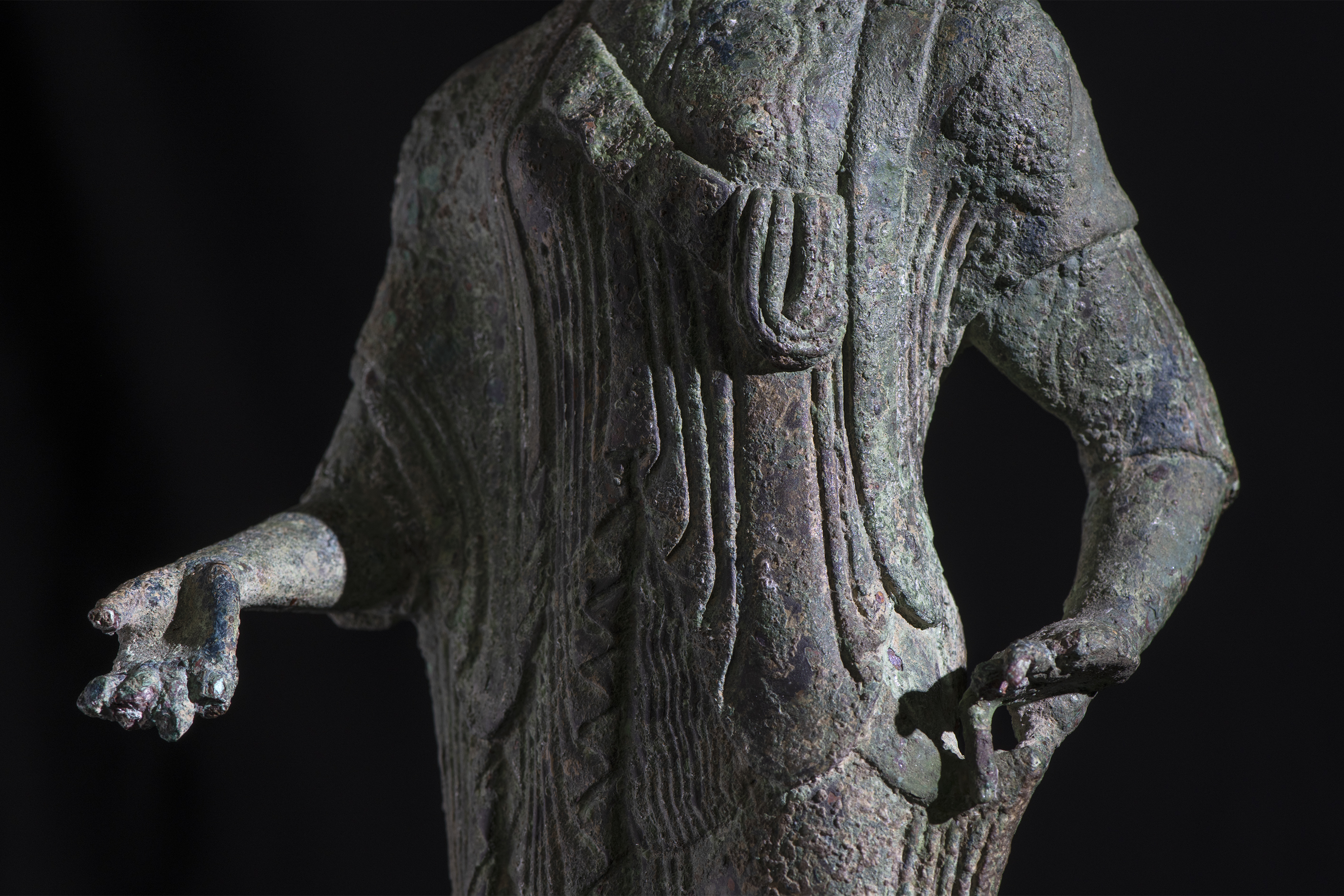
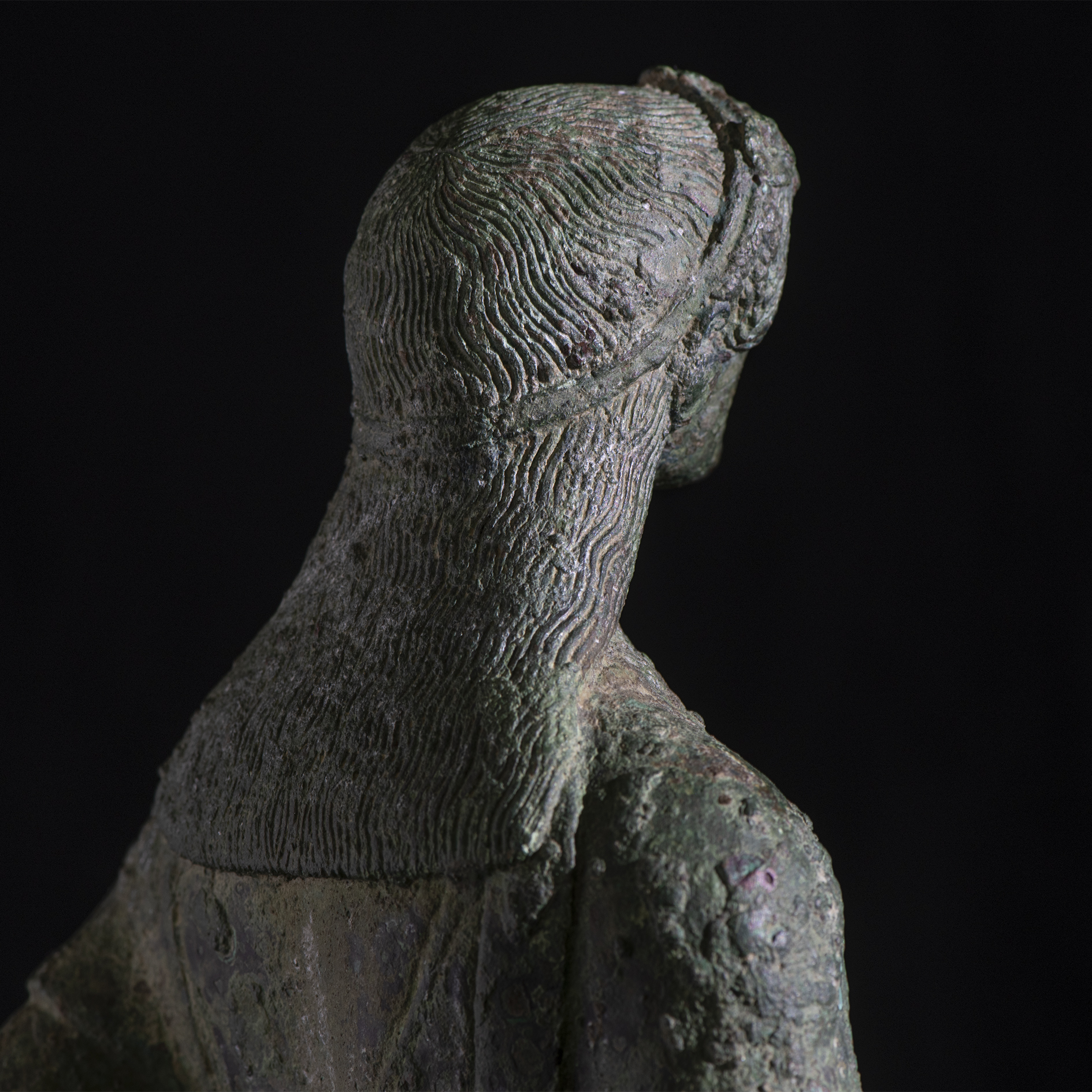
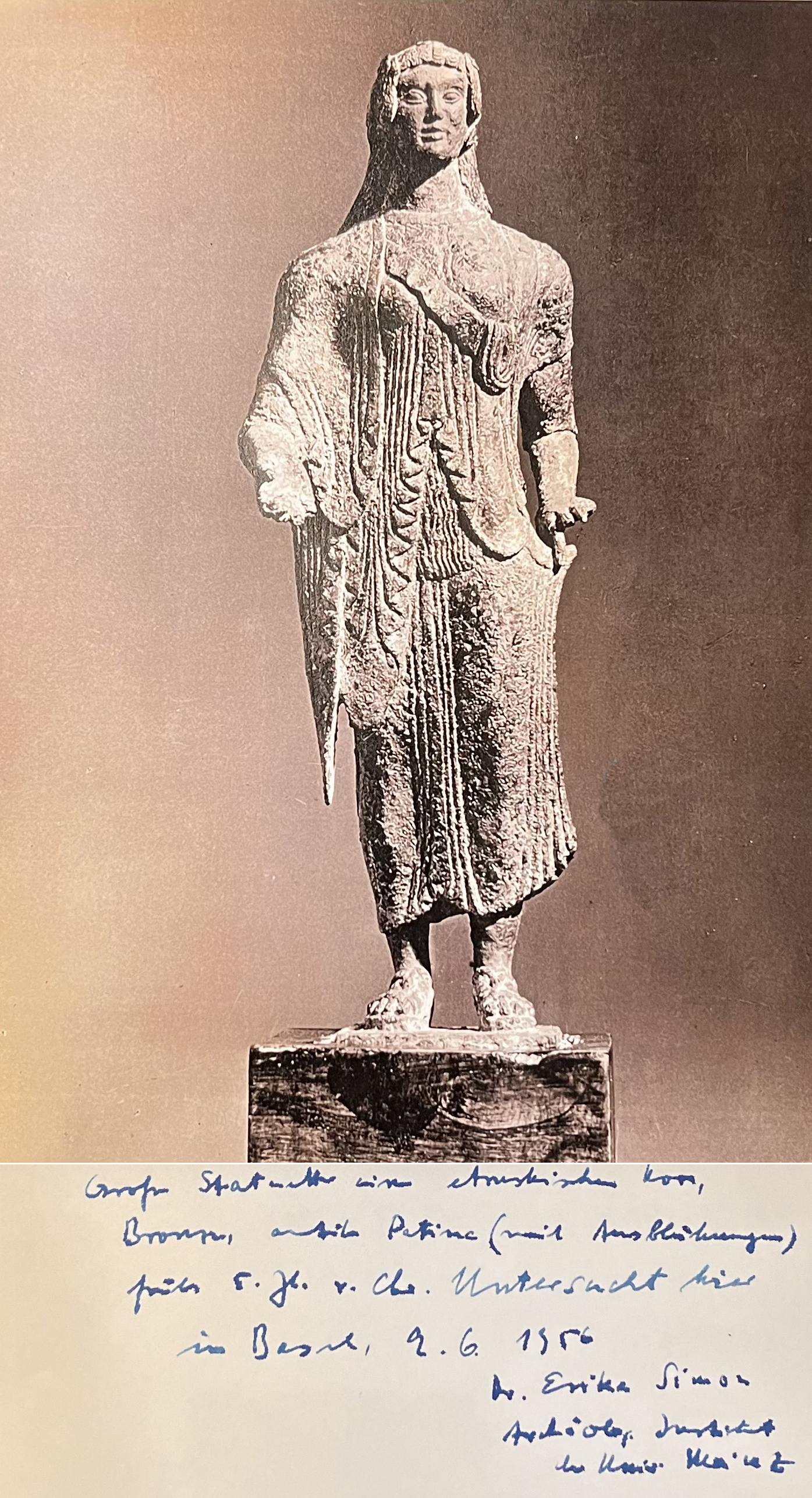 Richly dressed and elegant in her comportment, a young woman stands with her left leg slightly advanced. Close to her body she wears a filmy chiton with buttoned sleeves extending to her elbows. Over it a thicker himation is secured with a pin at her right shoulder, to drape diagonally between the small breasts, forming heavy folds which bifurcate centrally over the navel to descend further at her left in somewhat stiff swallow-tail folds. At the front, the chiton is rendered with wavy pleats to an overhang at the waist, beneath which wider folds are gathered between the legs. The garment closely hugs the contours of her youthful body, particularly at the rear, where it is rendered in a curiously abstract, curvilinear pattern of pleating. The skirt is pulled forward, stretched over the buttocks and thighs. Along with the textural interplay between garments, this interest in revealing and concealing the nubile female form with drapery was of particular concern to Late Archaic sculptors, and finds close parallels in the monumental stone korai of the Athenian Akropolis and even closer ones in the acroterion figures of the Temple of Aphaia in Aegina. Remarkably both hands survive and, although the fingers on the left are damaged, enough is preserved to show the delicacy of the maiden’s gesture as she delicately plucks her skirt between thumb and forefinger. The other hand is extended with the palm up and angled slightly downward; based on the positioning also of the thumb, it likely once held an omphalos phiale with which the maiden poured a libation. The modelling of the forearms and ankles is somewhat heavy, as is the sturdy neck as it emerges from the neckline of the chiton. The oval face is as expressive as it is symmetrical, with prominent lips curved into a slight smile, indenting the apple- shaped cheeks, and heavy-lidded almond-shaped eyes. Her thick hair cascades long down the back in a rectangular mass with individual locks incised in coldwork. A slim fillet encircles the crown of the head, securing the hair in the front which is centrally parted over the brow with loops falling over the temples. Remarkably, the sandaled feet are preserved upon the original base.
Note
This remarkable votive figure is deeply indebted to Archaic Greek sculptural traditions, drawing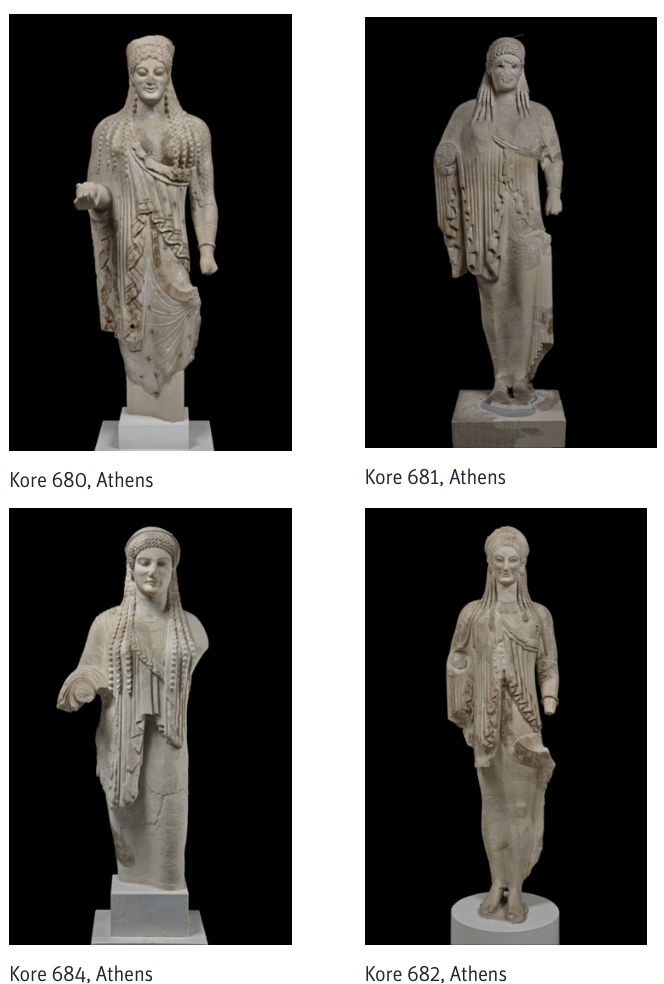 particular inspiration from the korai—the votive statues of young women erected as honorific dedications in sanctuaries, the finest examples of which come from the Athenian Akropolis—as well as from the akroterion figures from the Temple of Aphaia on Aegina. The frontal stance, with the right hand outstretched and the left hand gathering the garment, finds close parallels in the so-called Antenor Kore (no. 681), the korai nos. 680 and 682, and the Kore no. 684, all preserved in the Akropolis Museum, Athens.
On the stylistic and iconographic level, the statuette shows its closest affnities with the Aphaia figures from Aegina. These parallels are apparent not only in the general posture—with the feet placed slightly apart and flat on the ground—but also in the treatment of the garments, the articulation of the arms, and the hairstyle, which falls down the back in a compact mass rather than in the usual braids over the chest. Such correspondences firmly situate the piece within the Late Archaic Greek tradition, ca. 500–480 BC, a period marked by the predominance of Ionian features in bodily proportions, drapery style, and facial expression. Despite the richness and refinement of its still-Archaic costume, the statuette also displays a certain freshness and natural simplicity that anticipate the emergence of the Severe Style - qualities notably absent from Etruscan sculpture of the same period. The choice of production site, likely within Etruscan territory, is explicable in economic and historical terms: whereas copper was scarce in Greece, the mining districts opposite the island of Elba were exceptionally rich. This context helps account for the manufacture of a piece that adheres so closely to contemporary Greek artistic norms while being cast in an Etruscan 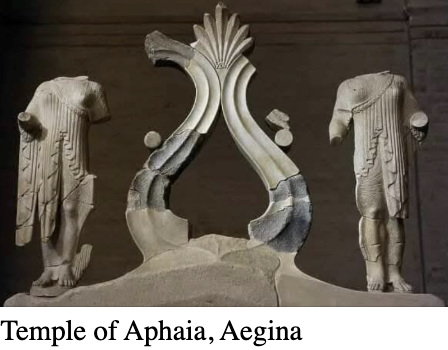 metallurgical landscape. In addition to the documented export of Etruscan bronzes noted by Pliny (Nat. Hist. XXXIV, 34), the presence of Greek artisans in the metalworking centers of Etruria is highly probable. These craftsmen, as mentioned by A. Solari (Vita pubblica e privata degli Etruschi, p. 40), were likely active in producing luxury objects for both local elites and patrons in their homelands. The statuette may therefore represent a compelling instance of cross-cultural artistic production, in which Greek aesthetic ideals were realized through Etruscan technical resources.