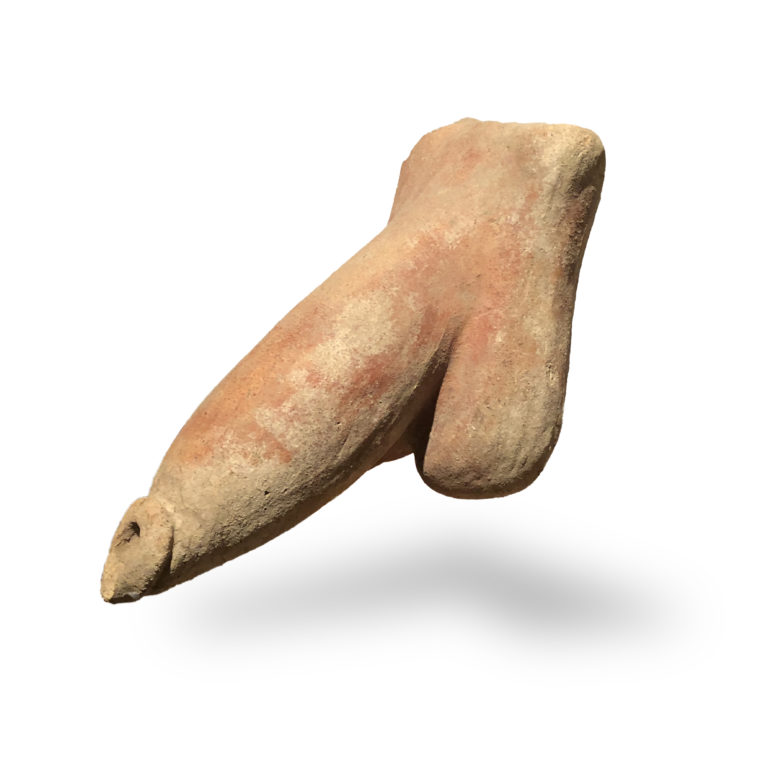
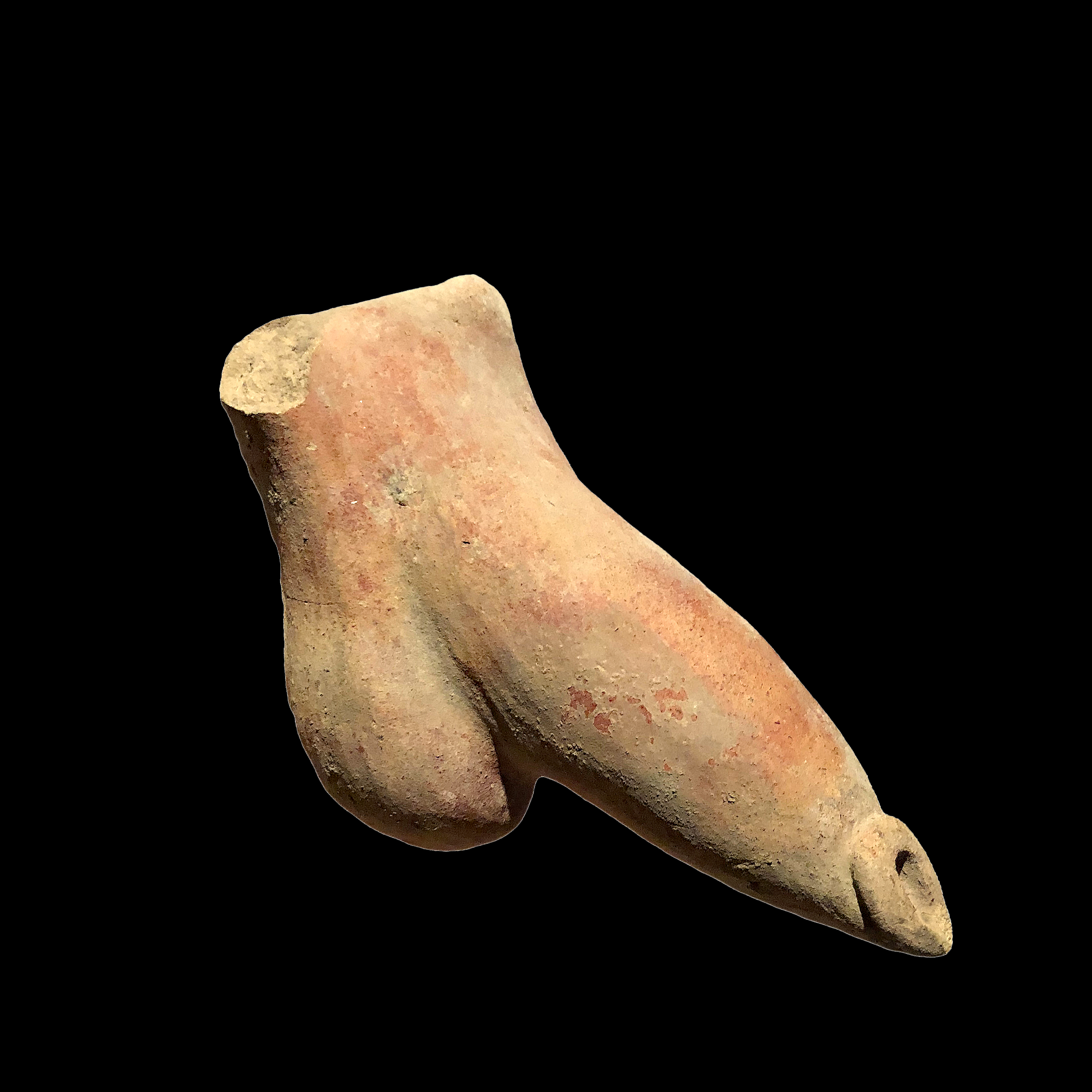
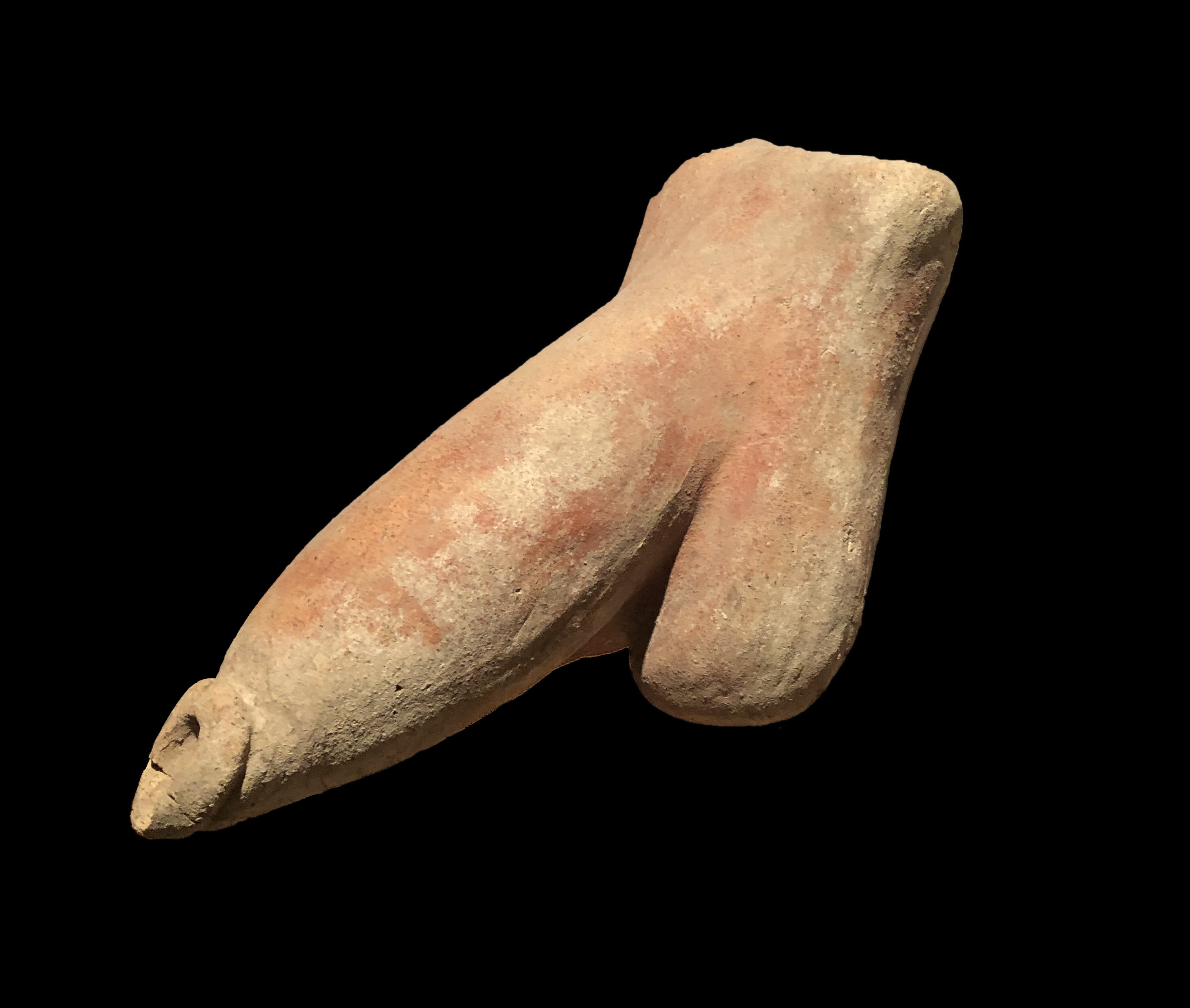
Naturalistically moulded to represent male genitalia, the phallus with well-defined foreskin, is pierced at the tip and is partially hollow on the reverse.
Note
The phallus probably originated from Etruria. This type of object can usually be identified as a votive offering, typical of this area; the votives would have been presented in a temple in the hope of healing for that part of the body. However, the size of this piece prohibits the identification as a votive; it is more likely to have been a protective, prophylactic emblem, almost even a lucky talisman. The fascinus, or divine phallus, symbolized masculine power. People living in ancient Rome saw the imagery as a sign of good fortune and protection. The dating cannot be more precise than around the 5th-4th century B.C.