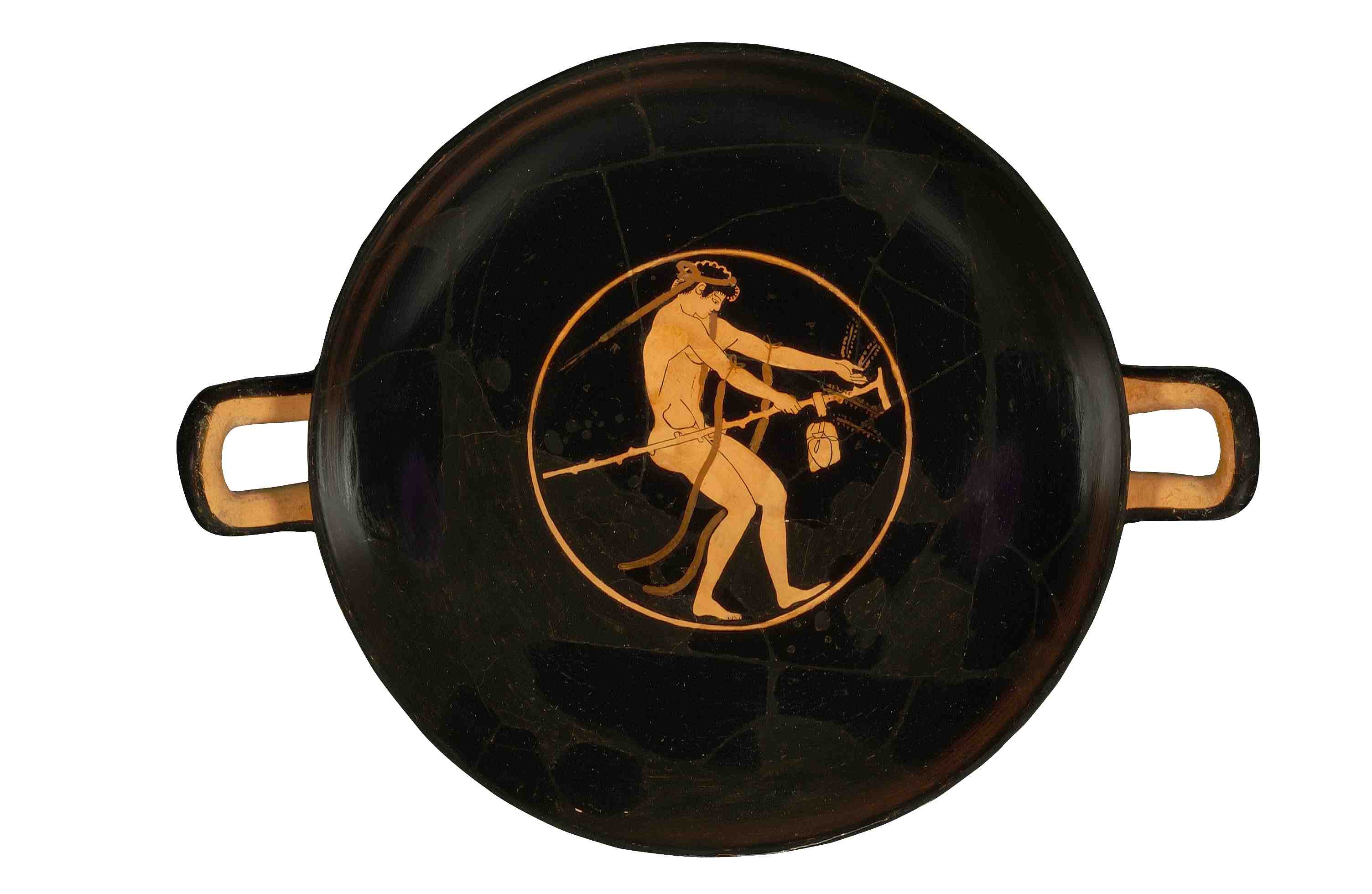
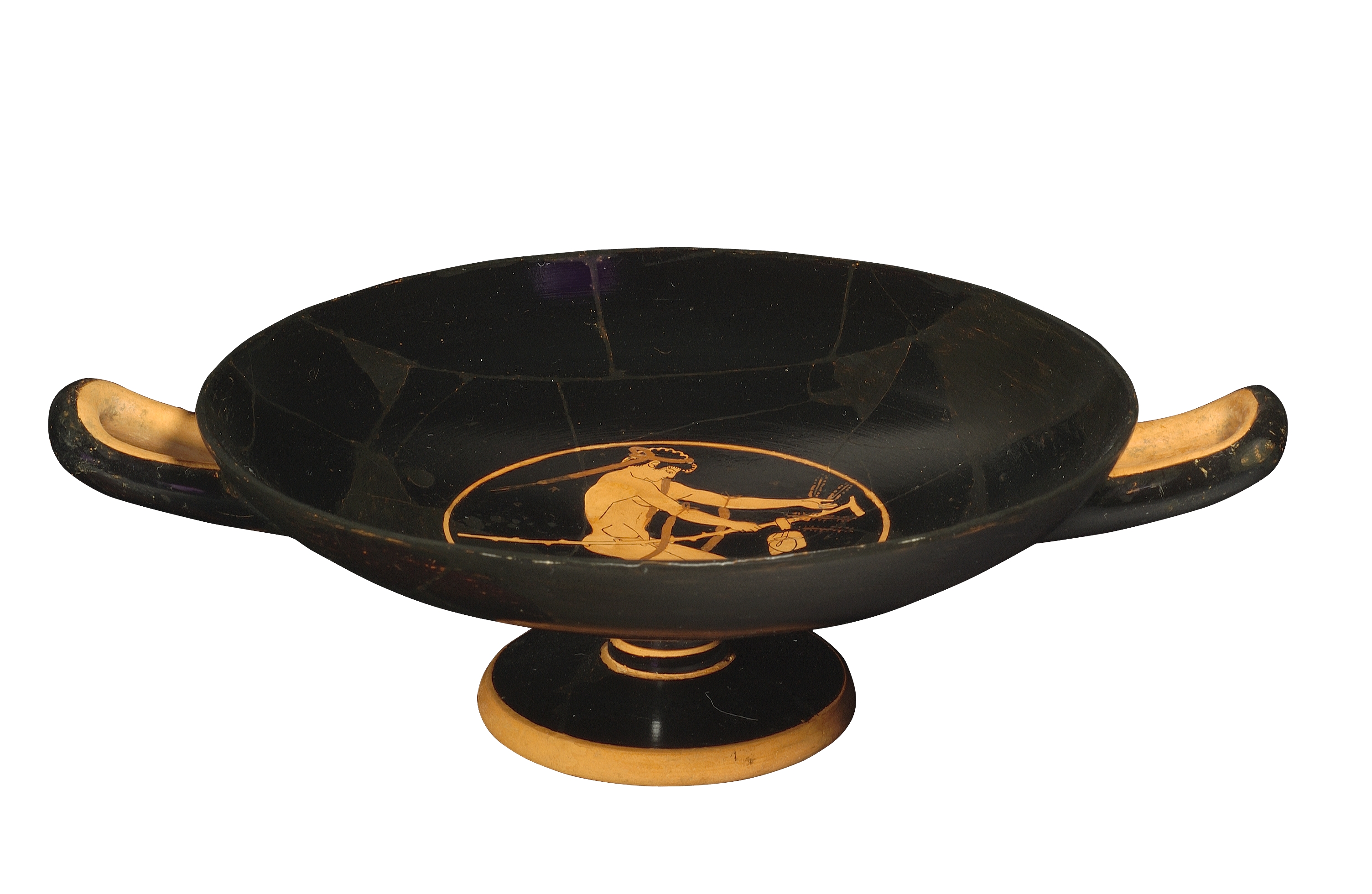
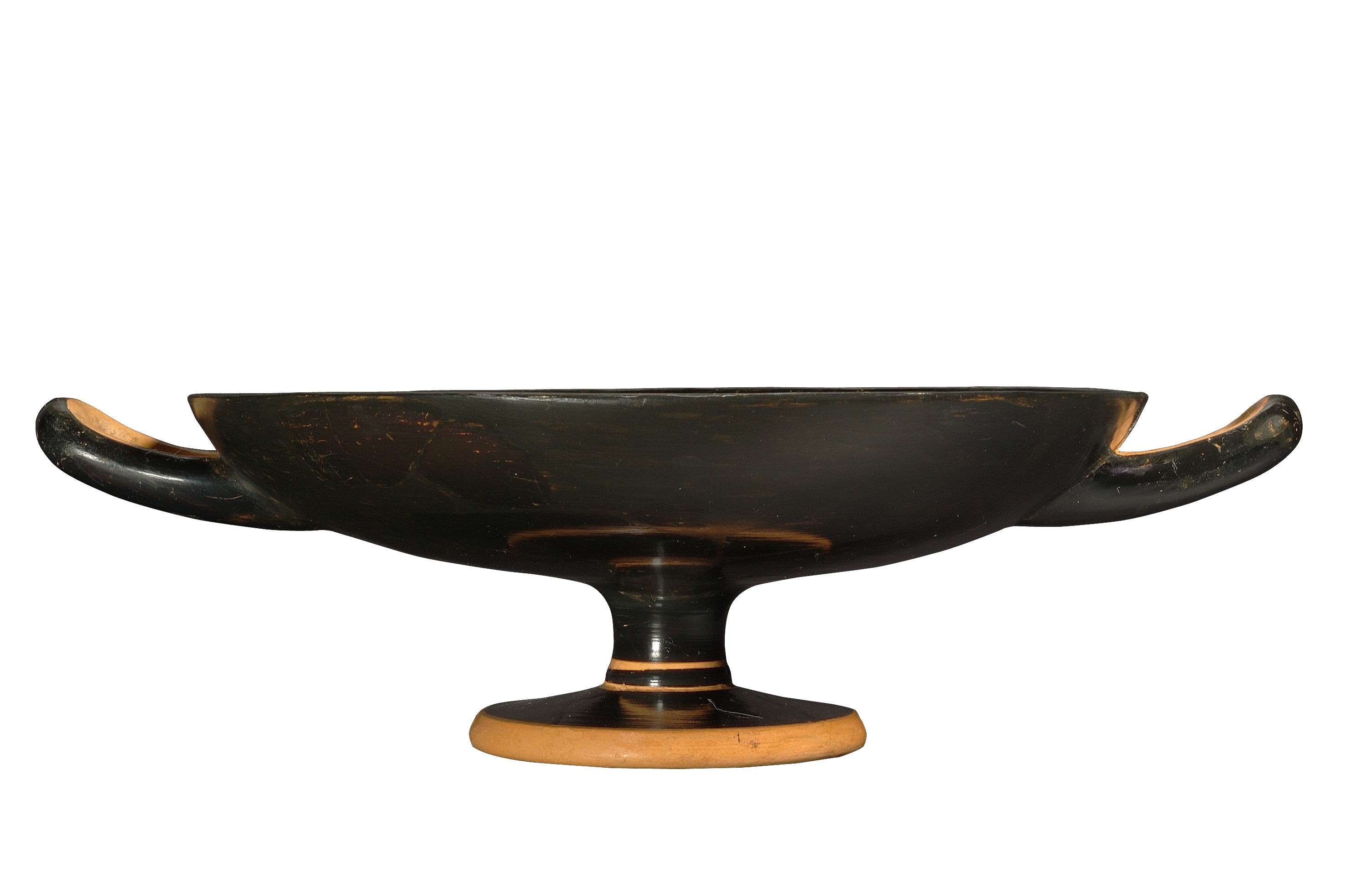
Attic red-figure kylix of type A
Private collection, Roger Peyrefitte (1907-2000), Paris, prior to 1977
Private collection, Switzerland, acquired from the above on 16 February 1977
Roger Peyrefitte (1907-2000)
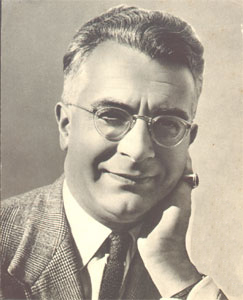 Roger Peyrefitte was a French writer, author of numerous novels, an anthology of Greek texts and historical biographies.
Born in Castres in 1907, he was educated by the Lazarist brothers. A brilliant student in the humanities, he continued his studies at the Faculté des Lettres in Toulouse, before entering the École des Sciences politiques, from which he graduated in 1930.
Peyrefitte's taste was boastful, perverse and not without its share of vulgarity. He wrote of himself in Jérôme Garcin's dictionary: ‘By that time, he had realised that there were only two things that mattered: money and a name, if you weren't born with one’.
He became embassy secretary in Athens from 1933 to 1938. In February 1945, he retired from the diplomatic service and began a literary career the same year.
Thanks to his erudition, his vast classical culture, his concise style with its rich vocabulary, his biting irony and his abundant output, he became a leading French writer. His masterpiece remains the biography of Alexander III of Macedonia (La jeunesse d'Alexandre; Les Conquêtes d'Alexandre; Alexandre le Grand). This work relates the life of the greatest conqueror of Antiquity from a variety of angles, incorporating social, geographical and mythological knowledge. Peyrefitte was a passionate collector in many fields.
Italia, Arte e Scienza nello Sport, Seoul 1988/Rome 1988, 104, no. 1
L’Olympisme dans l’Antiquité, tome 2, Lausanne: Musée olympique, 1996, 78, no. 113
Gli atleti di Zeus. Lo sport nell’antichità. Catalogo della mostra (Mendrisio, 12 September 2009 – 10 January 2010), p. 197, op. 121
Botho Graef-Ernst Langlotz , Die antiken Vasen von der Akropolis zu Athen (1925–33), vol. 2, no. 189, pl. 9
J.D. Beazley, Attic red-figure vase painters, ARV, 1943, 90-91, 950; ARV2 , 1963, 178-180, 1631; Add. [2] (1989), 185
Dietrich von Bothmer, An Archaic Red-Figured Kylix, in: The J. Paul Getty Museum Journal: Volume 14/1986, 5-20
Olympic Museum in Lausanne, Switzerland from 1999-2
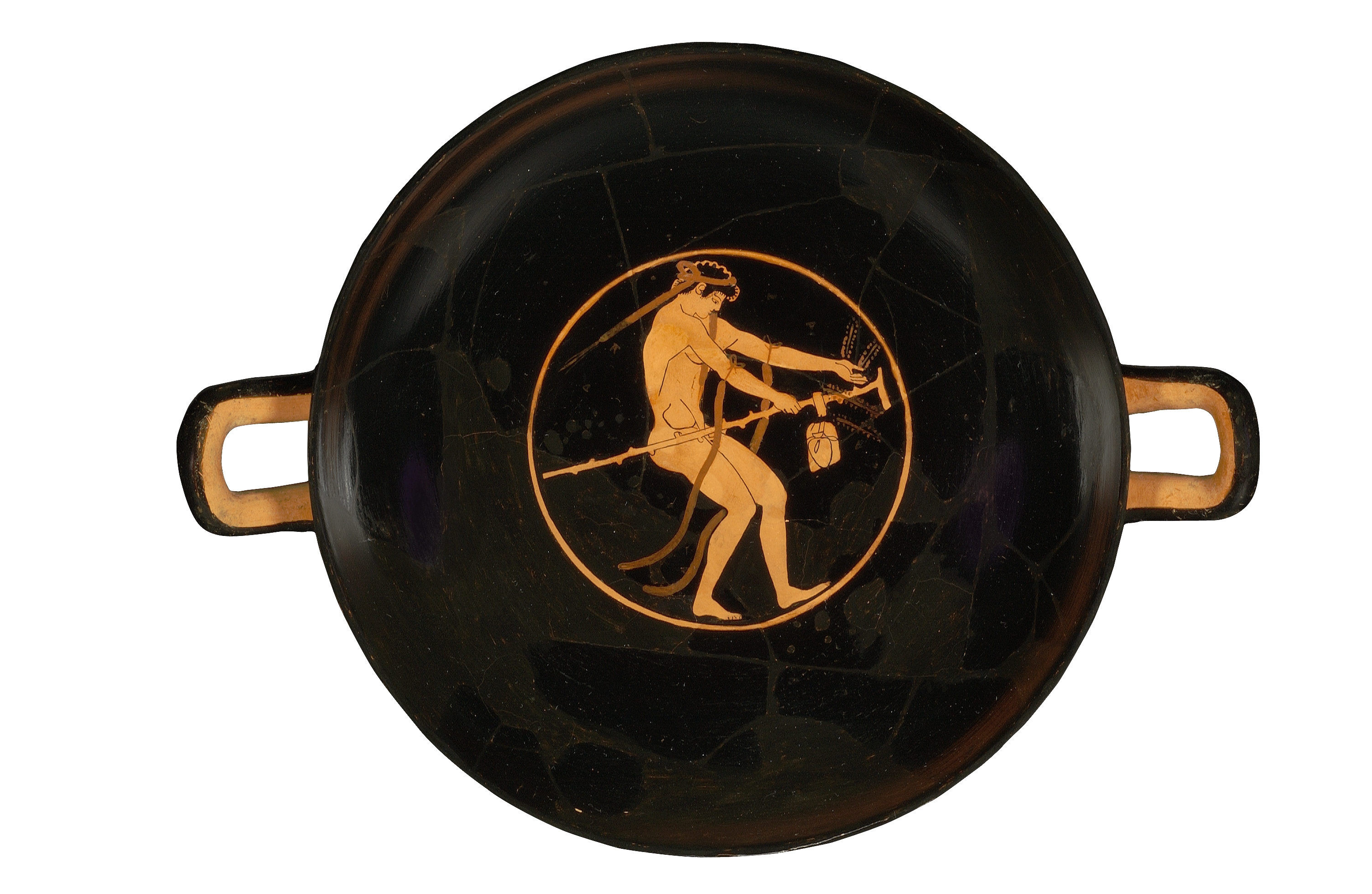
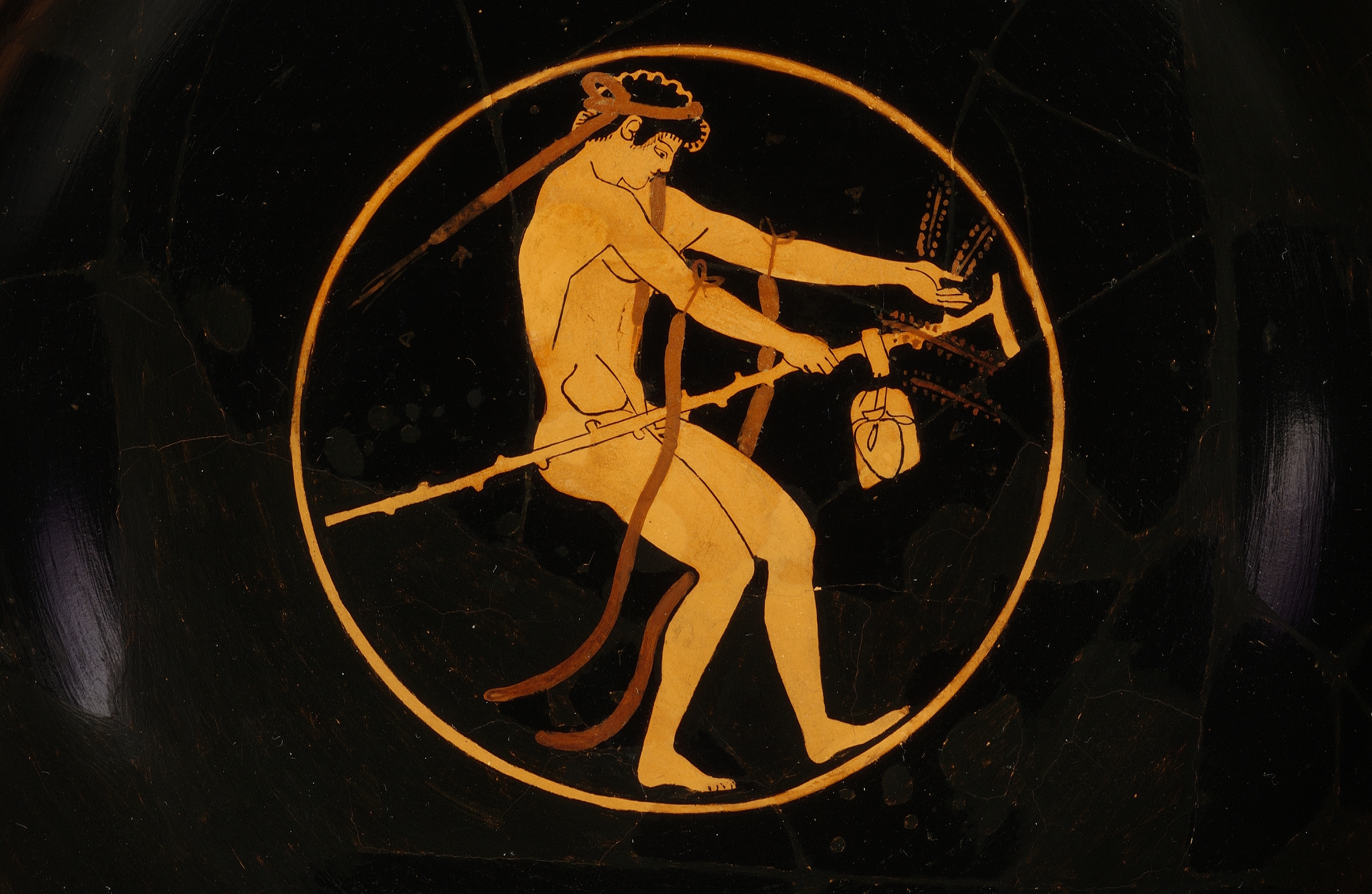
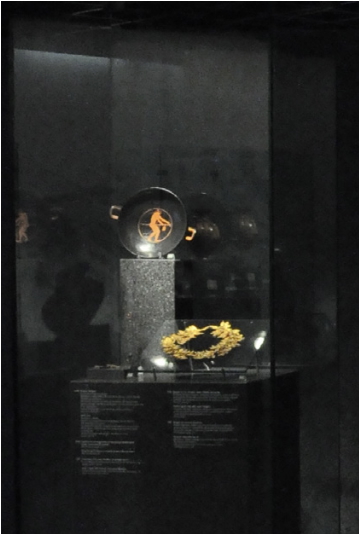 A simple reserved line marks off the tondo, which is decorated with the figure of a victorious athlete. His legs are slightly bent, his arms outstretched, and the stick he holds in his right hand evokes the spokes of a wheel. Long red ribbons with floating ends adorn the athlete’s hair and are attached to his arms by fine cords. In his right hand he holds his stick, to which are fastened a sponge and an aryballos—the athlete’s typical equipment. With his outstretched left hand, he attempts to catch a few leafy twigs thrown to him by the spectators in honor of his victory. This custom is called phyllobolia, as we learn from a passage of Eratosthenes (FGrHist II B, 3 [Leiden, 1929], no. 241, 1015s., fr. 14). Other objects could also be thrown, such as petasoi, chitoniskoi, and krepides.
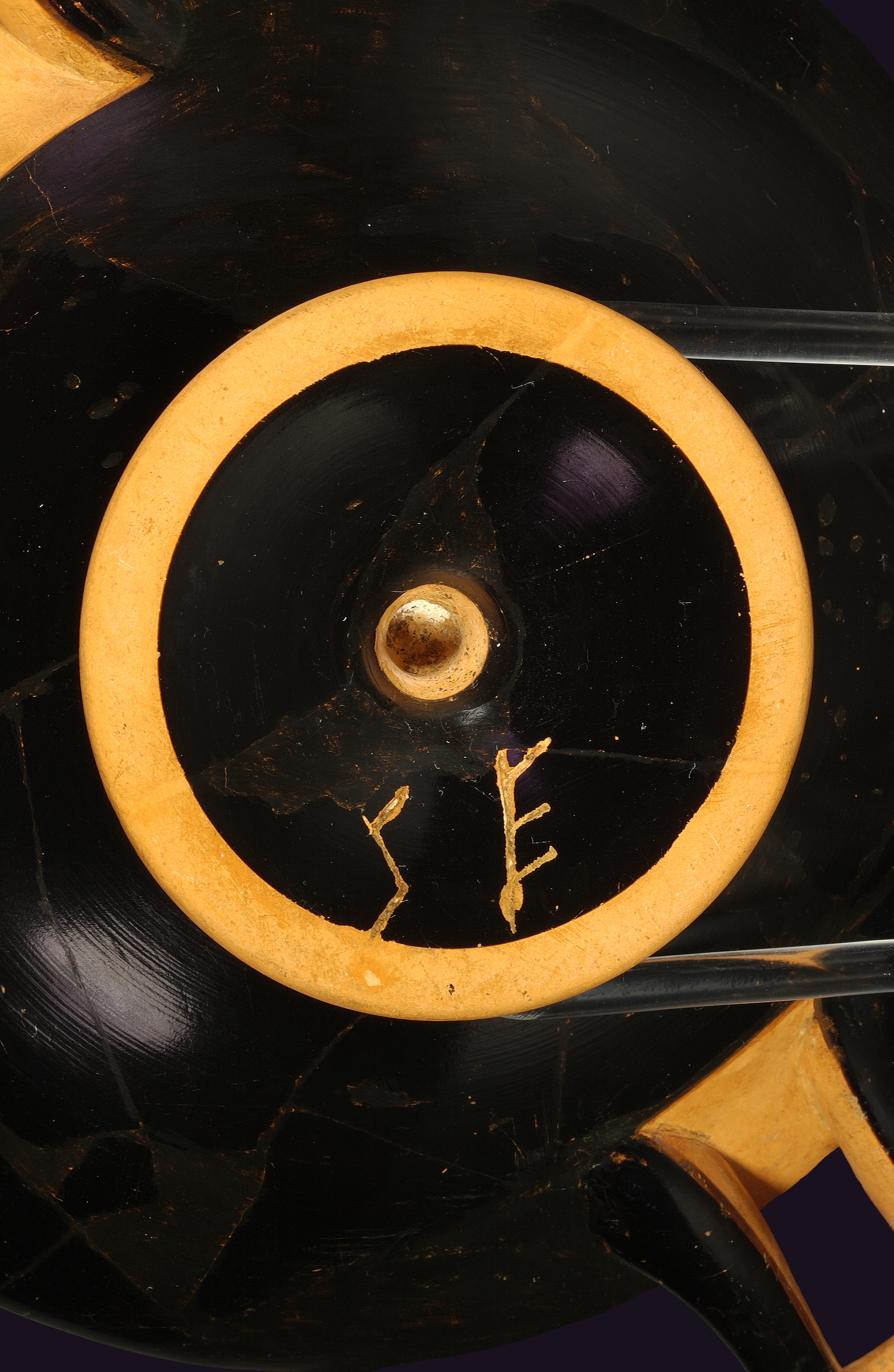
The inscriptions reveal that the young man is twice praised for his bravery, as kalos (“beautiful” or “noble”). The painter has written these words in red letters against the black background of the tondo. The letters K and A are still legible behind the figure, in the field between the ends of the ribbon, on either side of the KAΛ beginning in front of the figure’s forehead, then following the circular border almost parallel to it: the A above the forearm, the Λ between the sponge of the aryballos and the twig. Graffito on the underside of the foot.
Note
The Carpenter Painter was an Athenian red-figure vase painter active in the late 6th century BC. His real name is unknown; the conventional name “Carpenter Painter” derives from a cup in the British Museum (London, BM E23; BAPD 201642), found in Chiusi, which depicts a carpenter at work in its interior. The artist worked primarily as a cup painter, though a hydria has also been attributed to him. Only a small number of vases are securely associated with his hand. His work is identified through distinctive stylistic details, including the rendering of clavicles, pectoral muscles, nipples, long slender hands, garment folds, and the characteristic downturn at the corners of the mouth. The Carpenter Painter was familiar with the innovations of the so-called Pioneers of red-figure painting and was particularly influenced by Euthymides. His subjects include komasts (revelers), symposion scenes, youths, Herakles, satyrs, and hunting scenes.