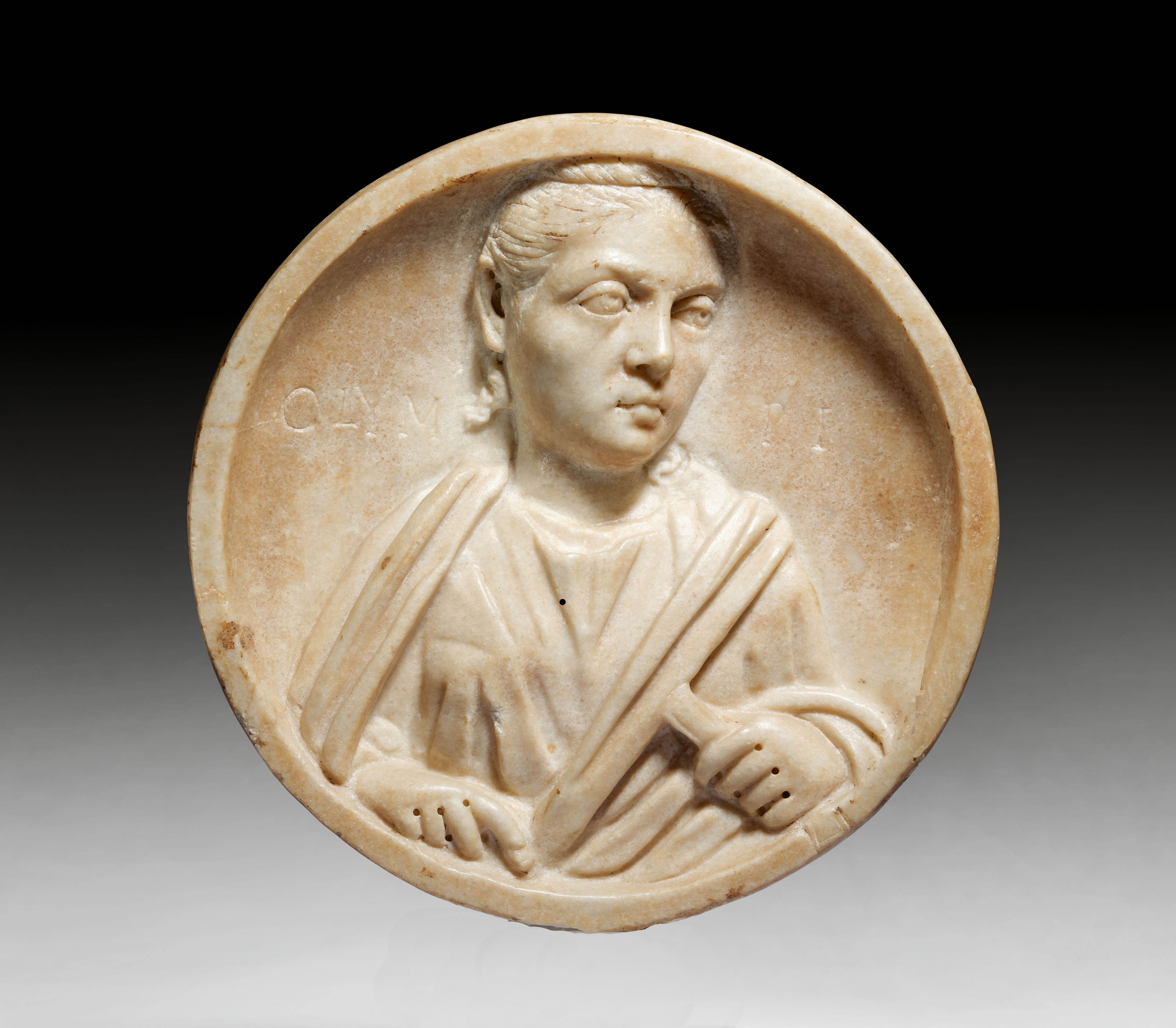
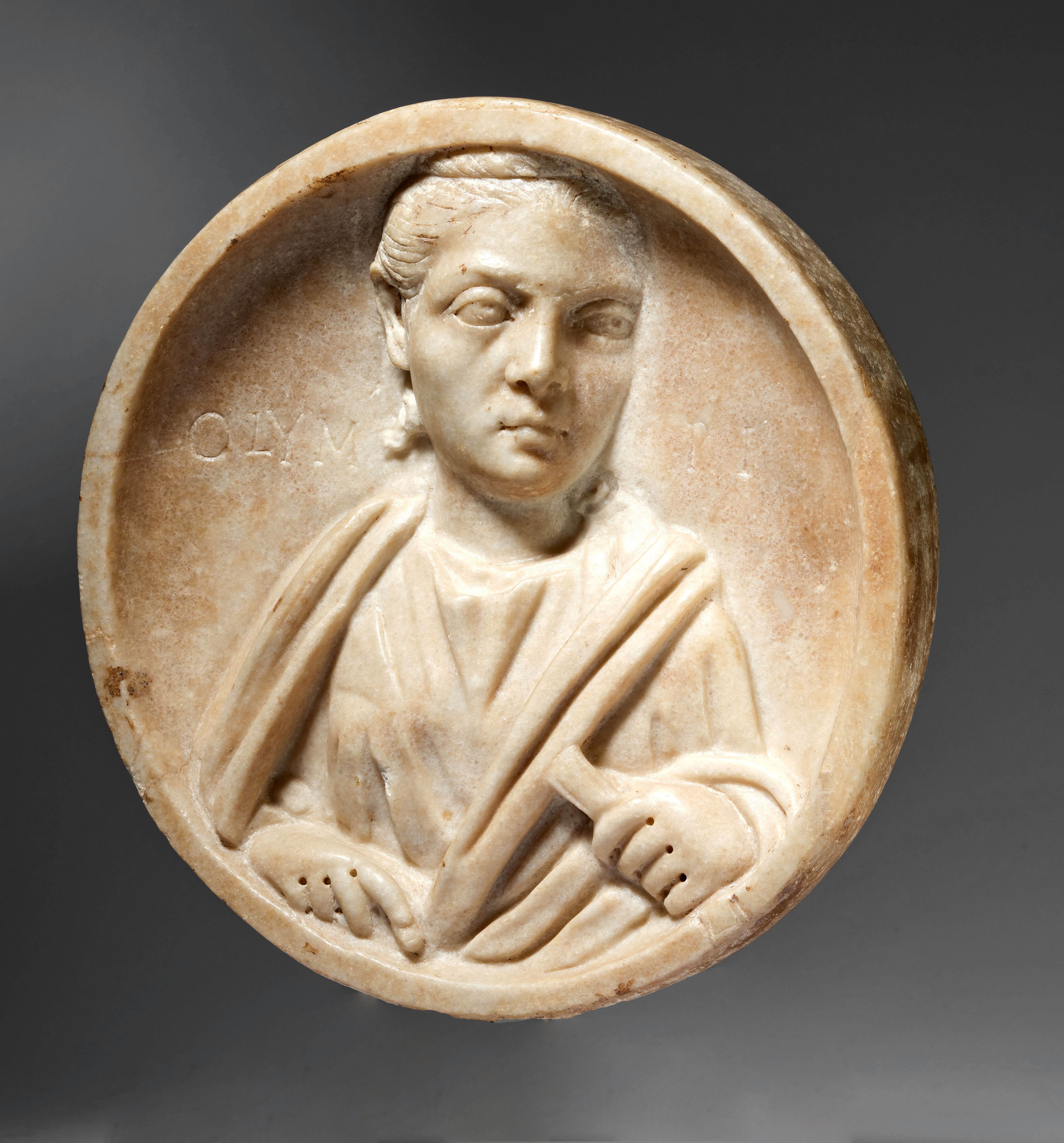
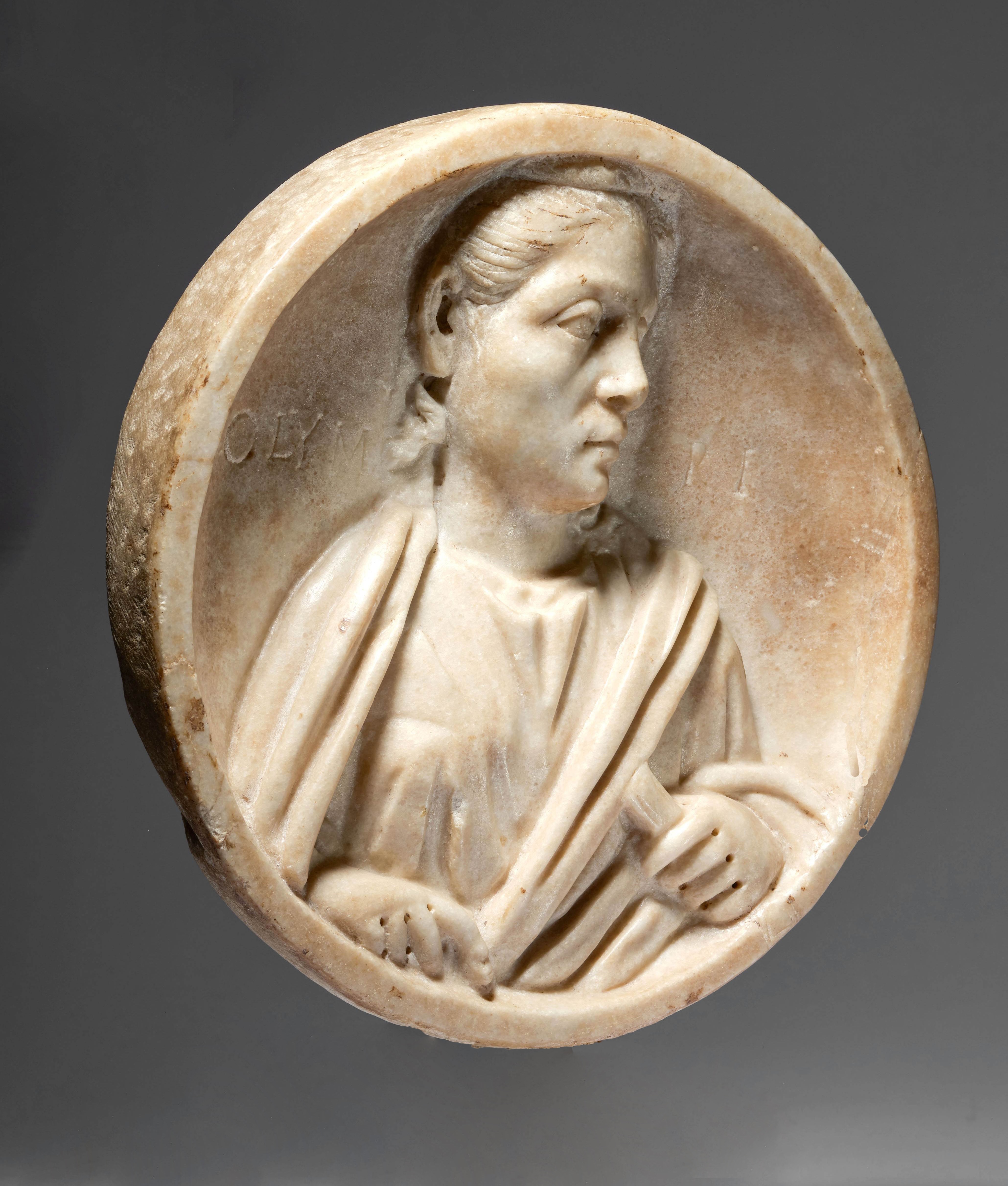
Marble Clipeus with a Portrait Bust
Collection Dr. Philipp Lederer, Lugano (*1872–†1944)
Auktion Fischer Luzern, 21 May 1941, Sammlung Dr. Philipp Lederer aus Lugano
Auktion Fischer Luzern, Antiken aus dem Nachlass des Dr. Philipp Lederer, 27–29 September 1945, lot 896
Auktion Fischer Luzern, 16-20 November 1948
Privatsammlung Dr. Adolf Portmann (*1907-†1968), Horw, Luzern, acquired from the above, thence by descent to his wife Lina Portmann-Stamm (*1918-†2017), Lucerne
Thence by continuous descent
Philippe Lederer
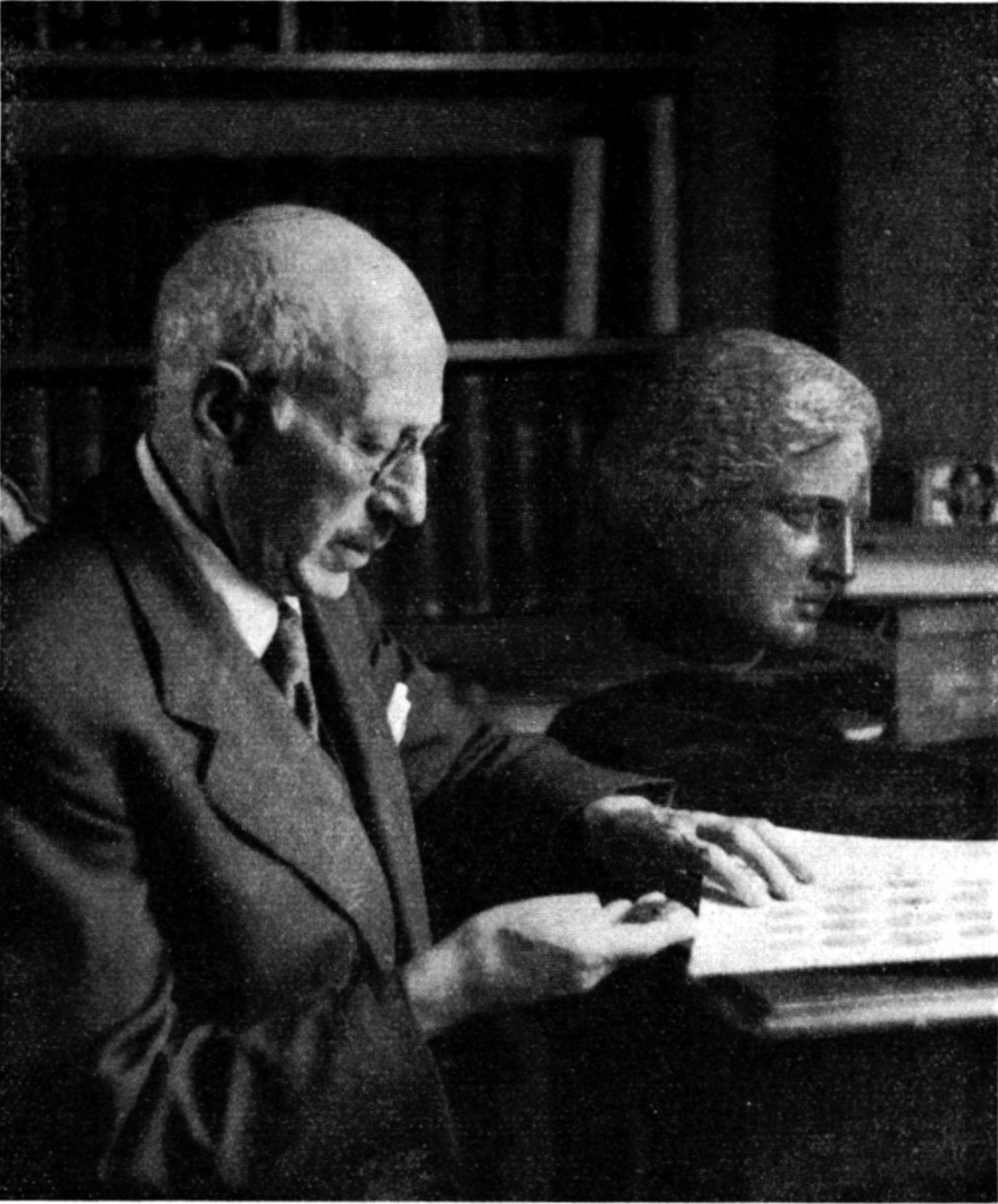 Philipp Lederer (born August 25, 1872 in Bamberg; died September 2, 1944 in Lugano) was a German numismatist and dealer in coins and antiques. After finishing secondary school, he initially worked as a merchant in his father's toy store. In 1898, he went to Munich to study Classical Archaeology and Classical Philology while simultaneously working in the coin shop of his relative Jacob Hirsch. On March 10, 1910, he earned his doctorate in Munich with a dissertation on the ancient coinage of Segesta, one of the first studies of Greek numismatics based on die comparison. From 1911, he lived in Berlin, where he worked as a numismatic author, collector, and dealer in coins and antiques. His shop was located directly opposite the Museum Island at Kupfergraben 4. Among his clients was Sigmund Freud, who acquired numerous antiques from him.
Johannes Bolten, Die Imago Clipeata, Studien zur Geschichte und Kultur des Altertums, 21 H. 1 (1937)
Helga von Heintze, Imago Clipeata 1919-1996 Hamburg : 1949 - Bestellen in Bern
Rolf Winkes, Clipeata imago : Studien zu einer römischen Bildnisform, Bonn : Habelt 1969
R. Daut, Imago. Untersuchungen zum Bildbegriff der Römer (1975)
Rolf Winkes, Pliny's chapter on Roman funeral customs in the light of clipeatae imagines, AJA 83, 1979, 481ff.
J. Engemann s.v., Imago Clipeata, in : RAC (Roman Archaeology Conference) XVII (1995) 1017ff.
Jane Fejfer, Roman Portraits in Context, Berlin: Walter de Gruyeter, 2008, 233-235
Letizia Sotera, Dal mondo pagano a quello cristiano. L'imago clipeata (IV-IX sec.). Mosaici e affreschi nel contesto archeologico-artistico mediterraneo, Roma : Aracne 2013
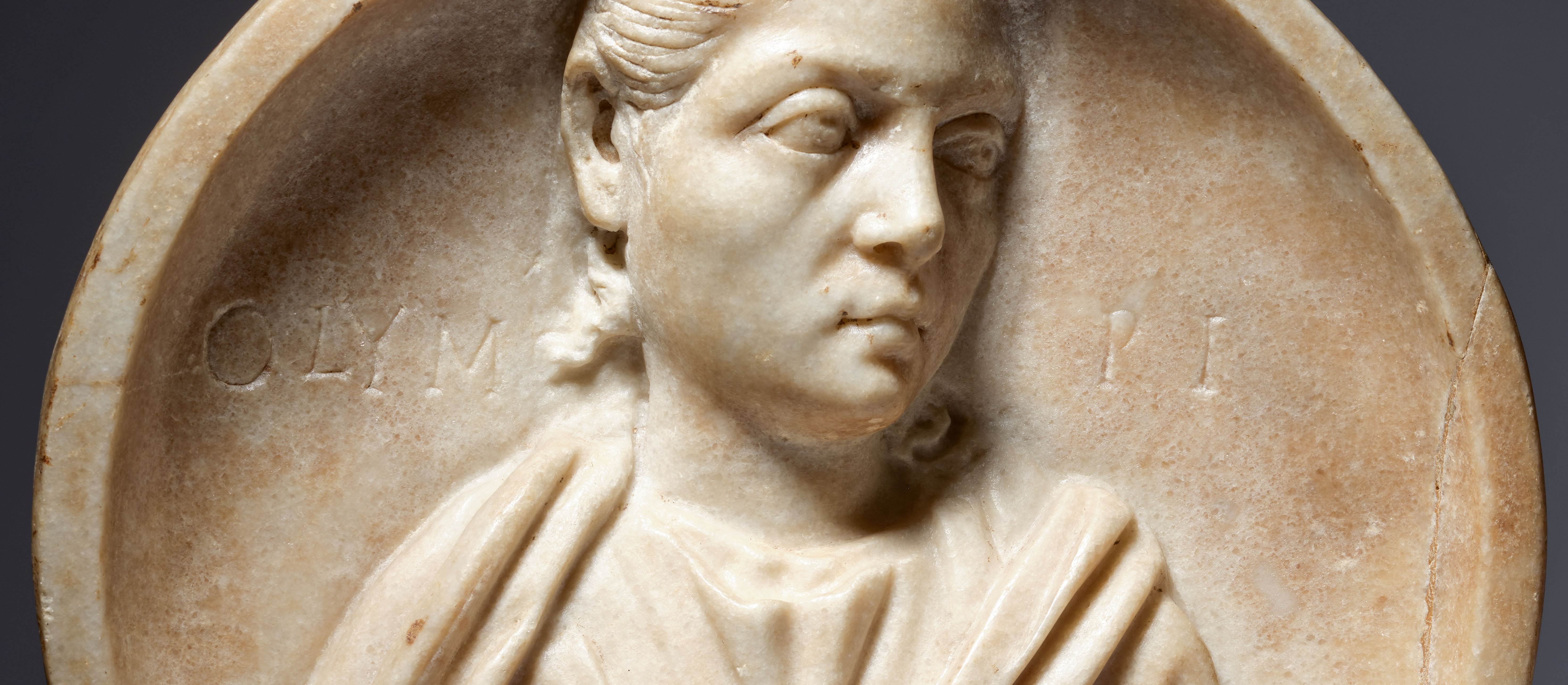
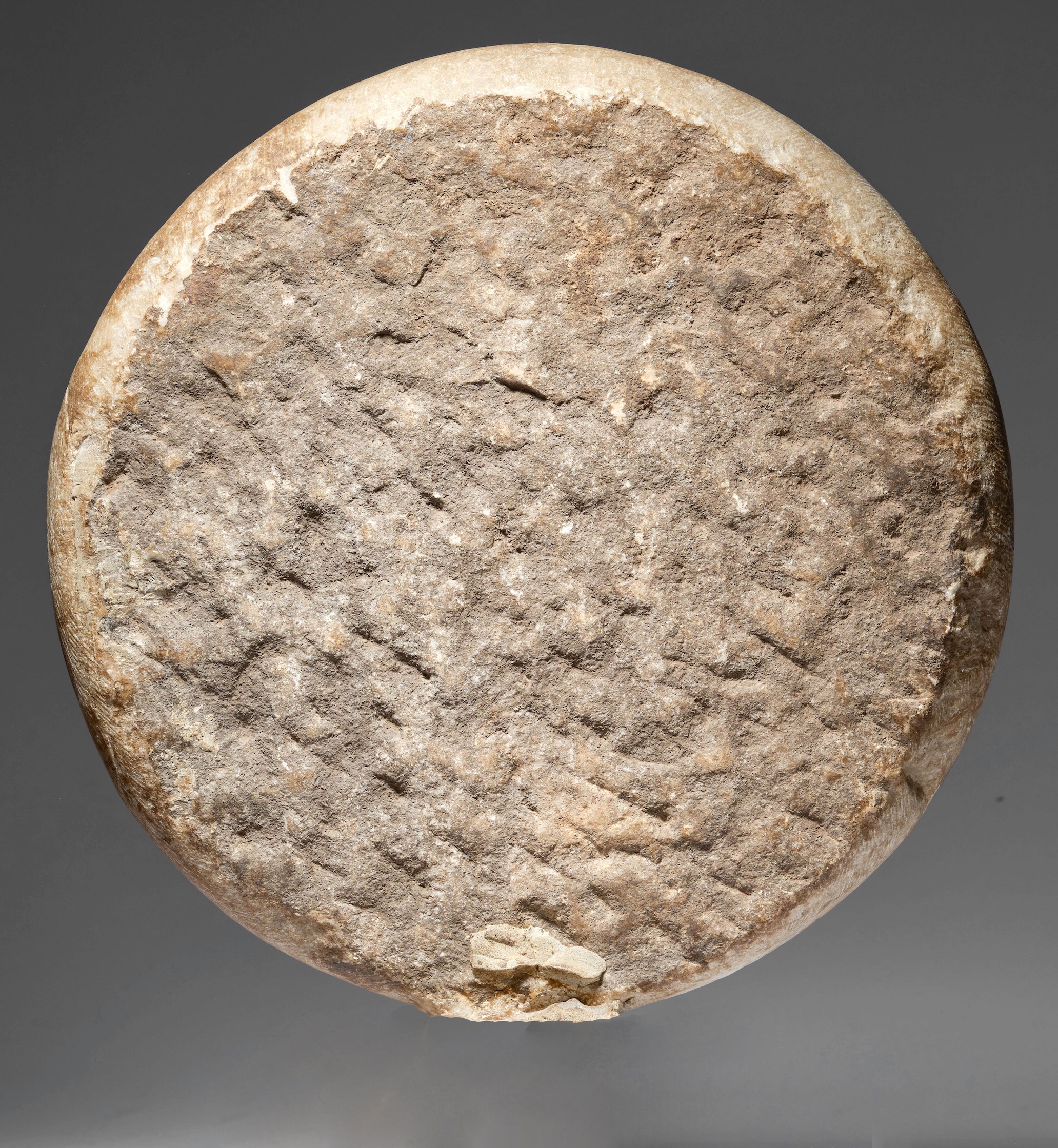
This portrait medallion, framed by a raised plain border, depicts a projecting bust of a young woman shown in a three-quarter view with her head gently turned to the right. She is dressed in a garment with a mantle draped over her shoulders in two parallel folds. Both hands are visible below, each marked by small drill holes; the left hand holds an object, possibly a scroll. Her hairstyle features curls that descend along each side of her neck and a rolled chignon positioned above a central parting, closely resembling the styles favored by Roman empresses of the third century. The inscription “OLYM—PI” is incised on either side of her head.
Note
Imagines clipeatae, or “shield portraits,” were first introduced within Roman temple contexts as ancestral tributes erected by victorious generals in commemoration of their forebears. The symbolic and heroic connotations of the format subsequently extended into domestic and funerary spheres: in the atria of elite residences they functioned as visual affirmations of lineage, while in sepulchral settings they appeared as commemorative markers on family monuments (cf. N. Budrovic, “Framed and Fabulous: An Ancient Tondo Returns to View,” Getty Blog, 17 April 2018). Beginning in the 1st century CE, the marble clipeus was increasingly employed as an honorary format for portraiture, reaching its greatest popularity during the 2nd century. Freestanding examples in bronze and marble are documented; however, it is above all in relief decoration, particularly on sarcophagi of the 3rd and 4th centuries CE, that the motif attained its widest diffusion and enduring prominence.